Archive — Virtual reality
BLUE
Telepresence with an AI robot, for places too dangerous for people
2019 Spring · UC Berkeley
In collaboration with Arine & Ioanna
How can you be somewhere — with full physical capability — while staying safe from an external physical threat? This project introduces BLUE, an artificially intelligent robot designed and developed at Berkeley.
Blue has a set of remarkable skills, but what makes it special is its ability to learn new ones. Blue and robots like it are built to venture into areas inaccessible to humans — attending to dangerous tasks while accompanied, virtually, by a person.
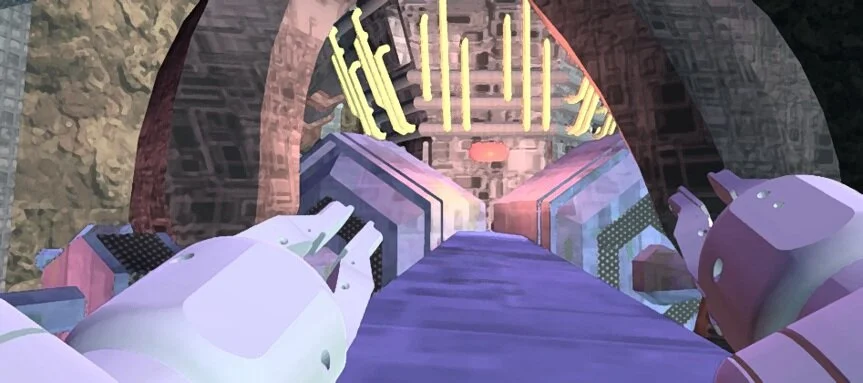
Entering the VR space, the user meets BLUE and soon realizes it mirrors their own movements: they can control the robot. They are then faced with three portals. Each opens into a scenario unsuitable for humans, where a small task is carried out through the robot.
In its creators' words
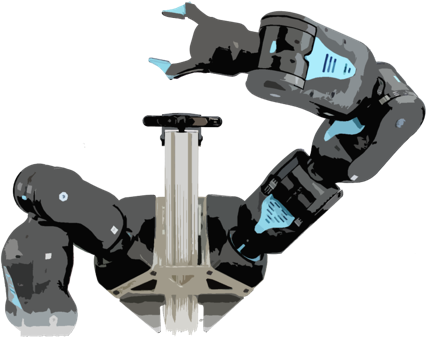
Robots must cost less and be force-controlled to enable widespread, safe deployment in unconstrained human environments. We propose Quasi-Direct Drive actuation as a capable paradigm for robotic force-controlled manipulation in human environments at low cost. Our prototype — Blue — is a human-scale, 7-degree-of-freedom arm with a 2 kg payload, and can cost less than $5,000. Blue's dynamic properties meet or exceed the needs of human operators: a nominal position-control bandwidth of 7.5 Hz and repeatability within 4 mm. We demonstrate a Virtual Reality interface for telepresence and for collecting robot training demonstrations.
Berkeley Open Arms · berkeleyopenarms.github.io
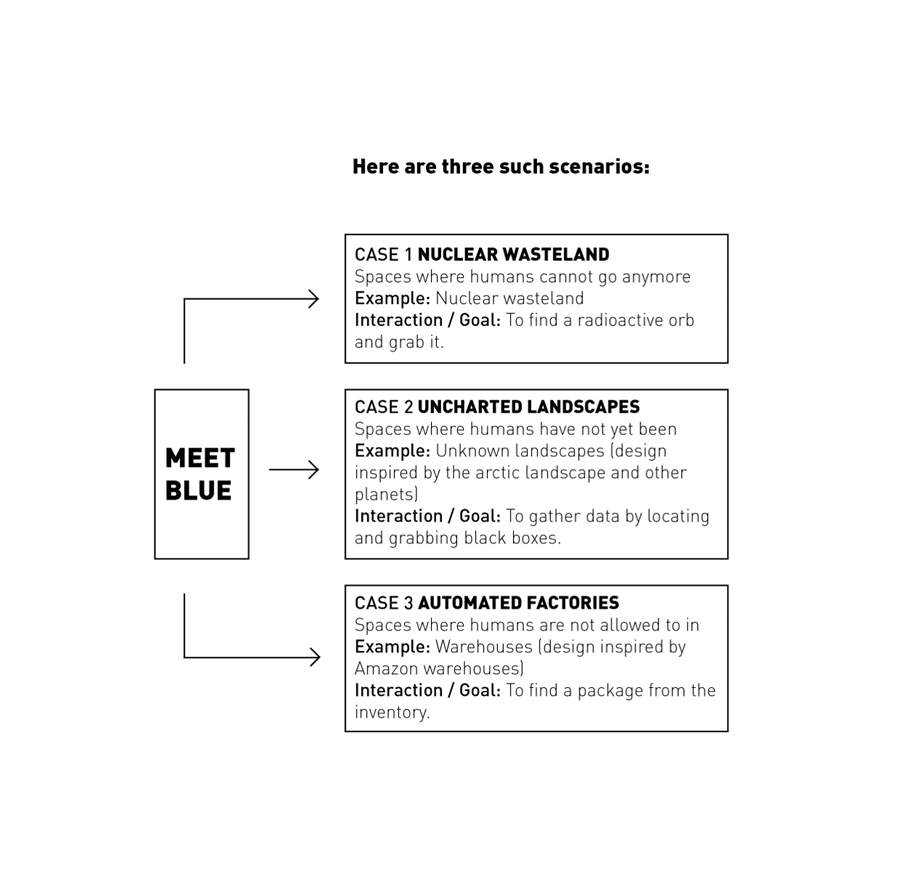
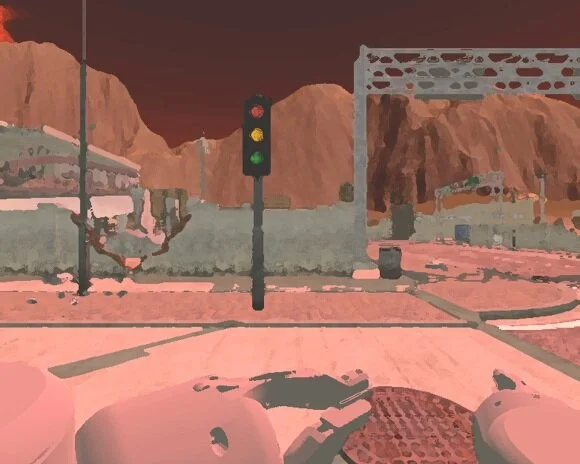
Case 01 — Nuclear Wasteland
Historically, mankind has caused several nuclear disasters — whether intentionally or through catastrophic accident. The high radiation in these areas makes them inaccessible without risking mortal peril. Yet reaching them is often crucial: for observation and study, or for more urgent reasons — stopping or minimizing the damage and controlling its spread. After Chernobyl, three men volunteered to enter the radioactive zone at the risk of their lives. Such sacrifices should no longer be necessary.
An AI robot, accompanied virtually by a human guide, infiltrates the radioactive zone instead — with the goal of saving countless lives.
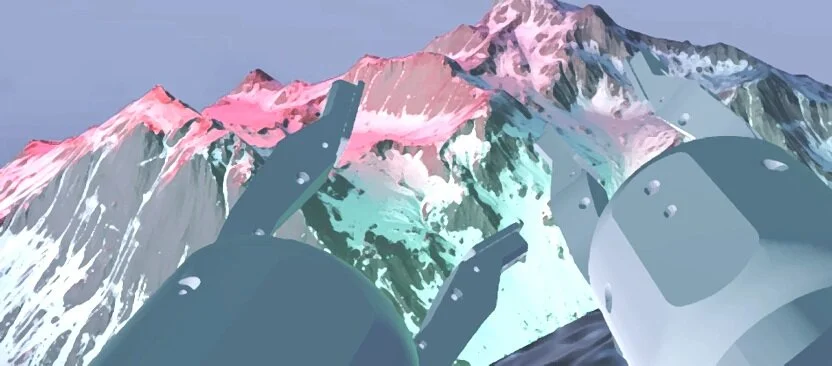
Case 02 — Uncharted Landscape
Humans are explorers and inventors by nature, forever pushing past boundaries for the sake of new and exciting discovery. But these adventures come at a price — the safety of the individual — even as a human presence at critical locations remains essential.
Case 03 — Automated Factories
Factories of industrial scale are often unsuitable for humans. They threaten physical well-being, and the safety procedures meant to protect people frequently halt or disrupt the process of manufacture. Yet a human presence still matters — for overseeing the process, and for intervening in critical moments. That is where the AI robot comes in: it exists in the real-time factory space while a person accompanies it in virtual reality — interacting with it, teaching it, and guiding it through whatever situation arises.