Archive — Space-syntax research
Chungking Mansions
An adaptive mechanism of spatial structure
2016 · Hong Kong
Instructor — Ling Xiaohong
In collaboration with Zhou Yaoyi, Wu Mengyu & Li Zhiyi
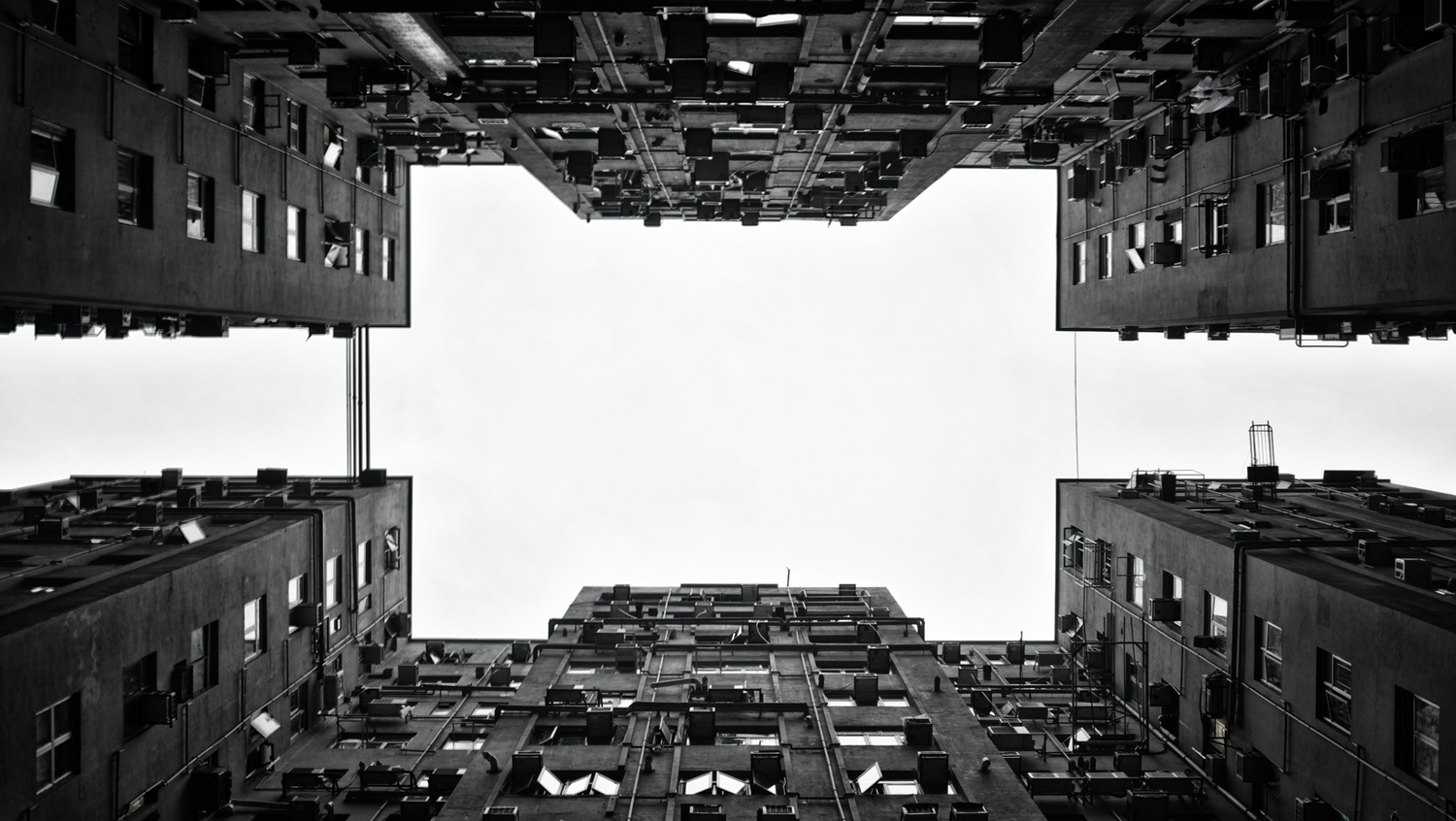
A space-syntax study of Chungking Mansions in Hong Kong — reading the famously dense, polyglot building as an adaptive spatial mechanism, and an architectural case with the qualities of a heterotopia.
The well-known Chungking Mansions, in Tsim Sha Tsui, Kowloon, is a building complex defined by its ever-changing interior urbanism. While its spatial structure has stayed comparatively stable across a long history, its internal program has been constantly transformed since the mansion was built in the 1960s. This research is an attempt to answer what those confrontational properties are, and how they sustain the continuously changing functions and activities — using the techniques of space syntax.
Along the way, beyond the data visualizations, the social issues behind these phenomena surfaced too. The work laid a foundation for my later topics: conflicts between government and public welfare, the issues raised by globalization, informal space inside formal urbanization, and the relationships between immigrants and enclaves in cities.
01 — Introduction to Chungking Mansions
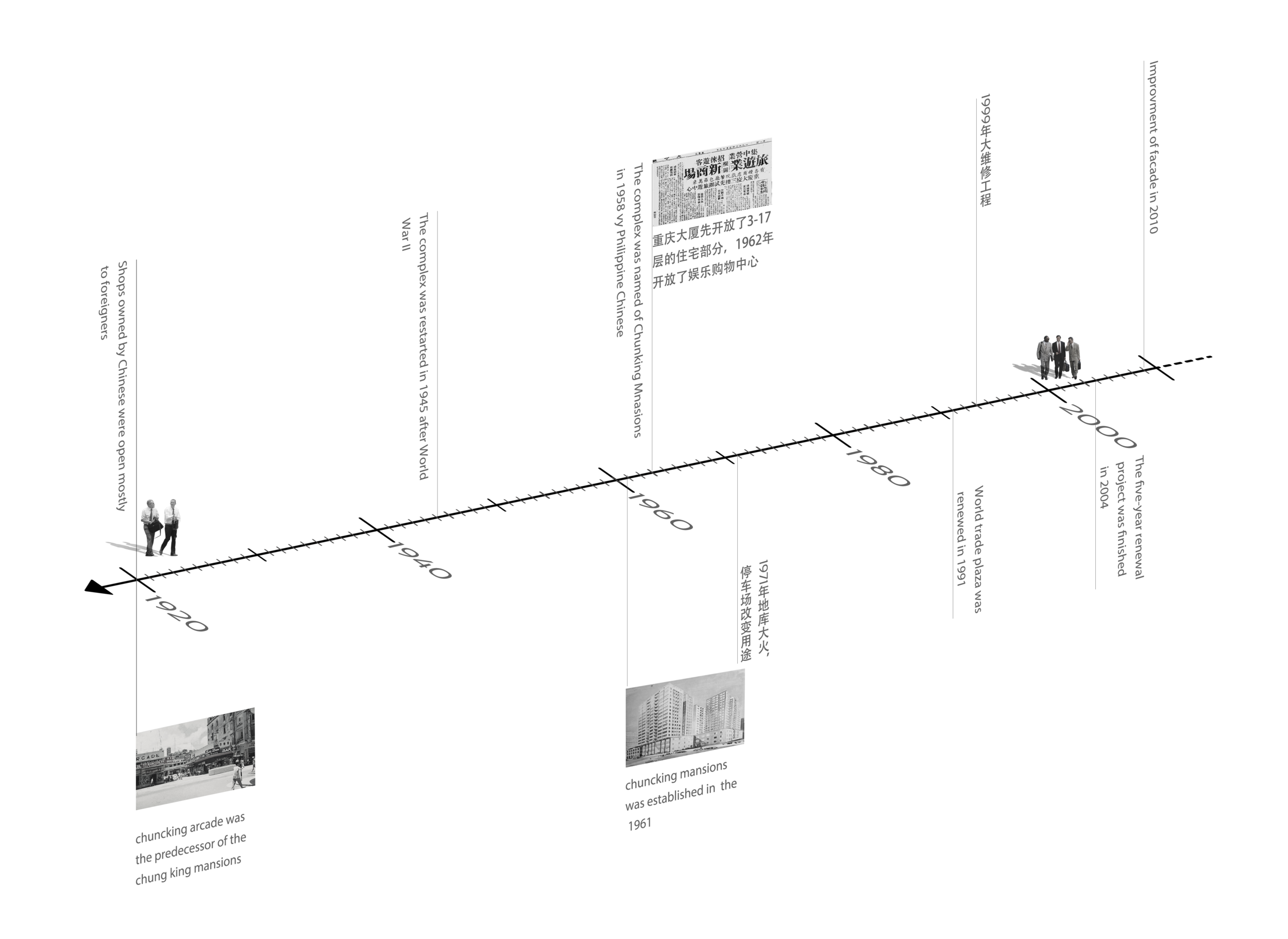
Hong Kong has always been a city where transnational migration is specific and peculiar. Its immigrants span all social classes and ethnicities, and ethnic minorities have several degrees of presence — most visibly as small-scale shops and restaurants. There is a clear distinction between the temporary and the permanent occupation of city space by minorities.
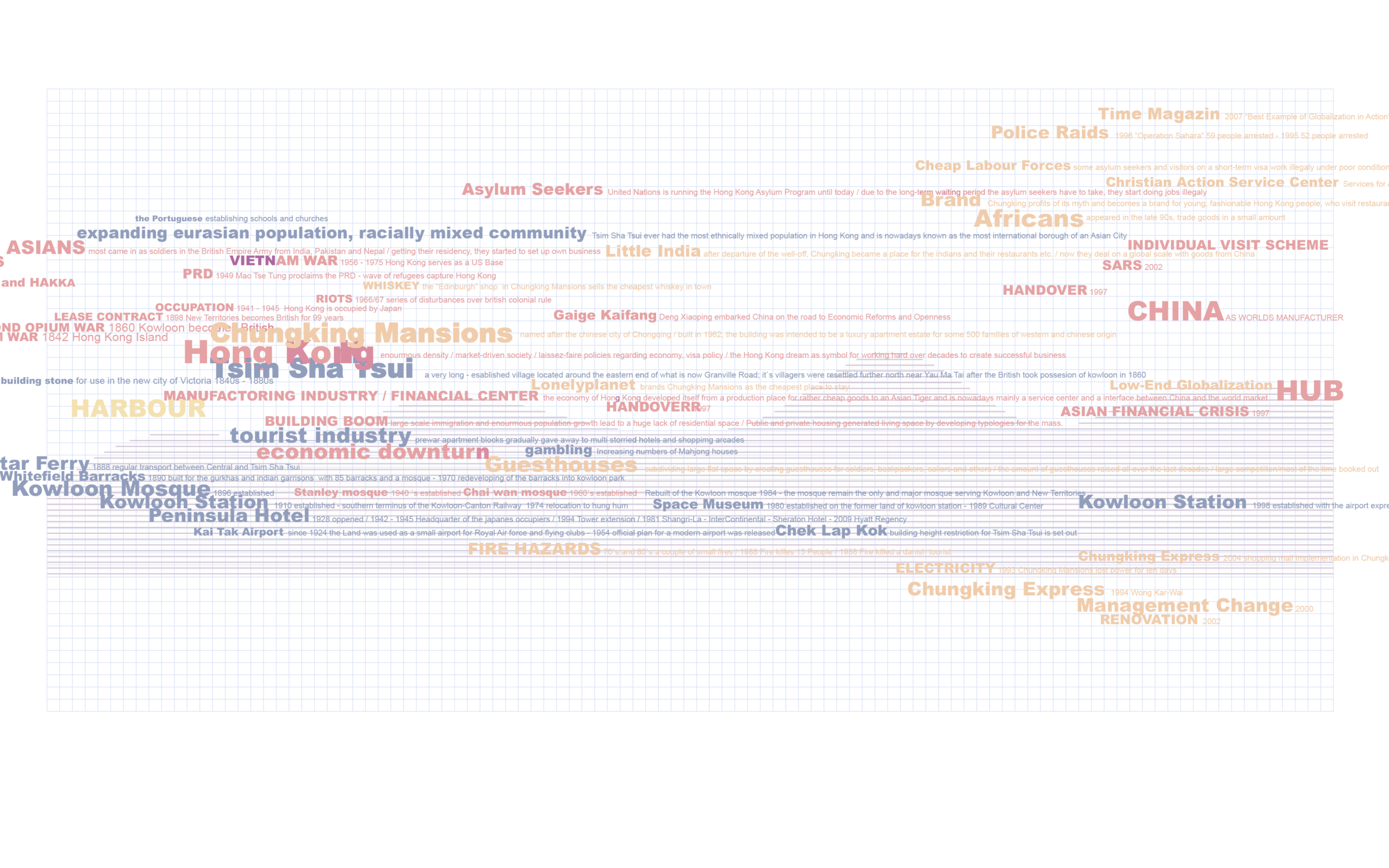
Given their scale and character, the two most remarkable cases are the Sunday Filipino gatherings in the Central Business District and Chungking Mansions in Kowloon. Both occupy and transform particular spaces in the city fabric to meet their needs, in a very pragmatic way.
The clearest difference between them: Chungking Mansions profits in ways we might read as informal or semi-informal, whereas the Filipino gathering is a social happening confined to its own community. Chungking Mansions is a permanent phenomenon; the gathering is limited to a single day of the week.
We concentrate on Chungking Mansions — a place where a “3D mega-structure” is occupied with an indescribable mixture and intensity: smells, sound, cluttered goods, and groups of traders, workers, inhabitants, backpackers, shoppers, and asylum seekers from Africa, India, and Pakistan to Europe. With endless corridors and labyrinthine plans harbouring spaces beyond view or reach, one has the impression of a place running by its own rules — a peculiar hybrid space at the border of legality. As iconic as it is, it becomes our point of focus, where migration, minority cultures, and (in)formal work meet in an architecturally remarkable mega-structure.
02 — Adaptive Mechanism: Interior Urbanism
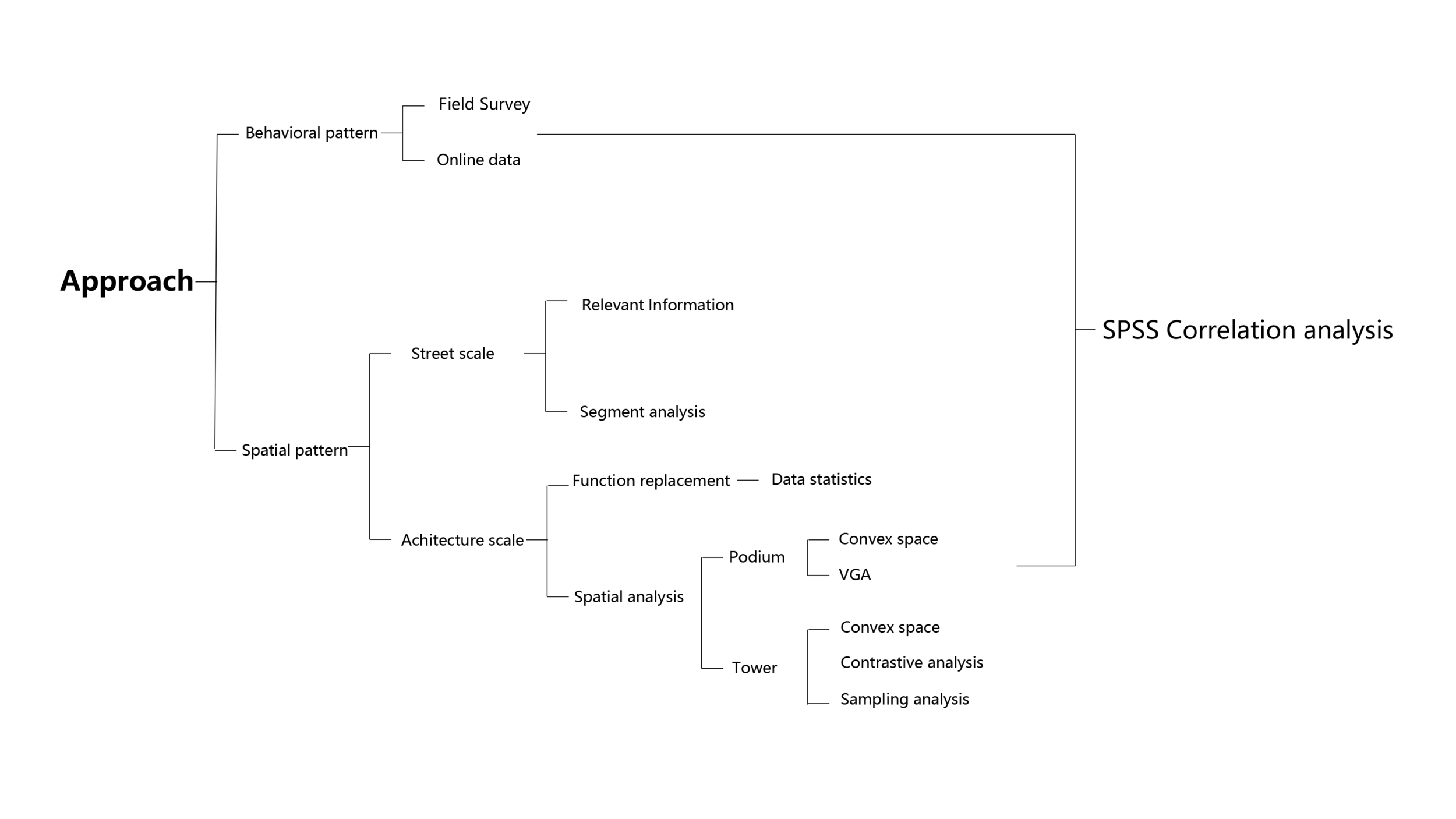
In light of the urbanization of architecture, the study analyses the spatial configuration of Chungking Mansions by building up convex space and an Isovist model. The configurational properties are then correlated with the programmatic distribution and human activity across different periods, in order to identify the functionally evolutionary laws — and the corresponding spatial mechanisms — within the complex.
Field studies found seven entrances. The podium's circulation is made of seven rectangular, ordered alleys, with five elevator cores affiliated to them; each core holds a pair of low-speed elevators, one serving odd and the other even floors. Ten staircases serve the towers — three reachable from the second-floor arcade — and two extra staircases in the alleys bind the two arcade floors together. The towers' circulation is a mix of punctual and corridor circulation.
That mix is typical of residential towers today; the real difference is the ground floor. In the 1960s the first floor was normally given to shops, parking, or services. In Chungking Mansions it became a large shopping arcade across three floors — perhaps the first building in Hong Kong to use the podium this way.
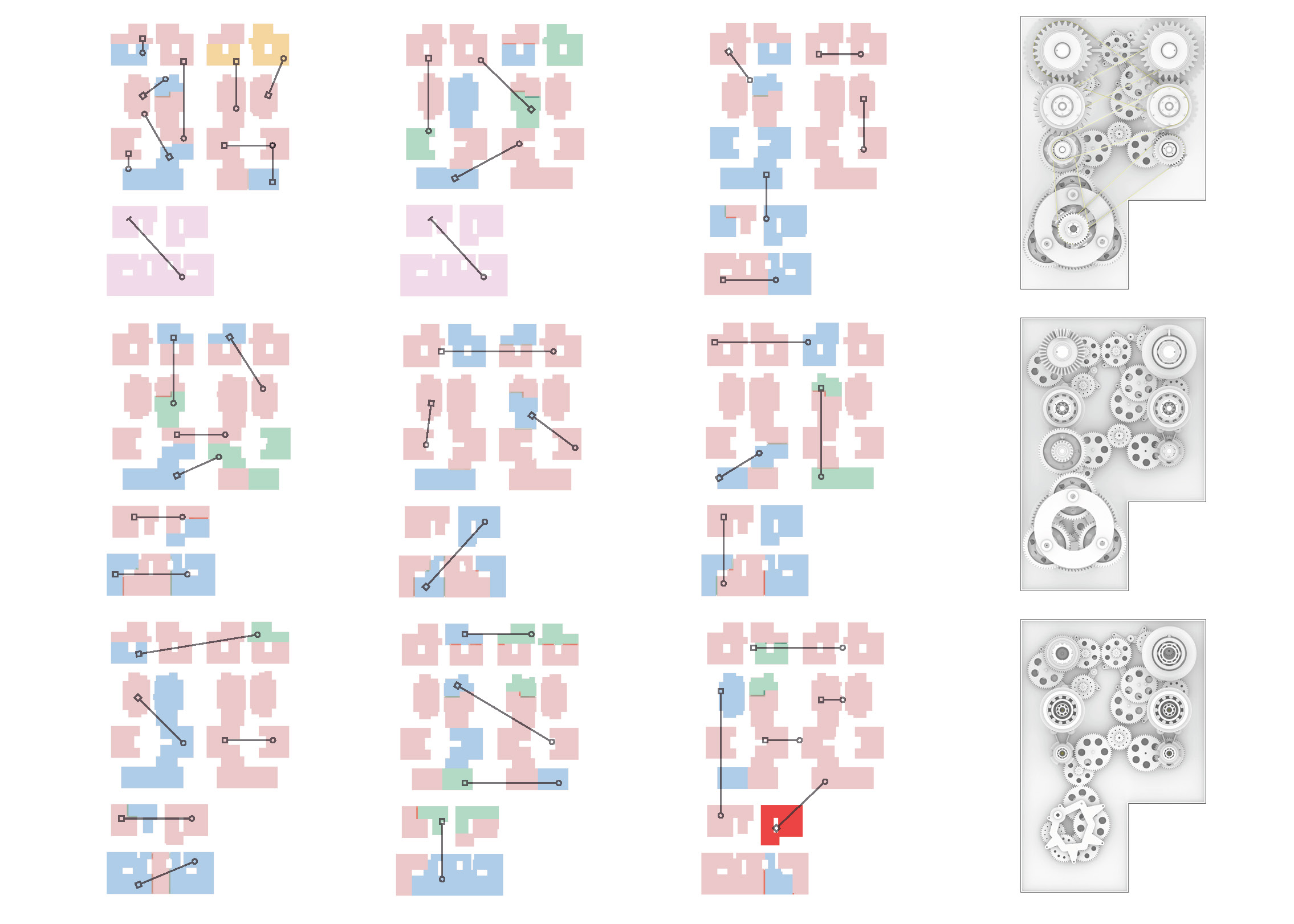
Read through convex space and the Isovist model, the spatial structure resembles Ernest Burgess's concentric-zone model: spaces near stairs and elevators act as the central parts of a city, while others behave like satellite cities — driving the development of an interior urbanism. This identifies the underlying adaptive spatial mechanism, and offers a reference for city complexes in high-density areas like Hong Kong.
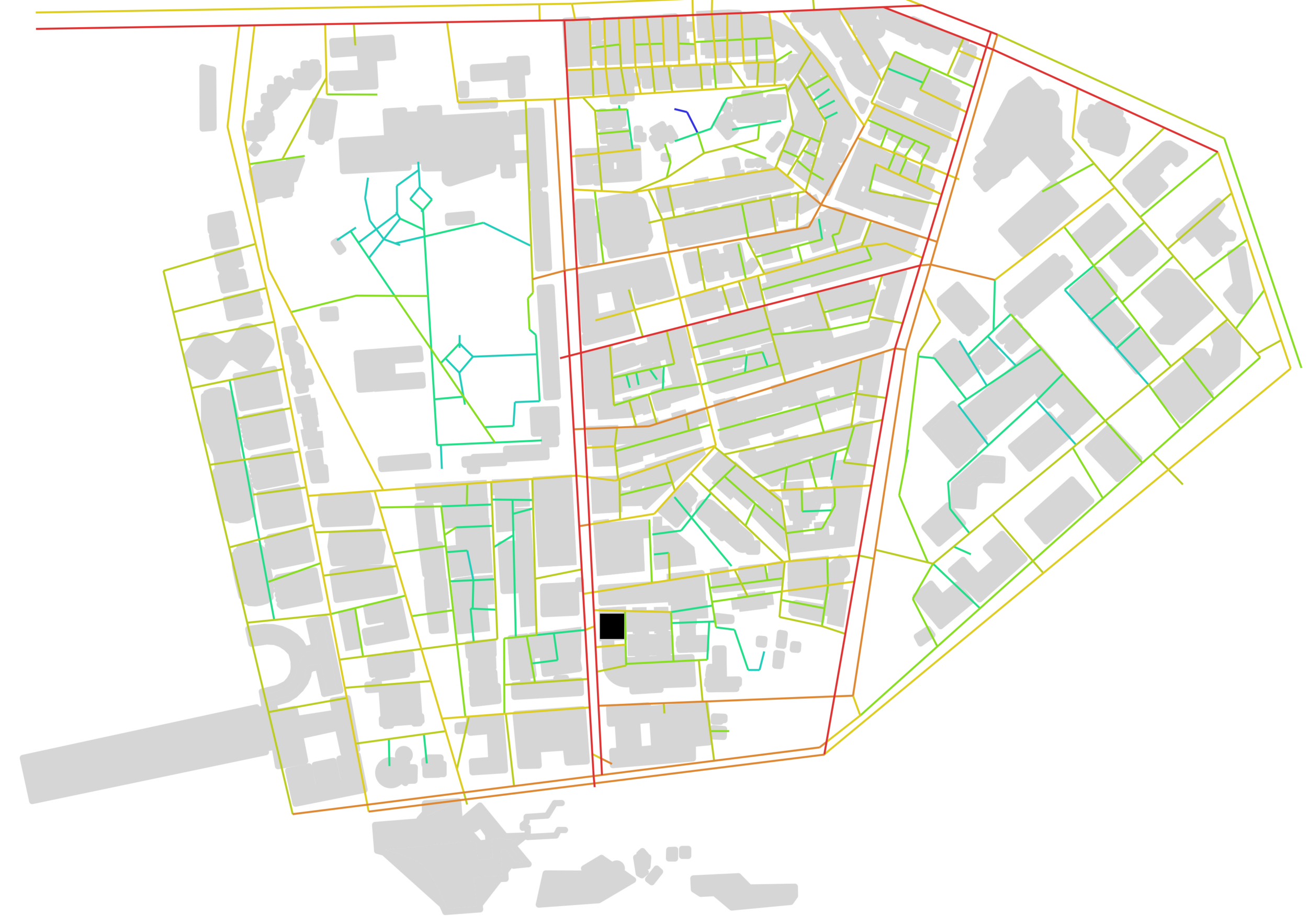
03 — Public Power in a Self-Sufficient System
Apart from earning rental yield, some investors took a proactive role, injecting new ideas into the property — the bulk floor space would be re-decorated as a mini shopping arcade and put on the market with a new strategy. Re-zoned as separate small units, it lured a surge of investment flow.
Centaline Property Agency
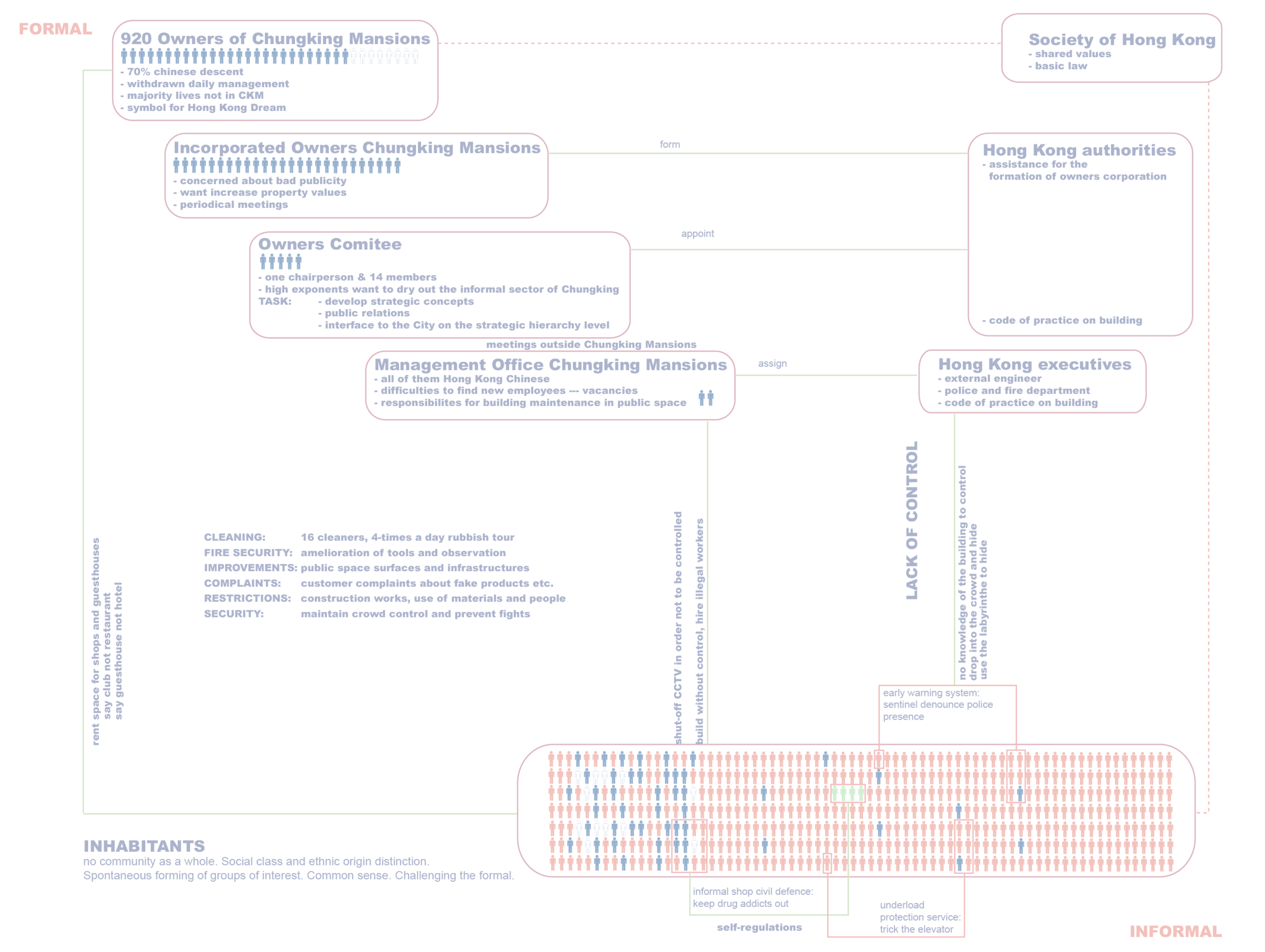
Chungking Mansions is an endless accumulation of functions and programs within an endless, labyrinthine mega-structure. Its self-sustaining, complementary, market-driven system is balanced in a highly fragile way — benefiting, in many ways, from informality.
The distinction between podium and towers is legible in the program. The shops sit in the two arcade storeys of the podium. The towers, originally residential, are now infiltrated with public and semi-public uses — guest-houses, restaurants, offices, and workshops.
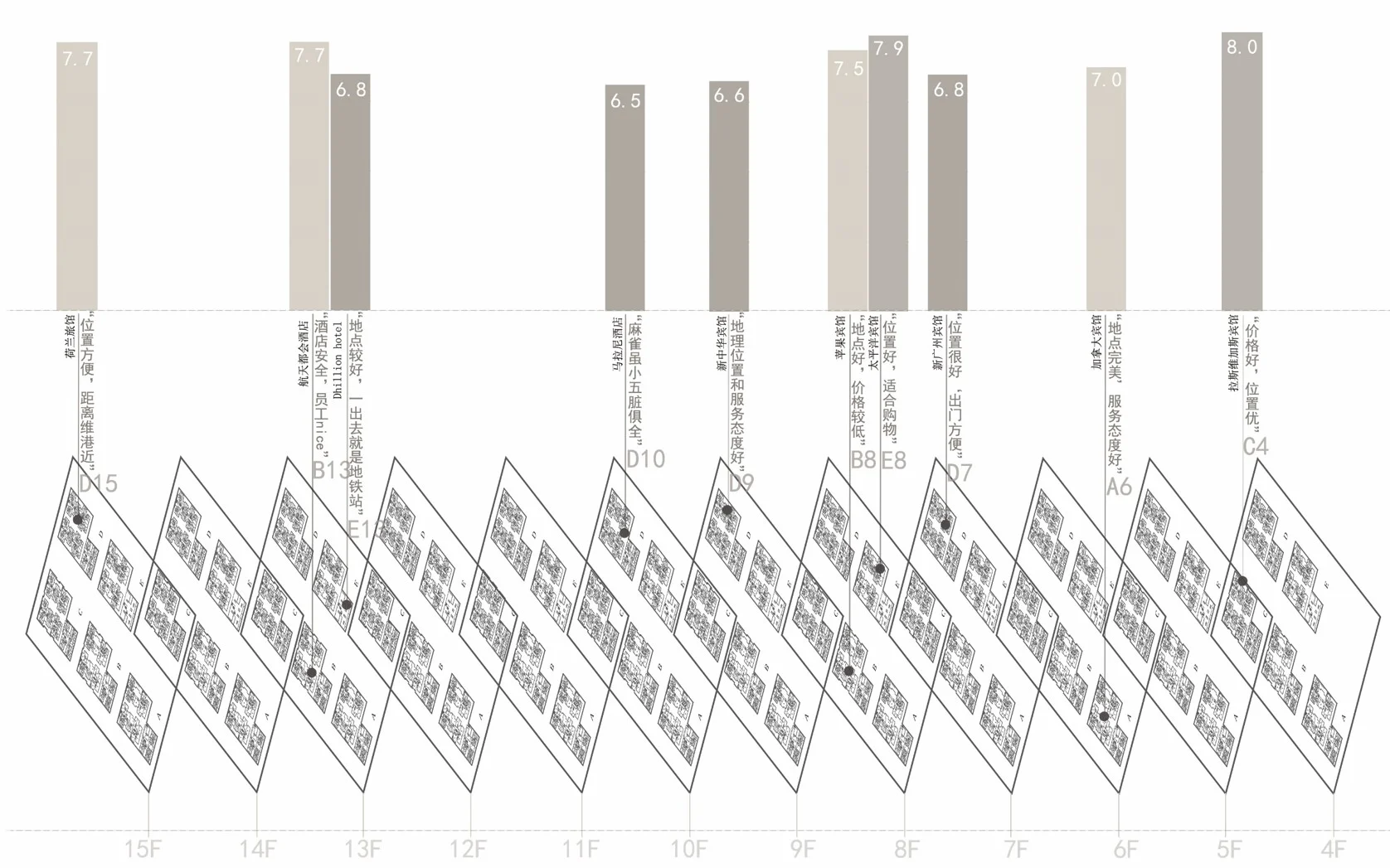
Chungking Mansions has its own open-door policy: anyone can come and go as they like. These flows can hardly be controlled, especially by day when there are thousands of people. There are none of the physical barriers or controls found in other buildings with ground-floor commerce.
A wide range of facilities serves these customers — one can find almost anything here, as across Tsim Sha Tsui — in part because the building sits largely outside the government's general control.
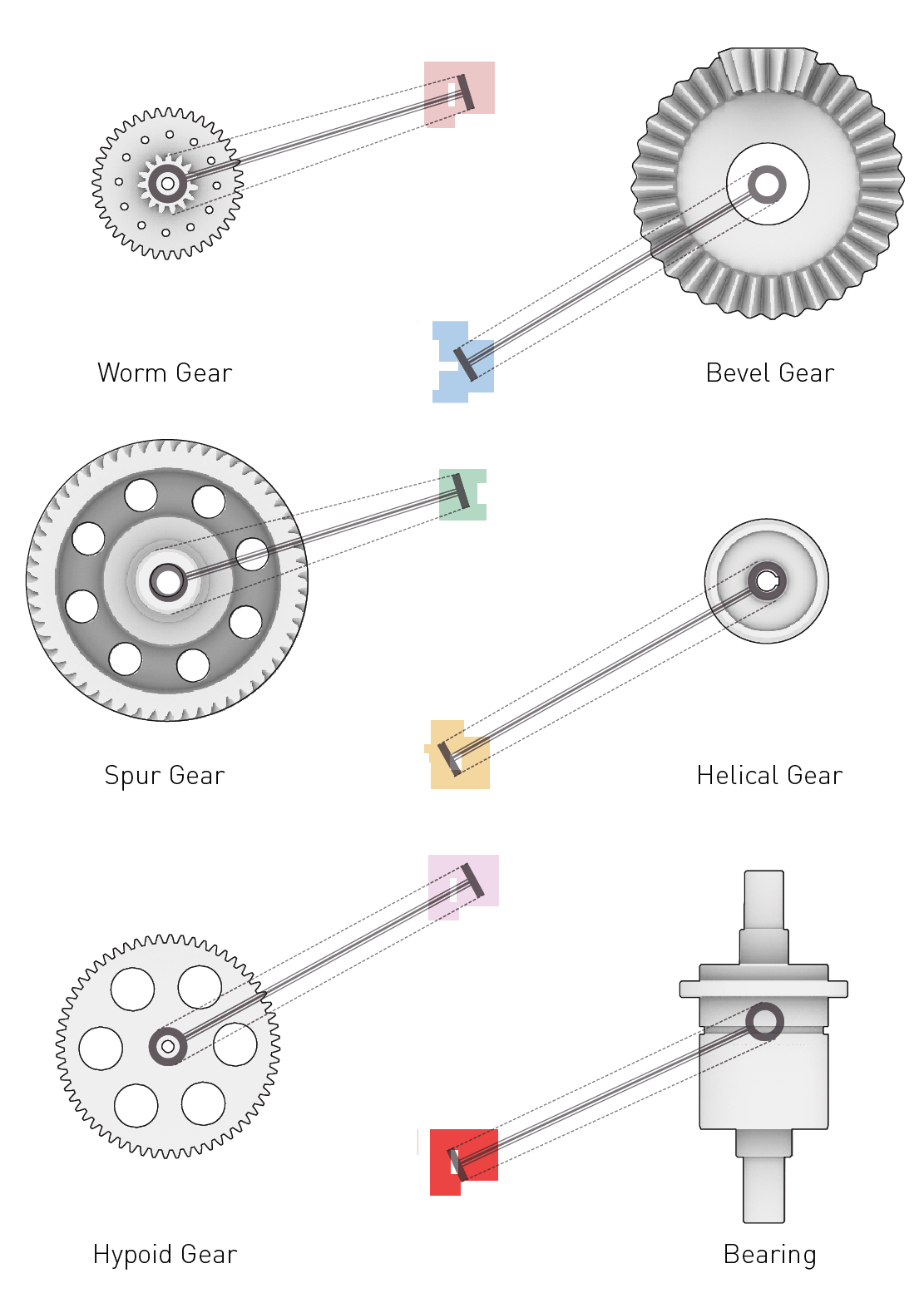
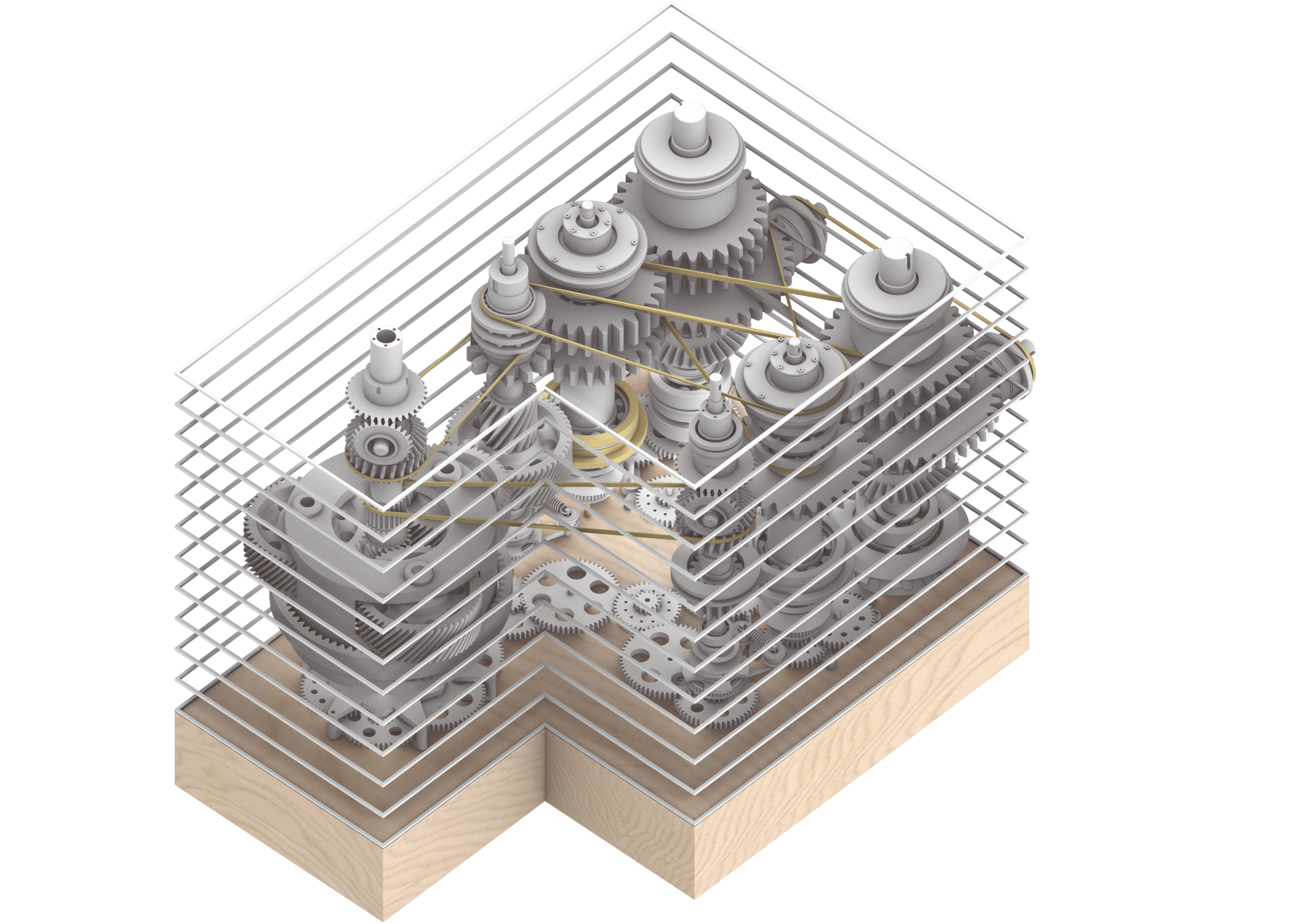
To explain how a self-sufficient system runs itself, I used a gear system as a model: different types of gears stand for the different spaces on each floor's plan, while the bearings represent the elevators in the four towers.
By contrast with the flexible, varied spaces of Chungking Mansions, many public spaces in mainland China have been turned into giant, out-of-scale, costly monuments — displays of the government's political power that ignore the need for humane, accessible, everyday civic space. In my “Anti-walling rules” project, the site once hosted government agricultural exhibitions and, after the founding of the PRC, events of the Cultural Revolution; its layout was rigidly symmetrical to emphasize centralized authority. In response, I designed a transparent box at the centre, full of tiny spaces, to invite more activity.
04 — Formality vs. Informality
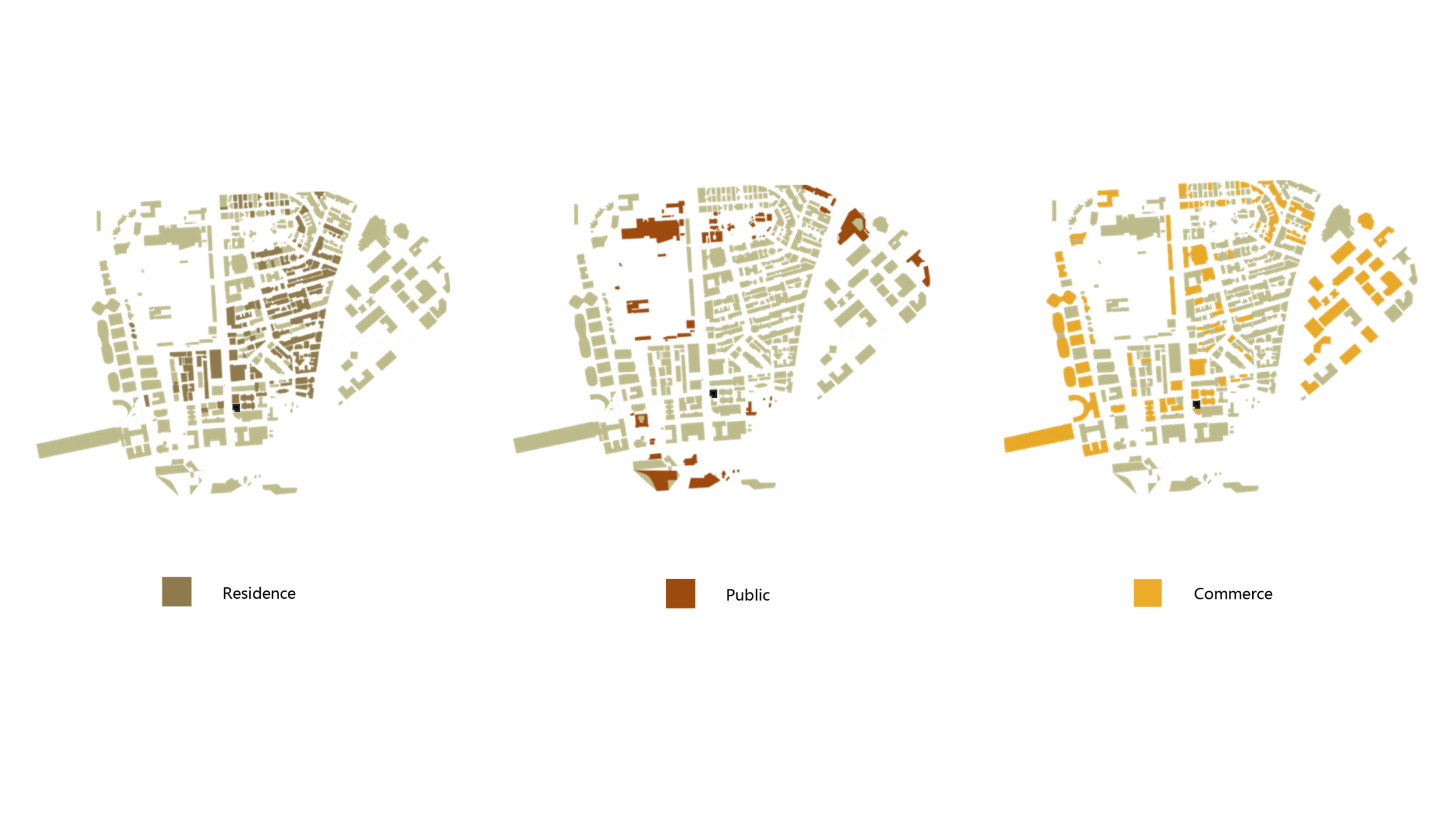
Mixed use is nothing new in Hong Kong — it's there in the traditional shop-house. But post-war podium-tower development drew a much sharper line between public and private program, even if that line is often evaded thanks to the ambiguity of lease conditions.
Where most planned podium-tower developments confine commercial program to the podium and residential program to the towers, Chungking Mansions blurs that division. Commercial uses appear throughout the supposedly all-residential towers: beyond the cheap hostels and ordinary flats, many units become restaurants, private clubhouses, factories, offices, and warehouses. The podium, meanwhile, is strictly commercial. This blurred boundary lets a high level of activity penetrate the building, promoting the social interaction that underpins the Mansions' socio-cultural self-sufficiency.
In China, cities are densifying and sprawling strikingly fast. I pay particular attention to collective forms of living, which often include informal settlements (slums). Though called “informal”, these are often spontaneous communities with a formal or quasi-formal social, economic, political, and civic structure — and they can be more flexible and resilient than their formal counterparts. In my first project, “Homo Ludens”, the site is a bridge dynamited and repaired during the war; it kept serving local residents afterward, and will soon be demolished. Reimagined as a heterotopia with informal functions, it absorbs people's desires and breaks time and space into fragments — a place to escape the burdens of urban life for a while, and find a moment of physical and mental comfort.
05 — Low-End Tech in the Global Market
I define 'low-end globalization' as the transnational flow of people and goods involving relatively small amounts of capital and informal, sometimes semi-legal or illegal transactions, commonly associated with the developing world.
Gordon Mathews, Ghetto at the Center of the World
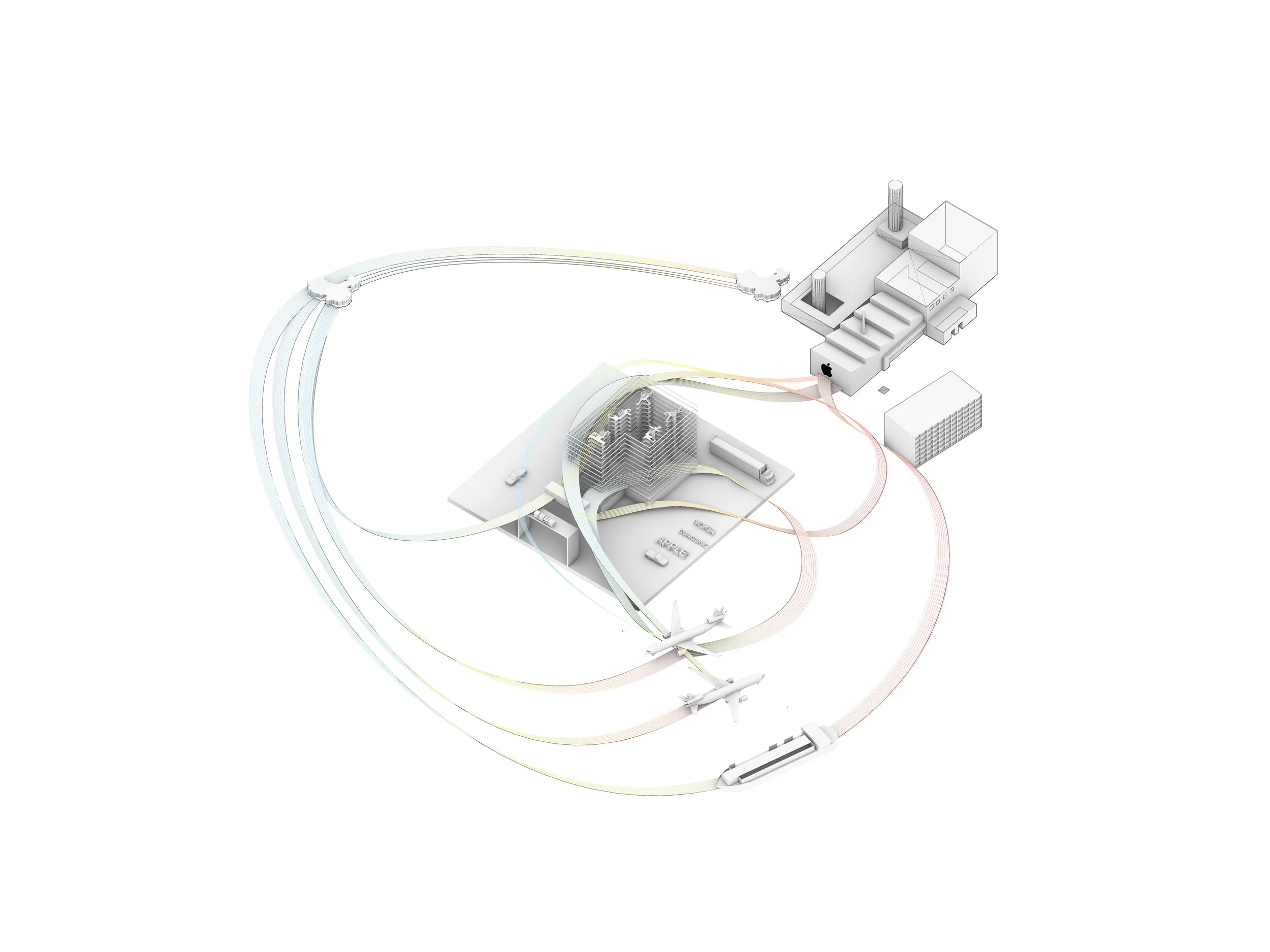
The mobile-phone business is a big deal in Chungking Mansions. Traders from all over the world — but mostly from Africa — come to buy phones, carry them home, and sell them there. This flow is just one example of low-end globalization.
The main reason is that China is a powerhouse for low-end manufacturing. Goods made in China, mostly in the Pearl River Delta, are cheap; and because most countries in the developing world have no electronics industry of their own, China becomes their powerhouse too. These products move out through Hong Kong, via the airport and the port.
Today's socioeconomic dislocations can't be fully understood through the usual language of poverty and injustice. Under globalization, foreign capital rushes to wherever manufacturing is cheaper — a process that can be destructive to local ecosystems and to workers in traditional industries. Its impact is a kind of expulsion: shutting traditional workers out of jobs, livelihood, and even the biosphere that makes life possible. I see real potential in bringing these issues forward through augmented visualization of unemployed workers and their changing livelihoods.
Recognition
Presented at the 2016 International Symposium on Space Syntax in China.