Archive — Design studio
Typological Mutation
A heterotopic antique market for Liwan, drawn from the logic of the Chinese garden
2016 Fall · Liwan, Guangzhou
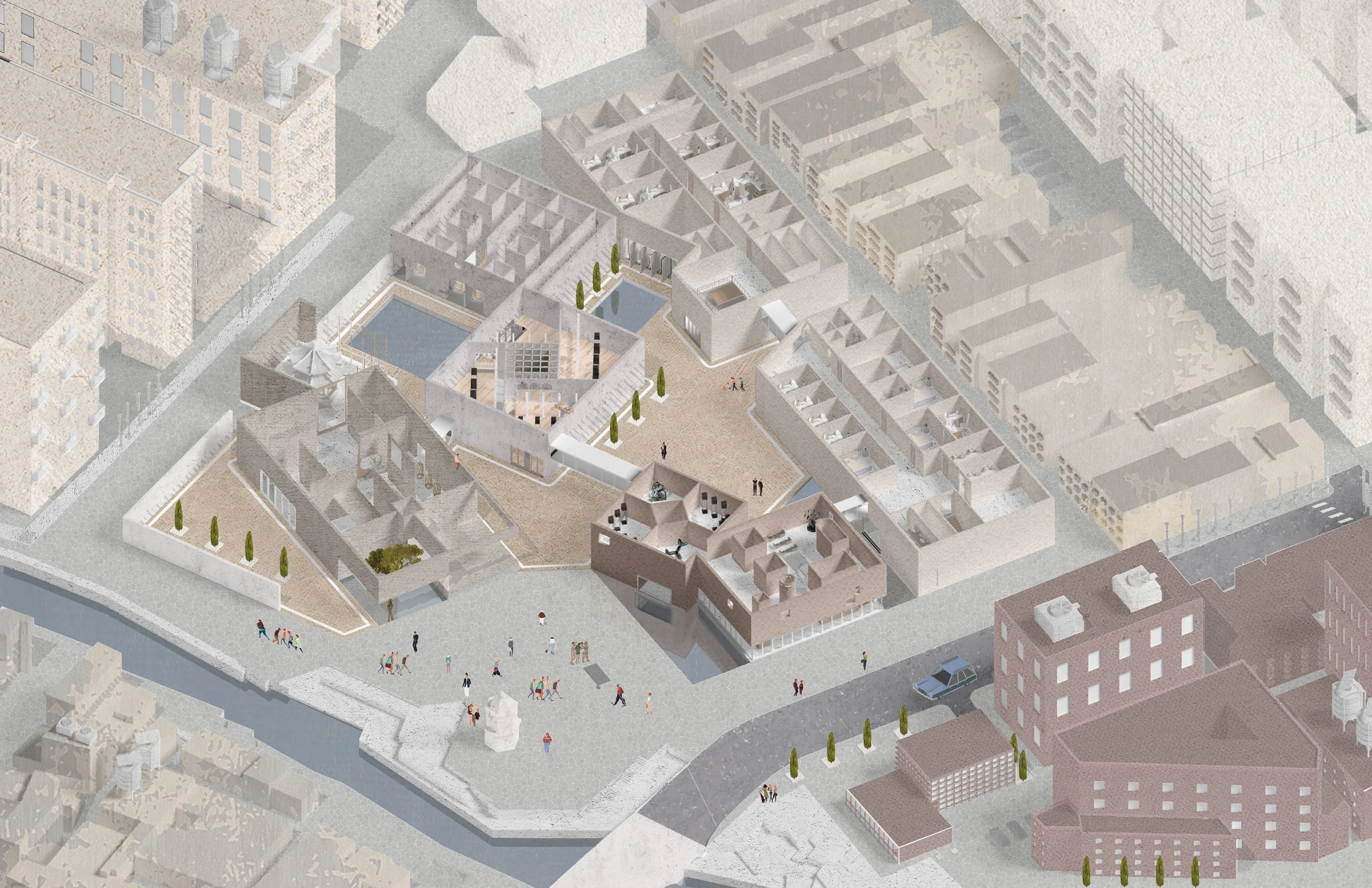
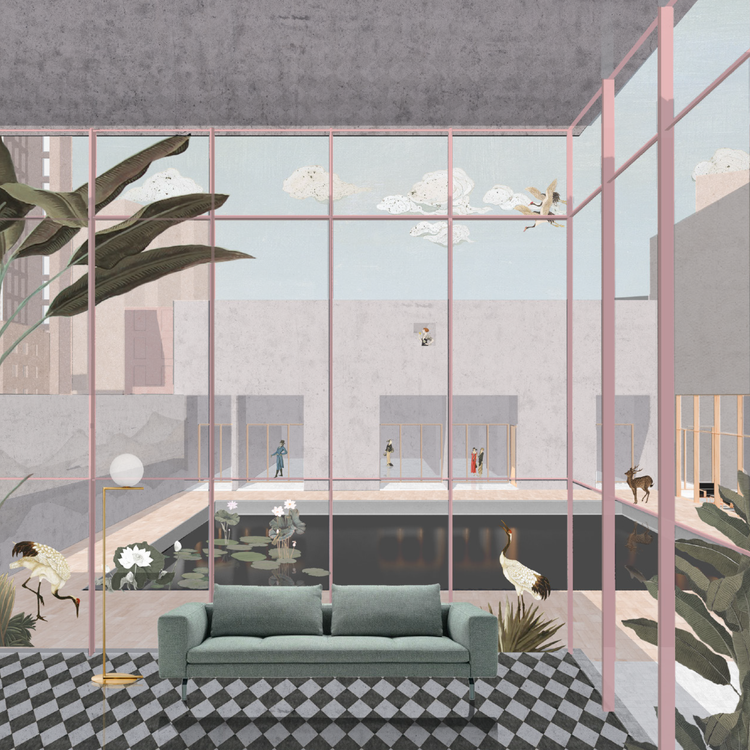
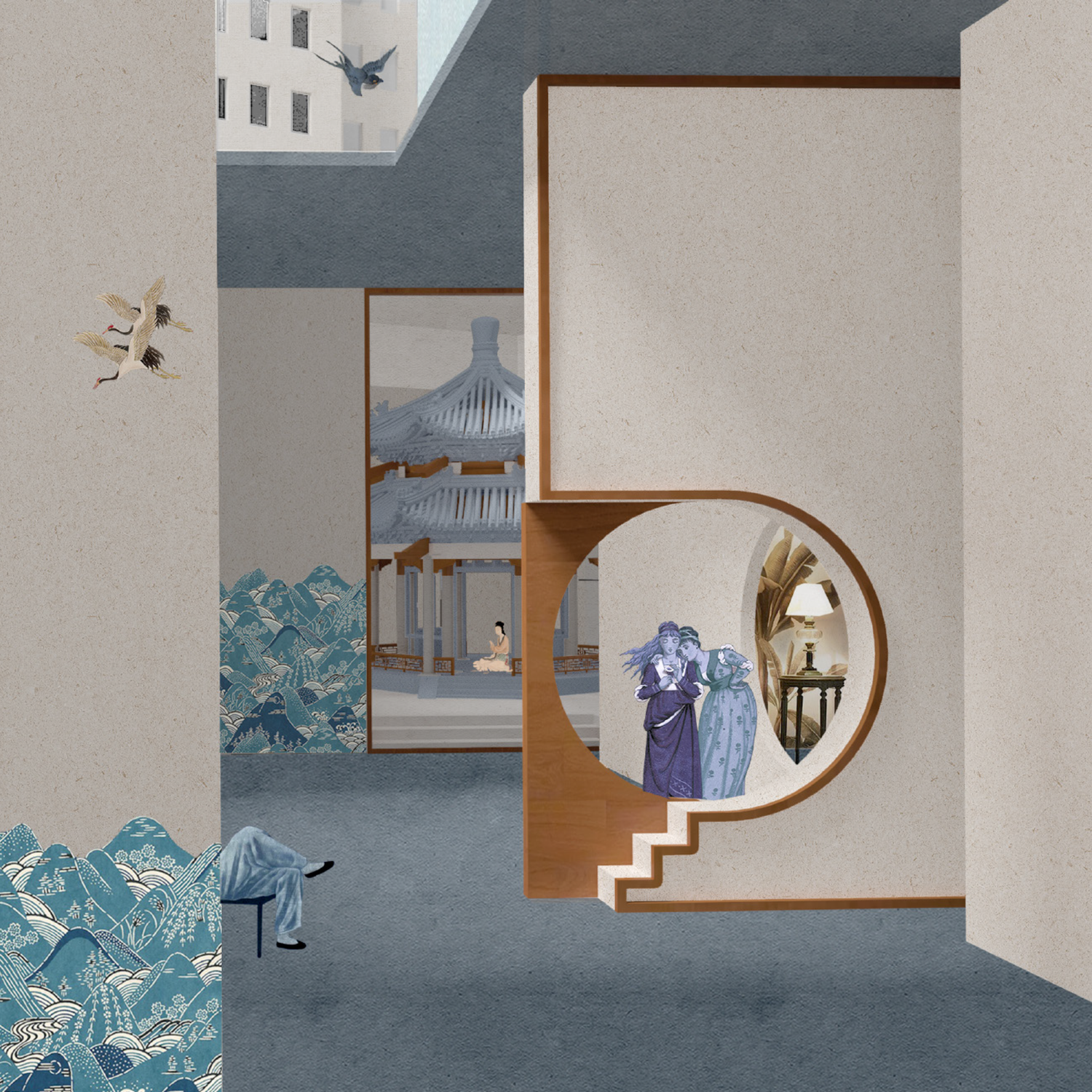
Typological mutation is the organising principle of this studio project — a response to the dense, layered context of the Liwan district in Guangzhou, where the classic comb-like texture of southern Chinese architecture grinds against fast modern urbanisation. The district's antique market becomes the site: a hybrid of many cultures and periods, read as a heterotopia, and rebuilt as a set of collaged boxes on the plan of a traditional Chinese garden.
Typological mutation is the organising principle of this project — a response to the dense, layered context of the Liwan district in Guangzhou. Liwan carries the classic texture of southern Chinese architecture, a fabric laid out like the teeth of a comb. And like much of the city, it has urbanised fast, until modern development now grinds against the historic zones it grew out of.
Its antique market is where that friction becomes legible — a hybrid of cultures from many periods, a heterotopia in which different contexts and different times are all present at once, inside a single building. The market is itself a hybrid, drawn straight from the complexity of Liwan.
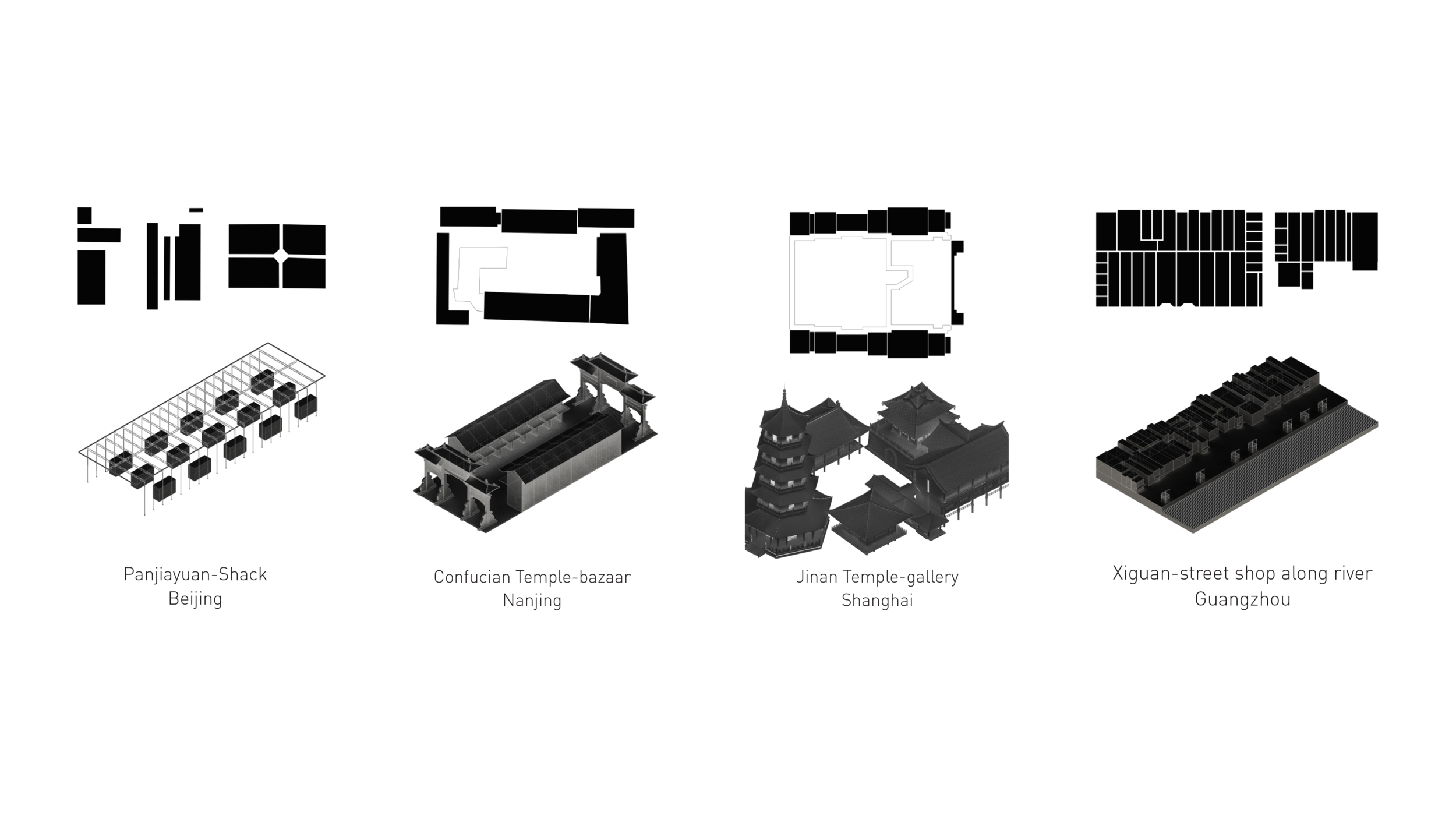
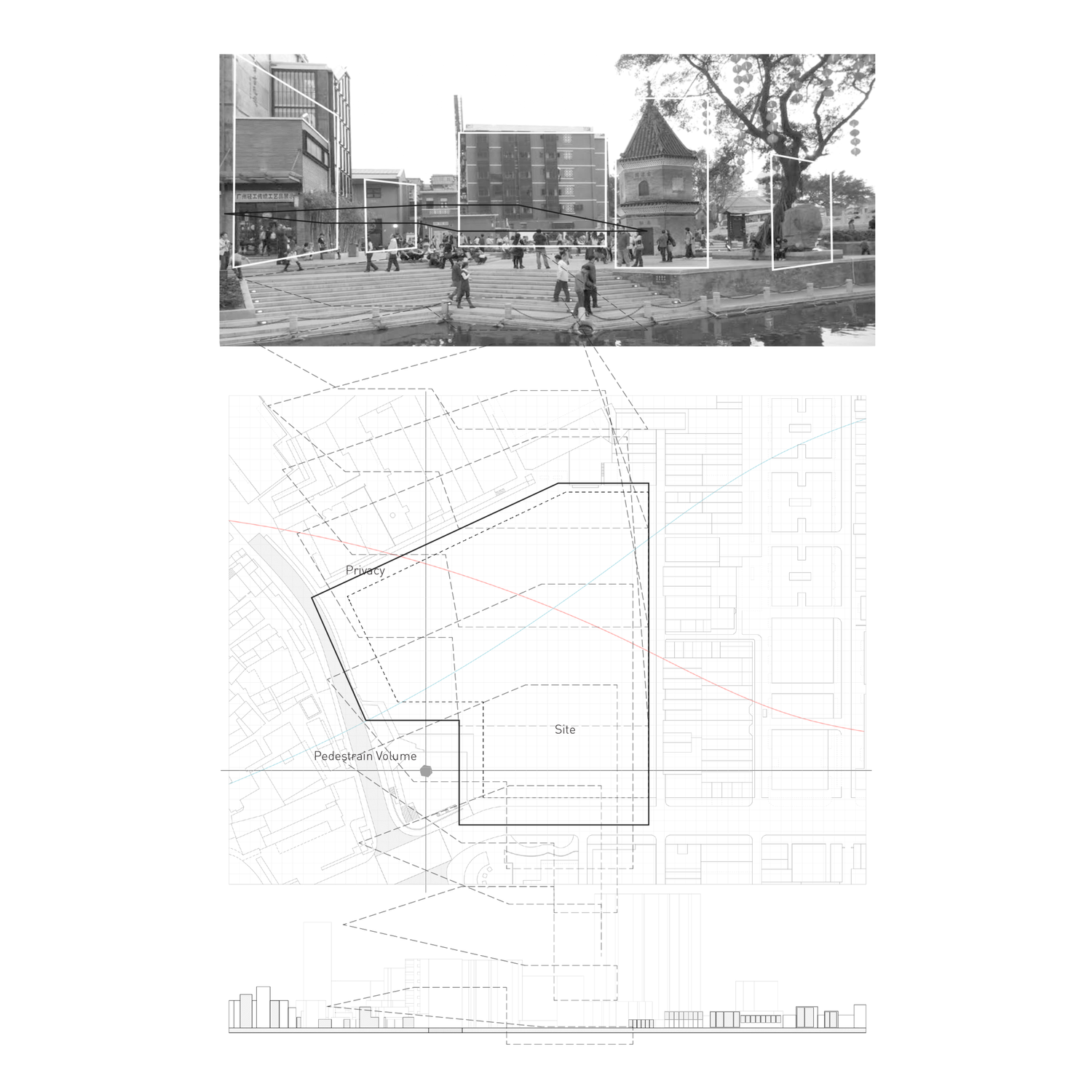
To work with that, the prototypes of the antique market are studied closely, and the layout of the traditional Chinese garden is brought onto the site — a way to knit together the river along its edge, the dense neighbourhood, and the modern high-rises, and to open up the varied spaces a heterotopia needs.
Layout of the traditional Chinese garden
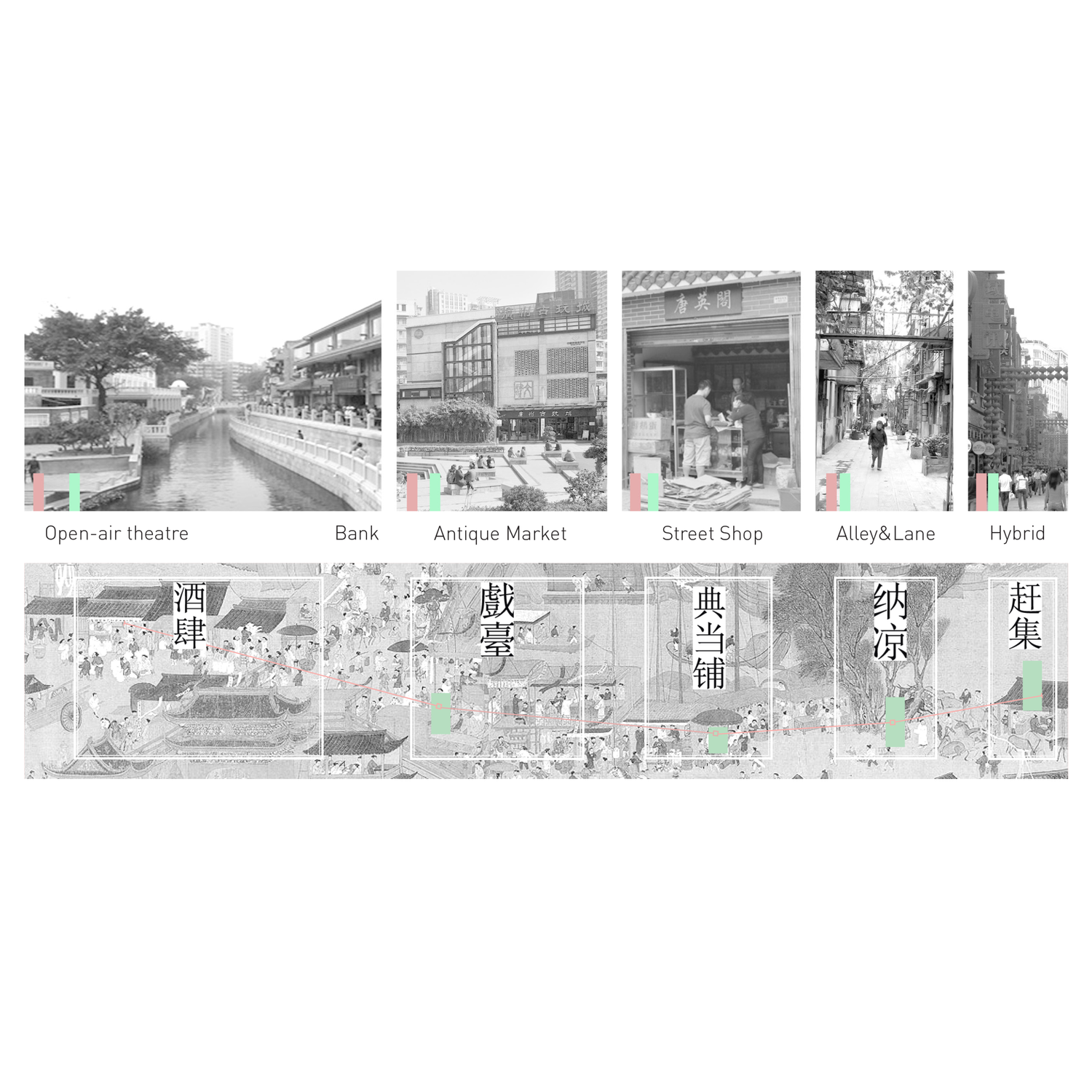
After studying the site, a set of functional prototypes is drawn from it — open-air theatre, bank, market, street shop, alley, and hybrid buildings — taken both from the history of the area and from how it works today.
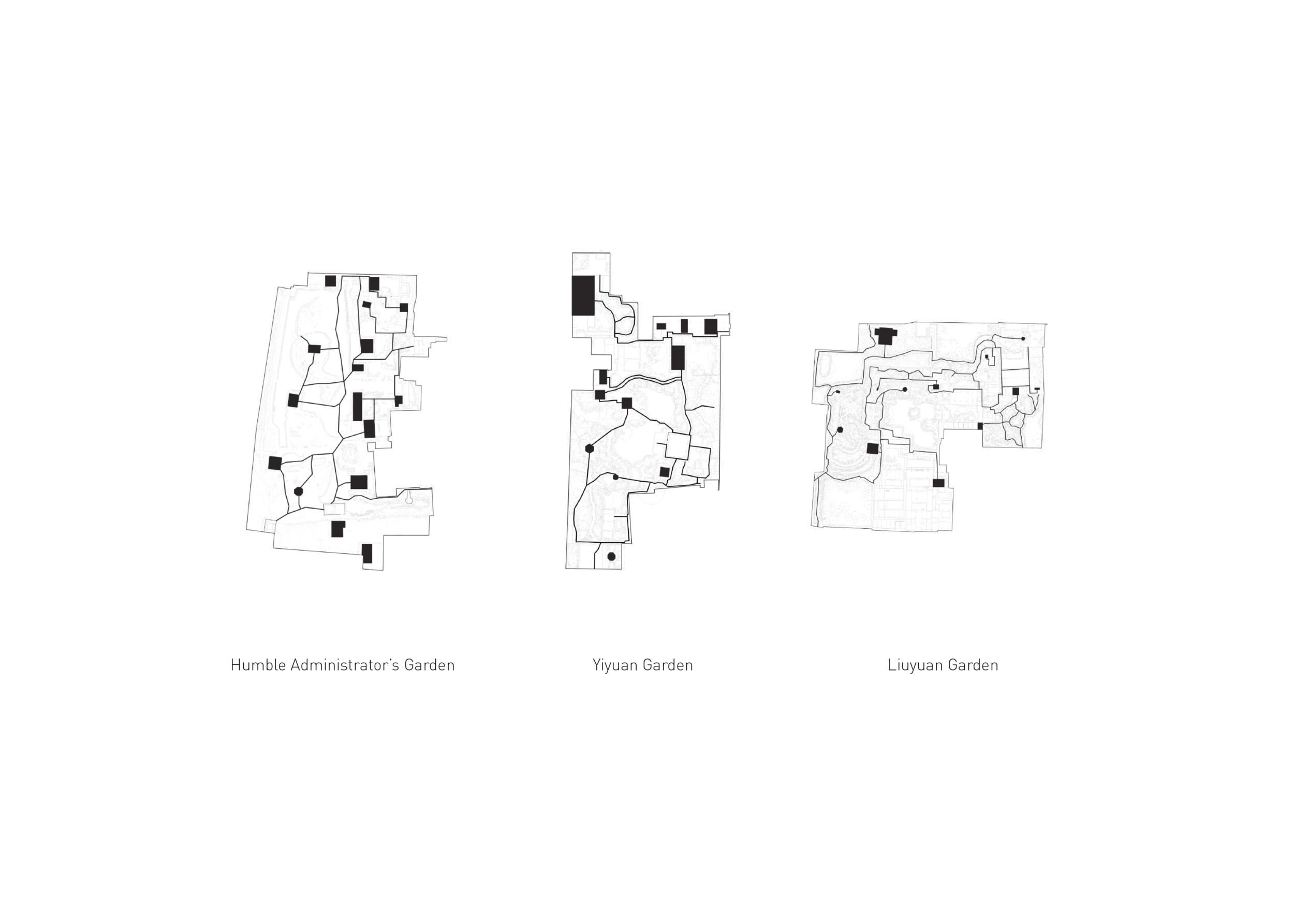
The architectural form of the Chinese garden is a good translation of regularity and irregularity — a distinction that matters a great deal when you are arranging a set of boxes against a context this complex. Following the garden's rules, the boxes — the pavilion, the street shop, and the rest — are connected in ways that are at once ordered and disordered.
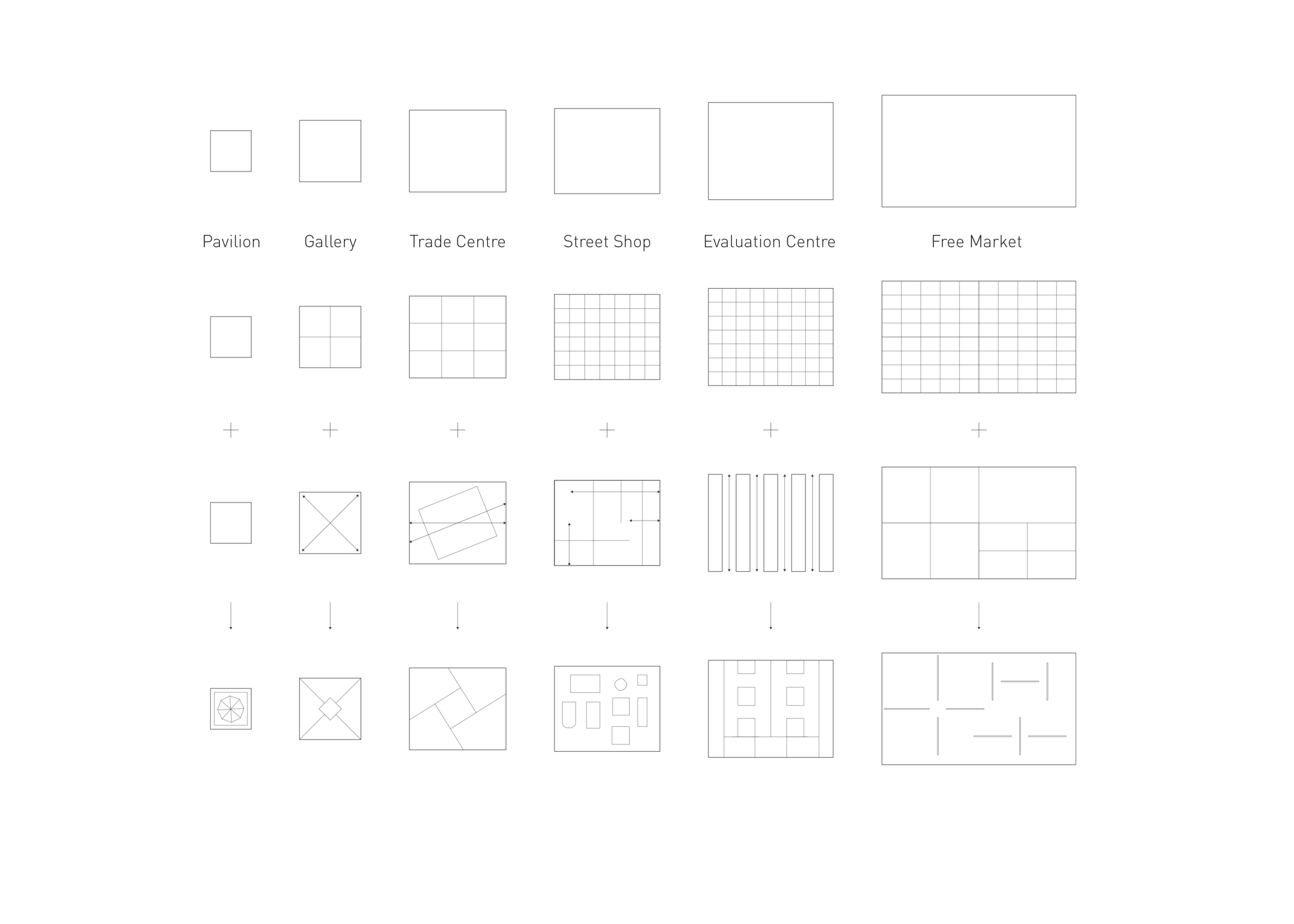
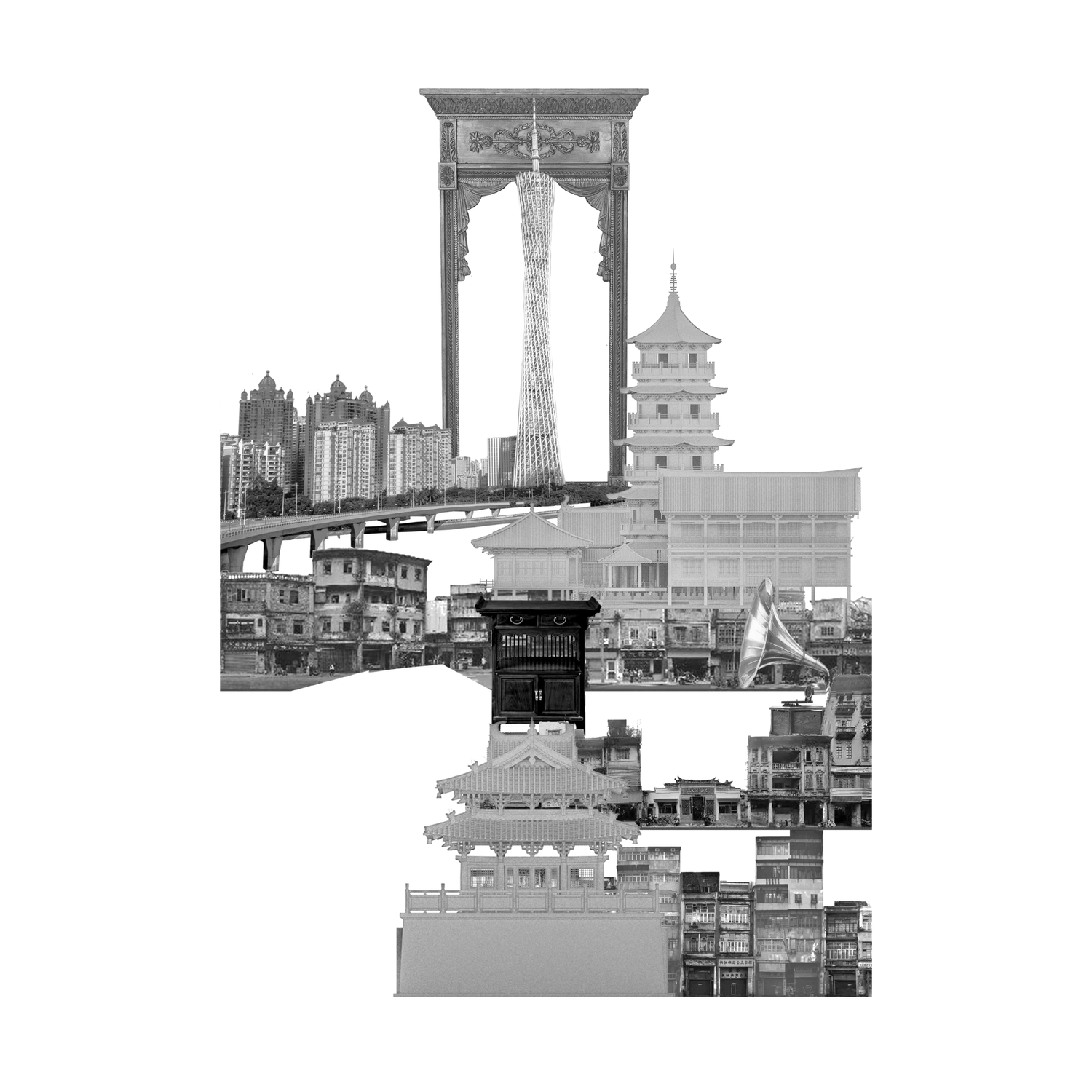
Collage boxes
The project sets out to explore how an architecture grounded in historical, typological and social context can act as a link, and a representation, for a new urban community in an area defined by divergence.
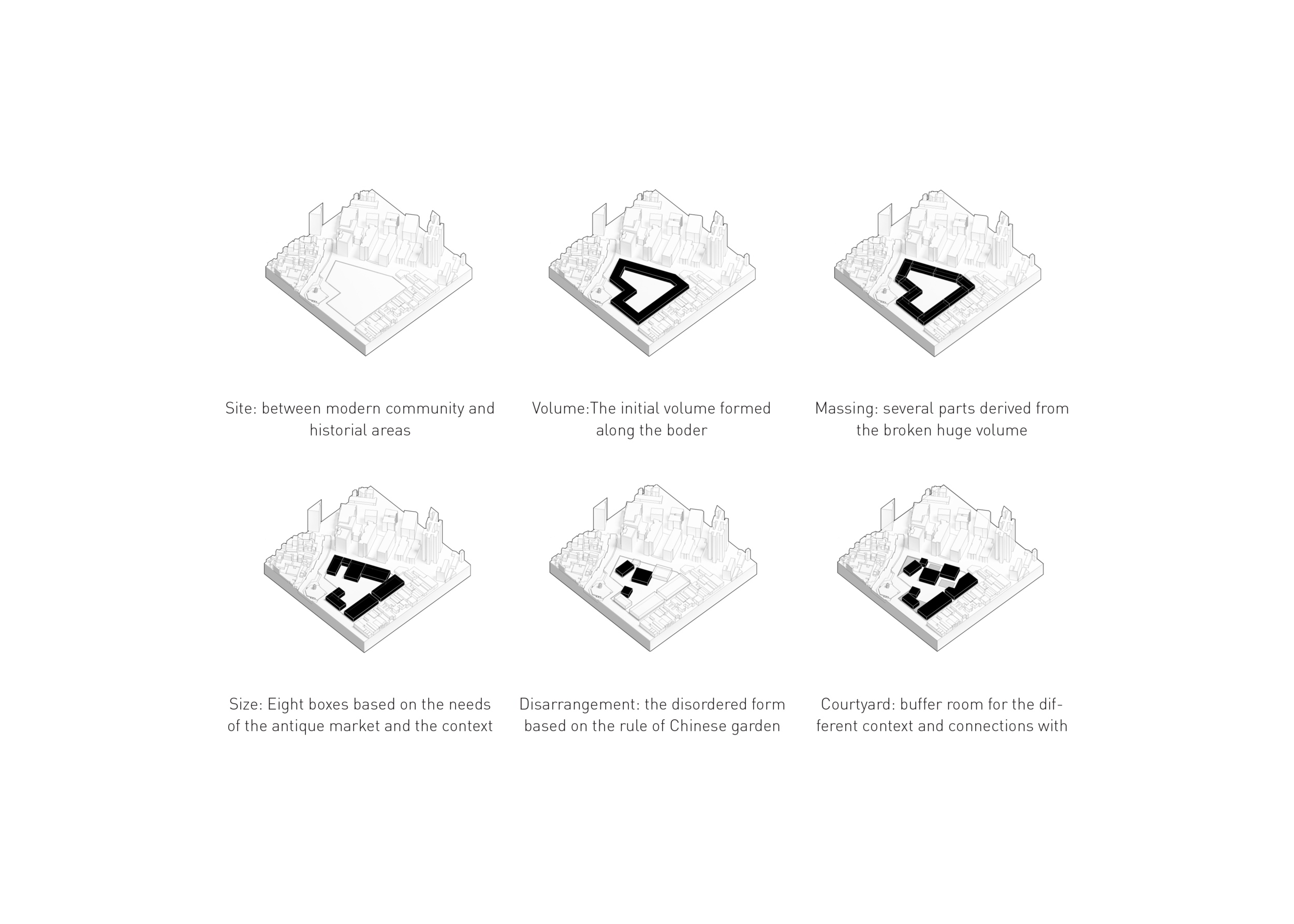
By setting the market apart from its context, the design creates a confrontation — and, through it, a strengthened identity: the antique market in dialogue with the city, architecturally and socially. The aim is a dialectical architecture, one that belongs to the community of the city and yet insists on its own individuality, holding the tension between the city's differences. To build a new market inside the existing city, in the field of tension between centre and periphery, is to try to redefine the architecture of the city through a reinvestment in form — a rediscovery and reinterpretation of the city's defining features, through articulated boundaries and definite architectural forms.
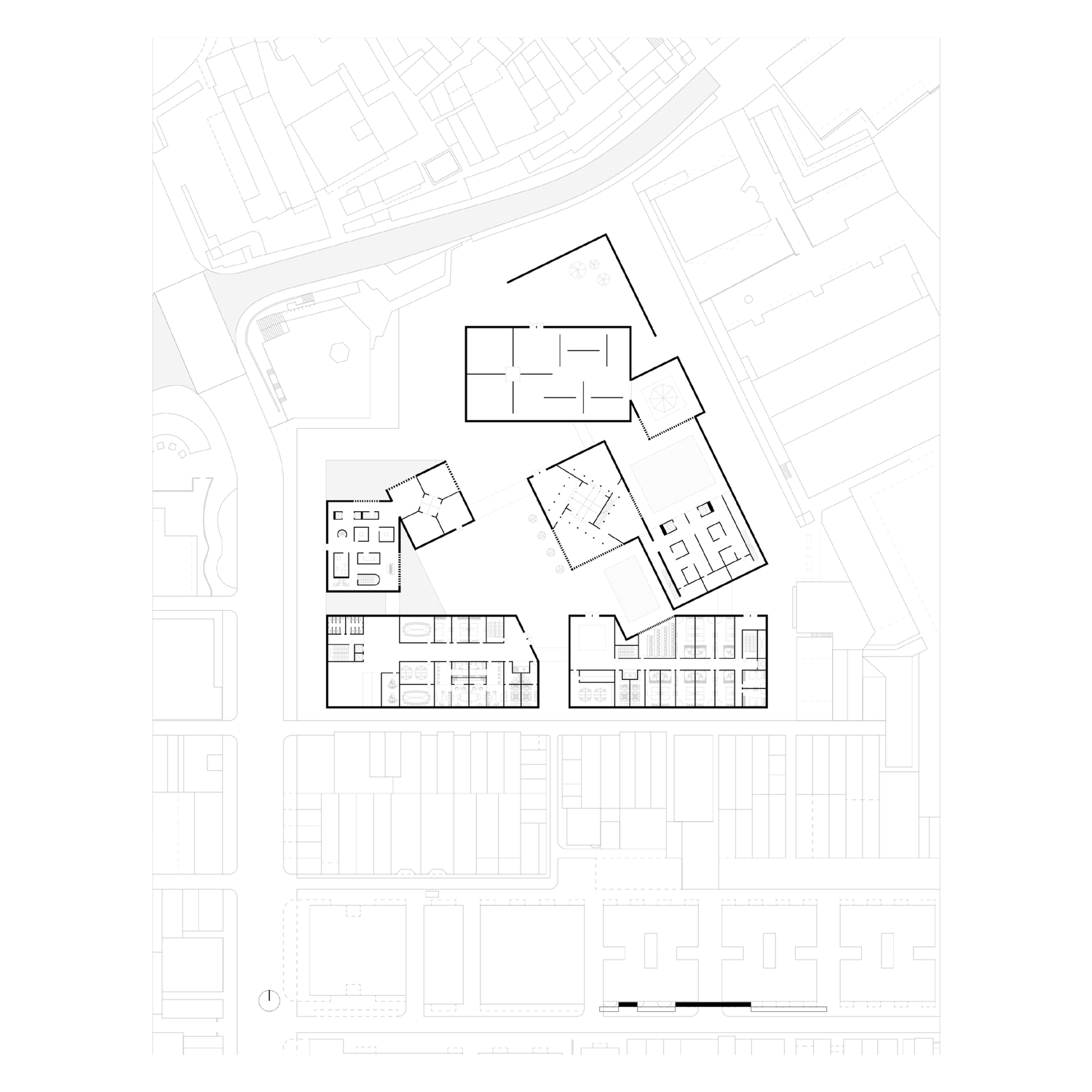
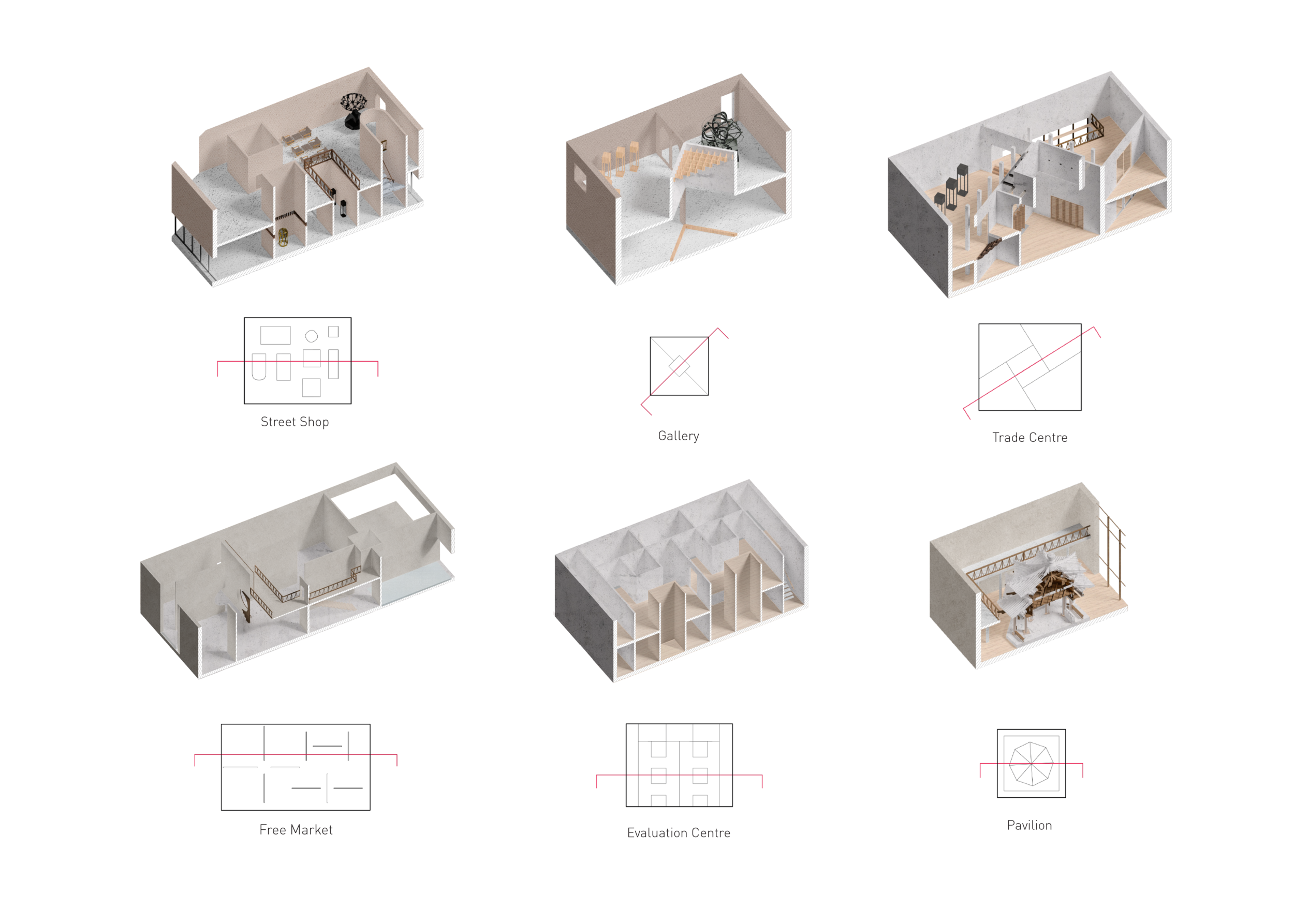
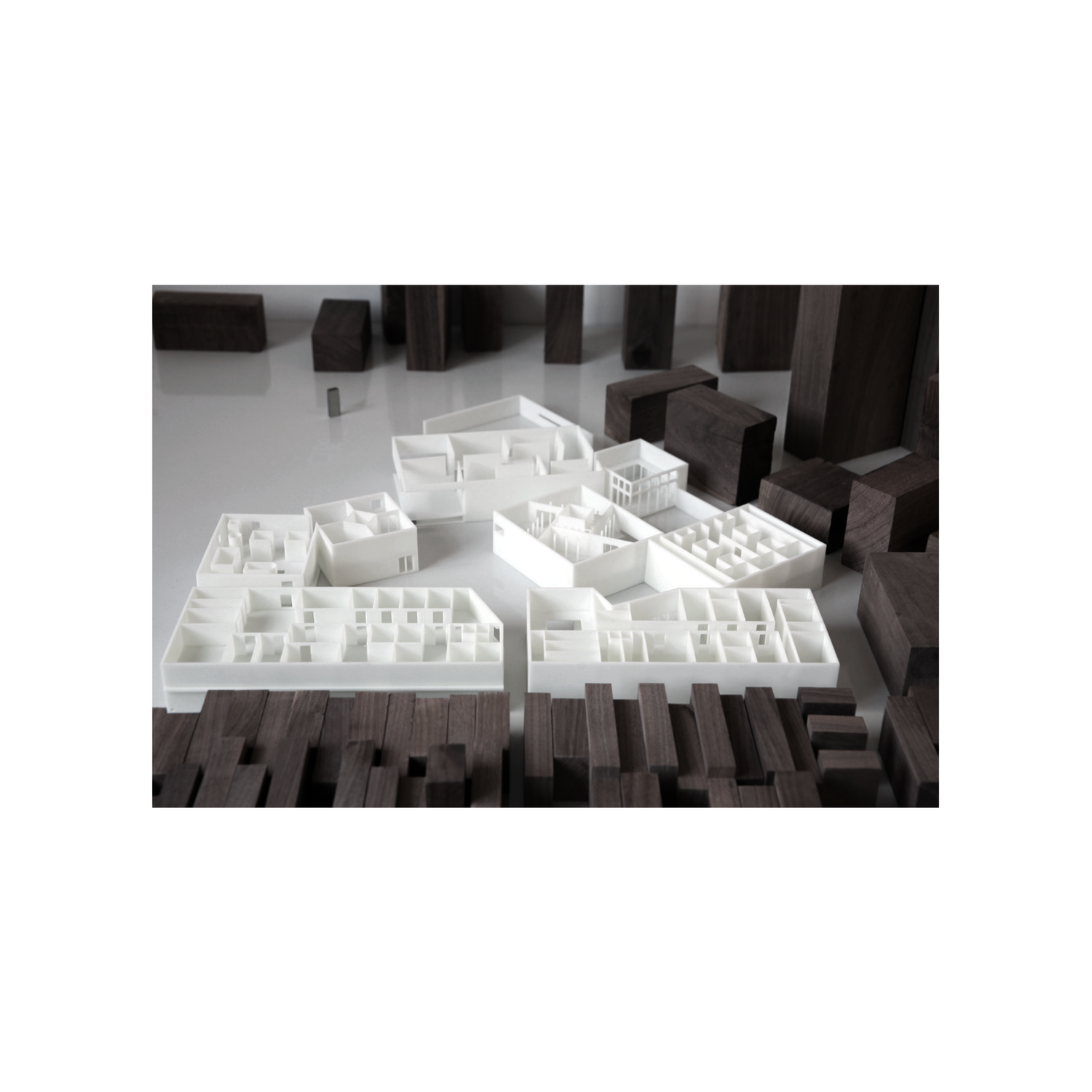
A strategy for context
The approach to context is not a direct reflection of it, but an attempt to build an idiom of abstract, definite architectural forms. The forms are drawn from the existing urban structure — not from Liwan's iconic landmarks, but from its abstract elements: the sequence of open and closed spaces, the rhythm of walls and columns, the continuous run of facades with their repeated openings and ornament.
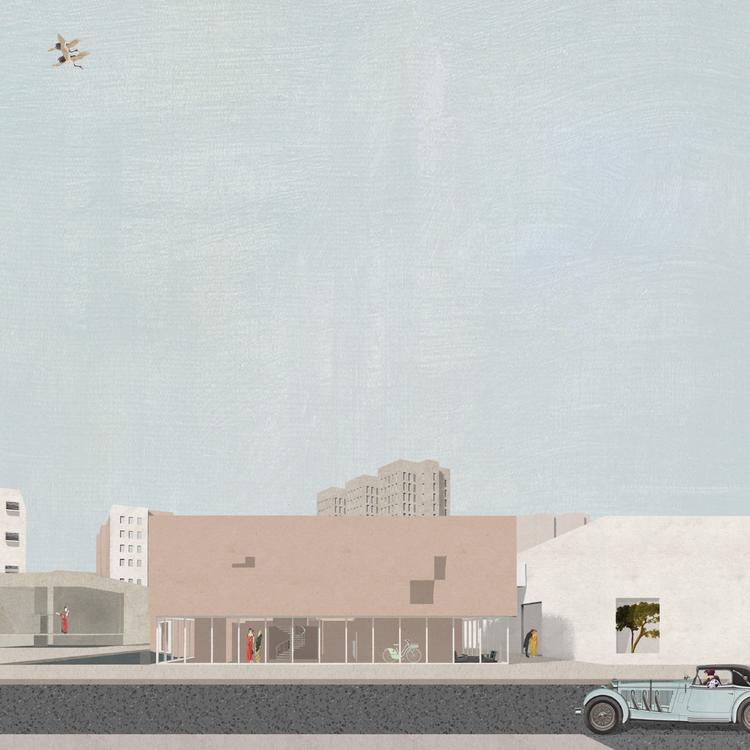
Liwan's character becomes the ground for a morphological transformation of the site, and for a new arena — one that, for all its autonomy of expression, keeps the essence of the city, and acts as a link between its different parts.