Archive — Competition entry
Homo Ludens
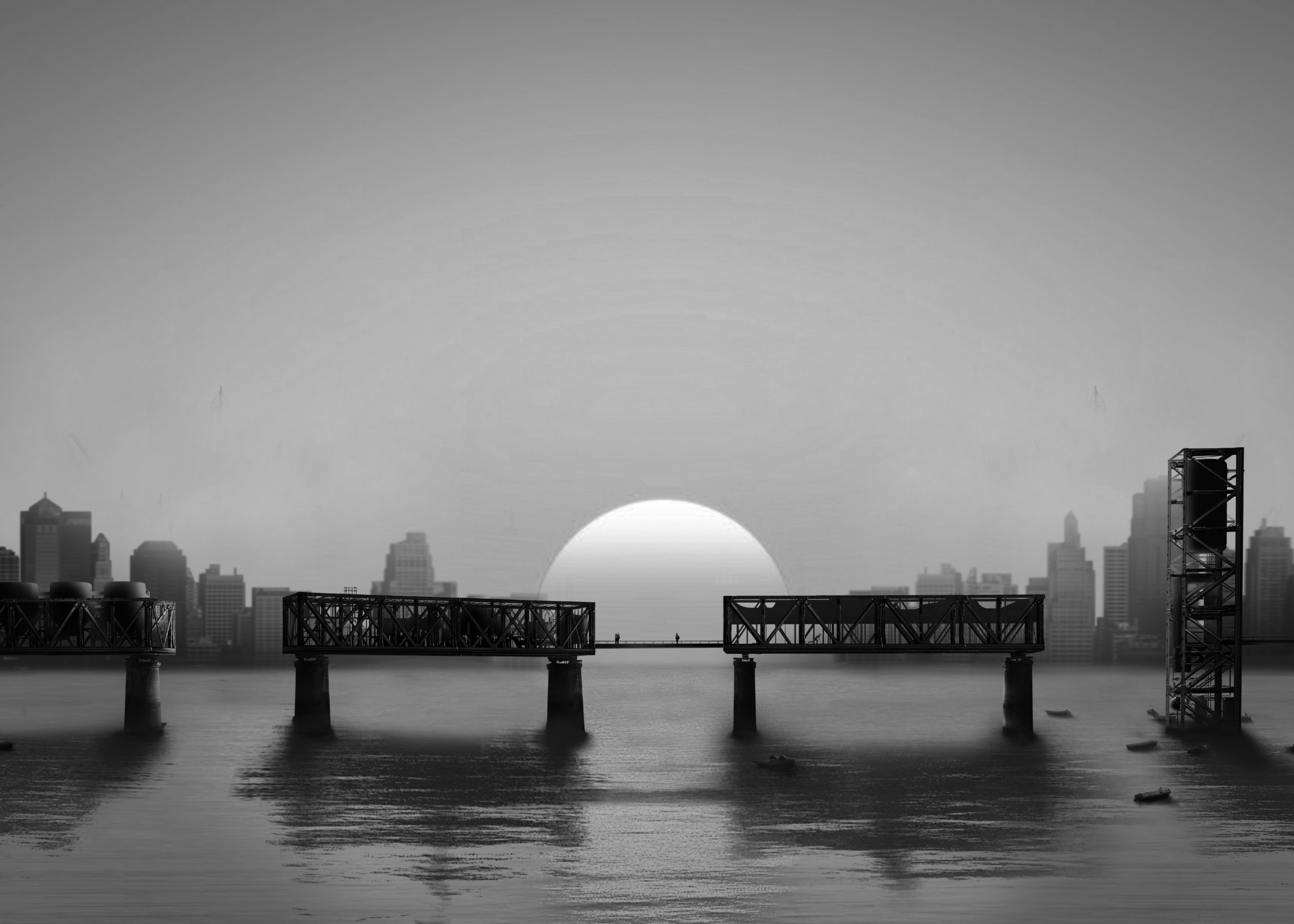
A condemned war bridge, re-imagined as a heterotopia for the city's informal life
2016 Spring · Hangzhou, China
In collaboration with Tianjian Li
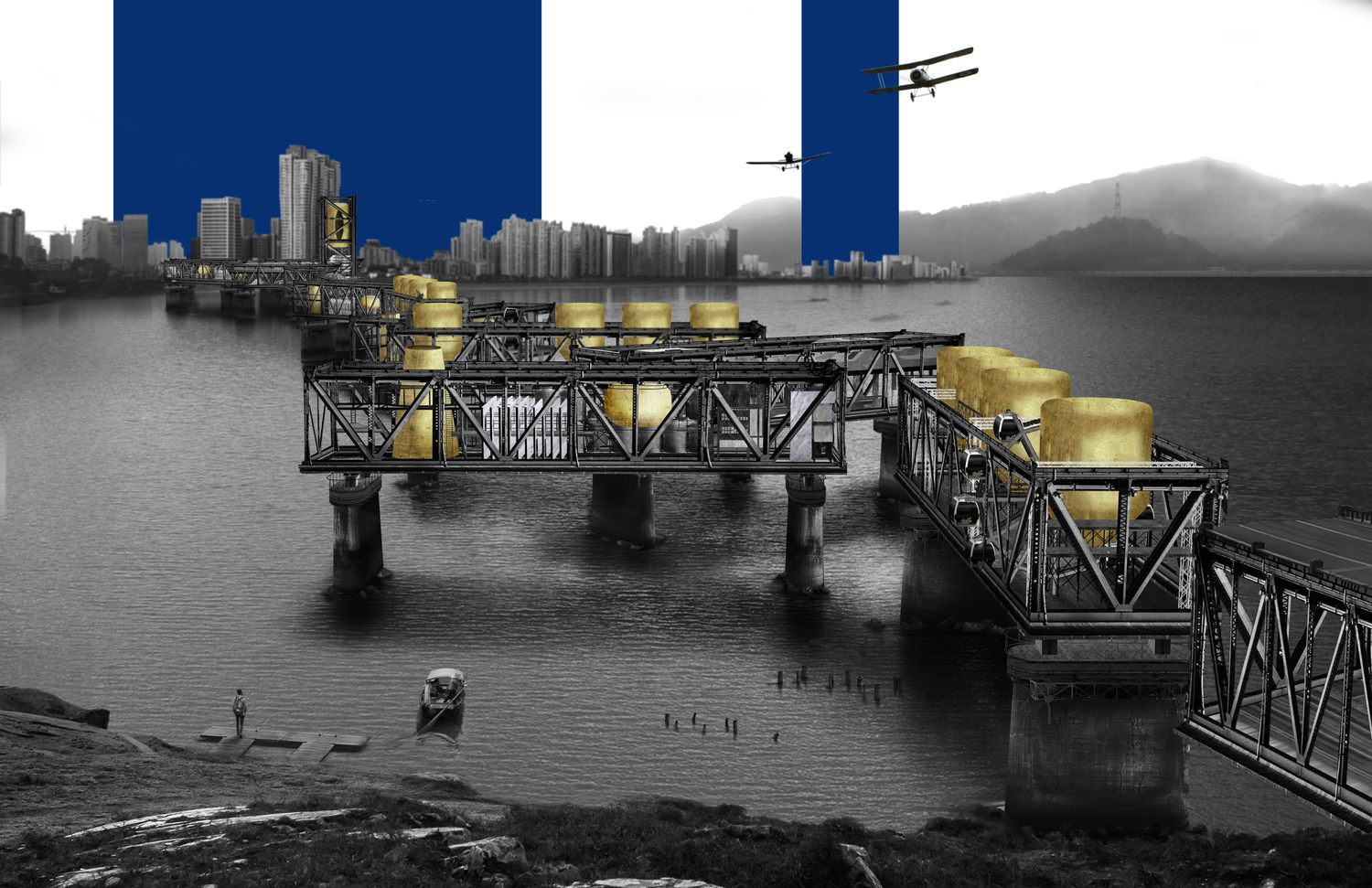
Built in the 1930s as China's first self-designed road-and-rail bridge — and detonated by its own engineer to stop the Japanese army from crossing the river — the bridge survives today as a guarded, half-alive landmark. Rather than freeze it as another monument, Homo Ludens proposes to blow it up once more, letting the blast scatter it into a self-renewing heterotopia that takes in the gray economies and desires the spectacle city has no room for.
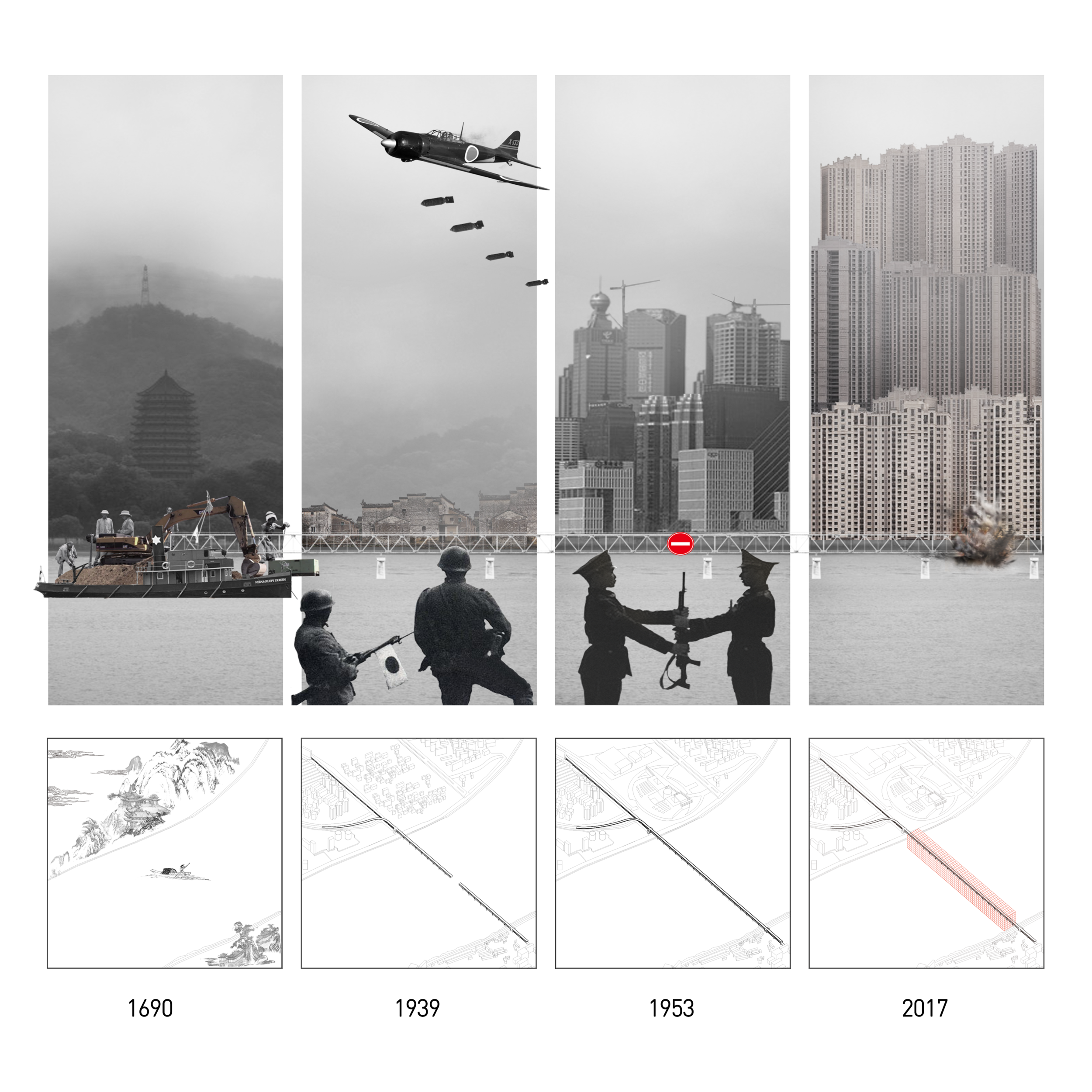
Built in the 1930s, the bridge — China's first self-designed road-and-rail crossing — once served as a military artery in the war with Japan. Today it is barely used. The rusted tracks on its lower deck were abandoned when the city's high-speed trains were rerouted onto a newer bridge nearby; the upper deck, guarded by soldiers and closed to pedestrians, now carries only a trickle of light vehicles, all its aging structure can bear. The bridge is “well preserved” as a historic landmark — and only half alive.
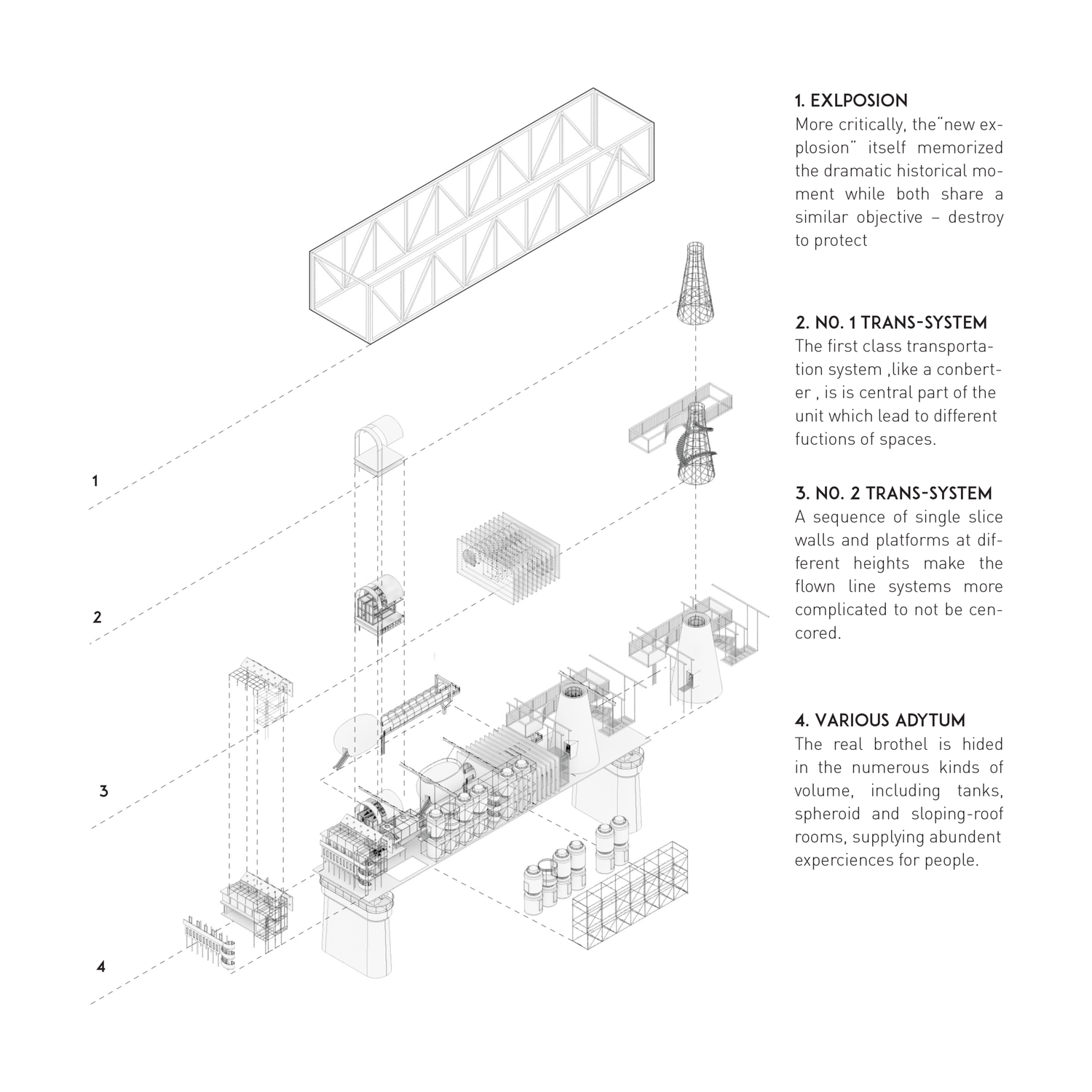
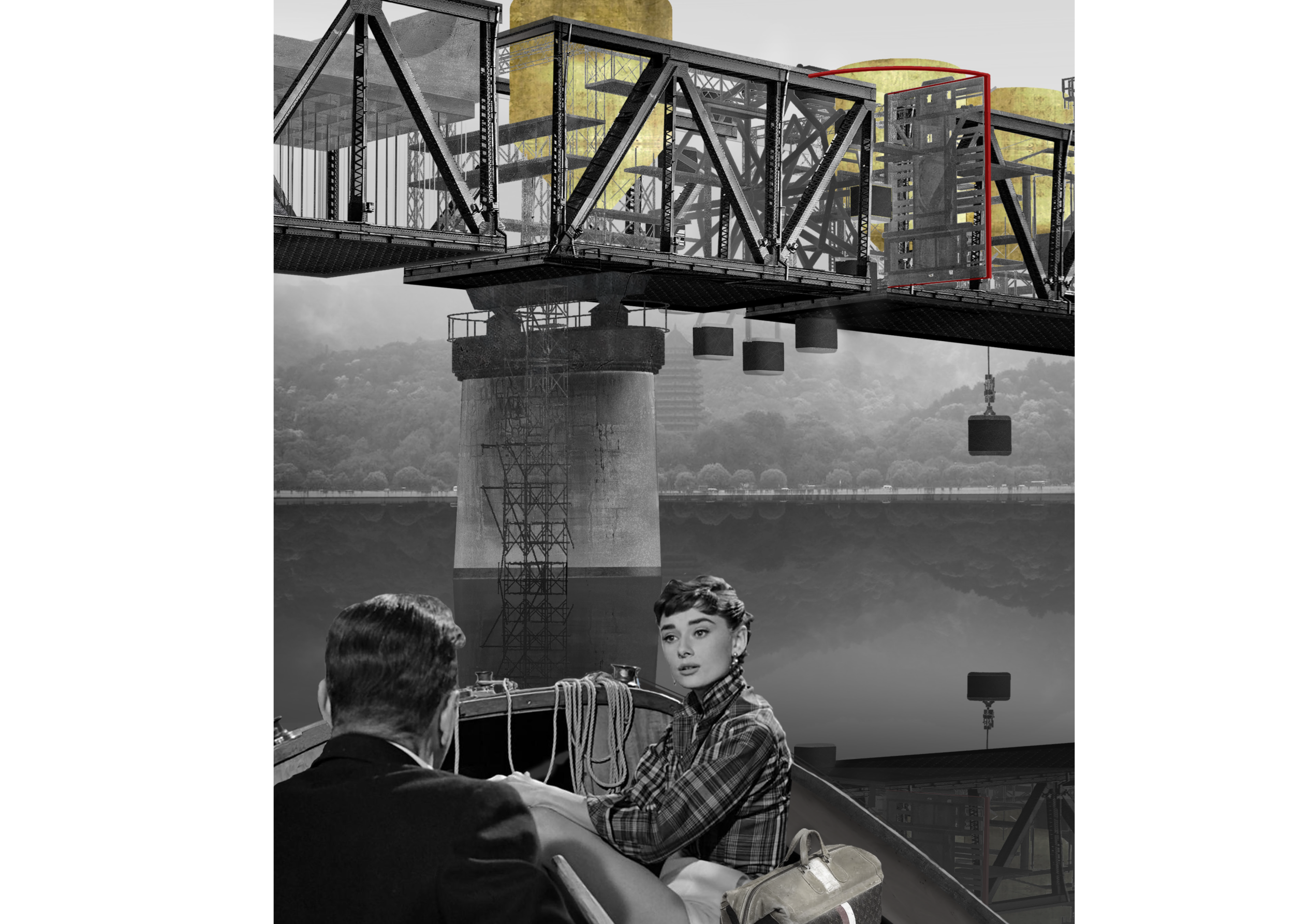
There is a paradox in that preservation: only by letting the bridge become an isolated relic would the public finally be free to reach it. The project takes the paradox literally. A “new explosion” would memorialize the most dramatic moment in the bridge's history — for the wartime detonation and this one share a single logic, to destroy in order to protect — turning an act of demolition into an instant memorial, an ephemeral museum.
Concept
Where most preservation projects in China presume that architecture should be made permanent, we wanted to try the opposite — to turn the bridge into a self-renewing organism that moves with an ever-changing society. The memory it carries is not only that it was China's first self-designed road-and-rail bridge. It is also the memory of the day its own designer pushed the button to blow it up, destroying his bridge to stop the Japanese army from crossing the river — and of the years the city then spent rebuilding it after the war.
From formal to informal form
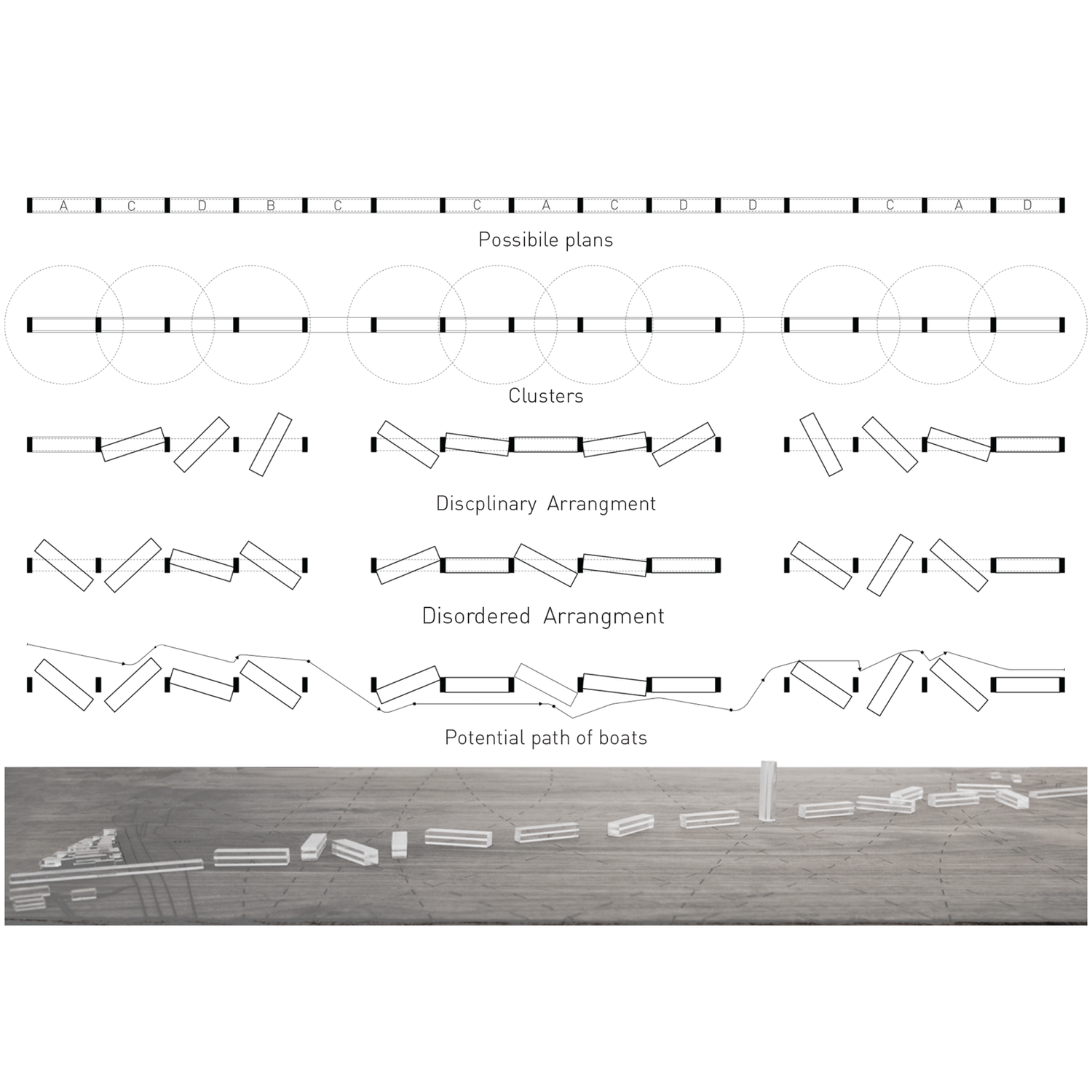
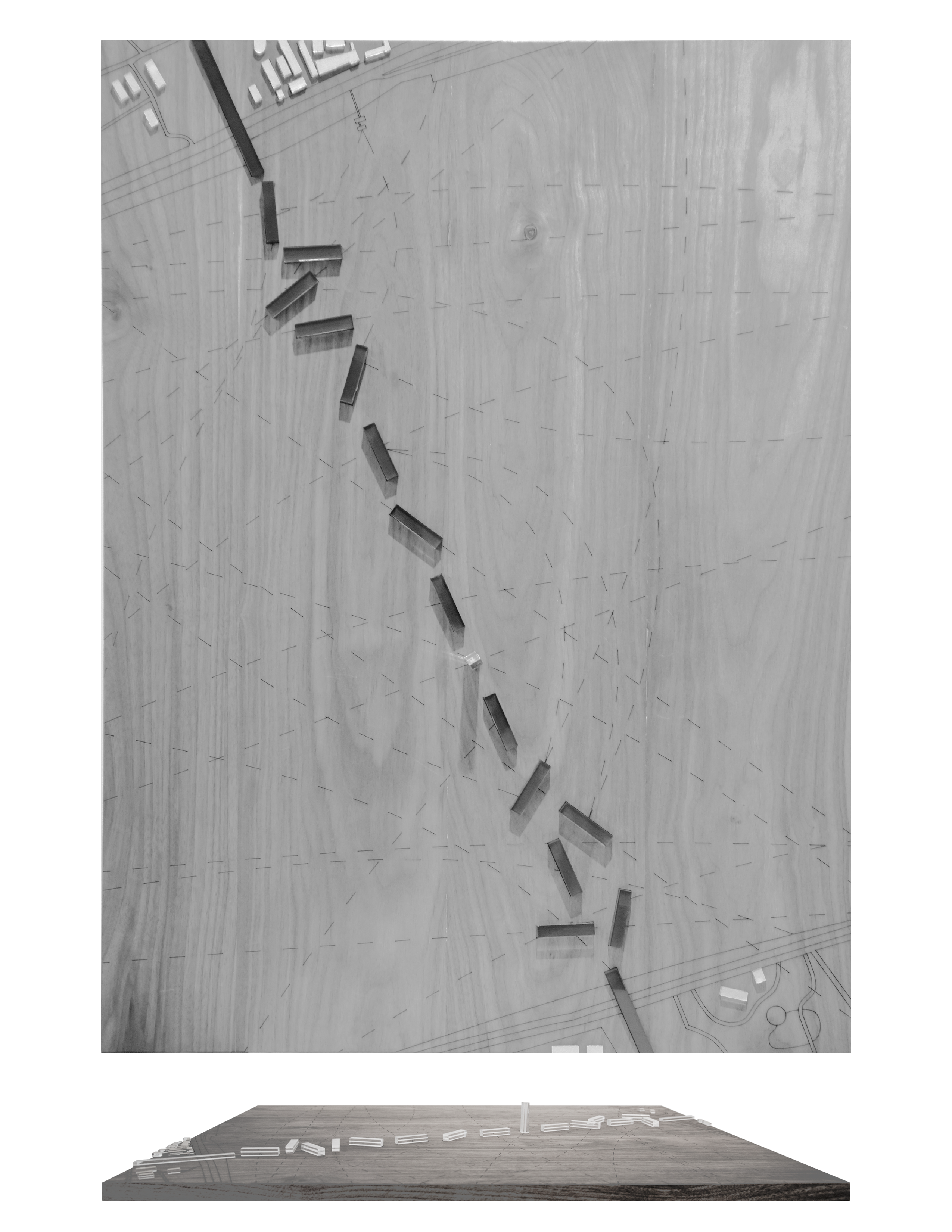
The bridge kept serving local residents long after the war, and it will soon have to come down. The government plans a museum on the cleared site — a monument on wasteland, a record of its own valiant history. Taking the wartime explosion as our cue, the first move is to blow the bridge up once more. The form itself is generated by this second explosion: the blast breaks the structure into disordered units, and those scattered fragments become the rooms — each one a different kind of space for a different kind of use.
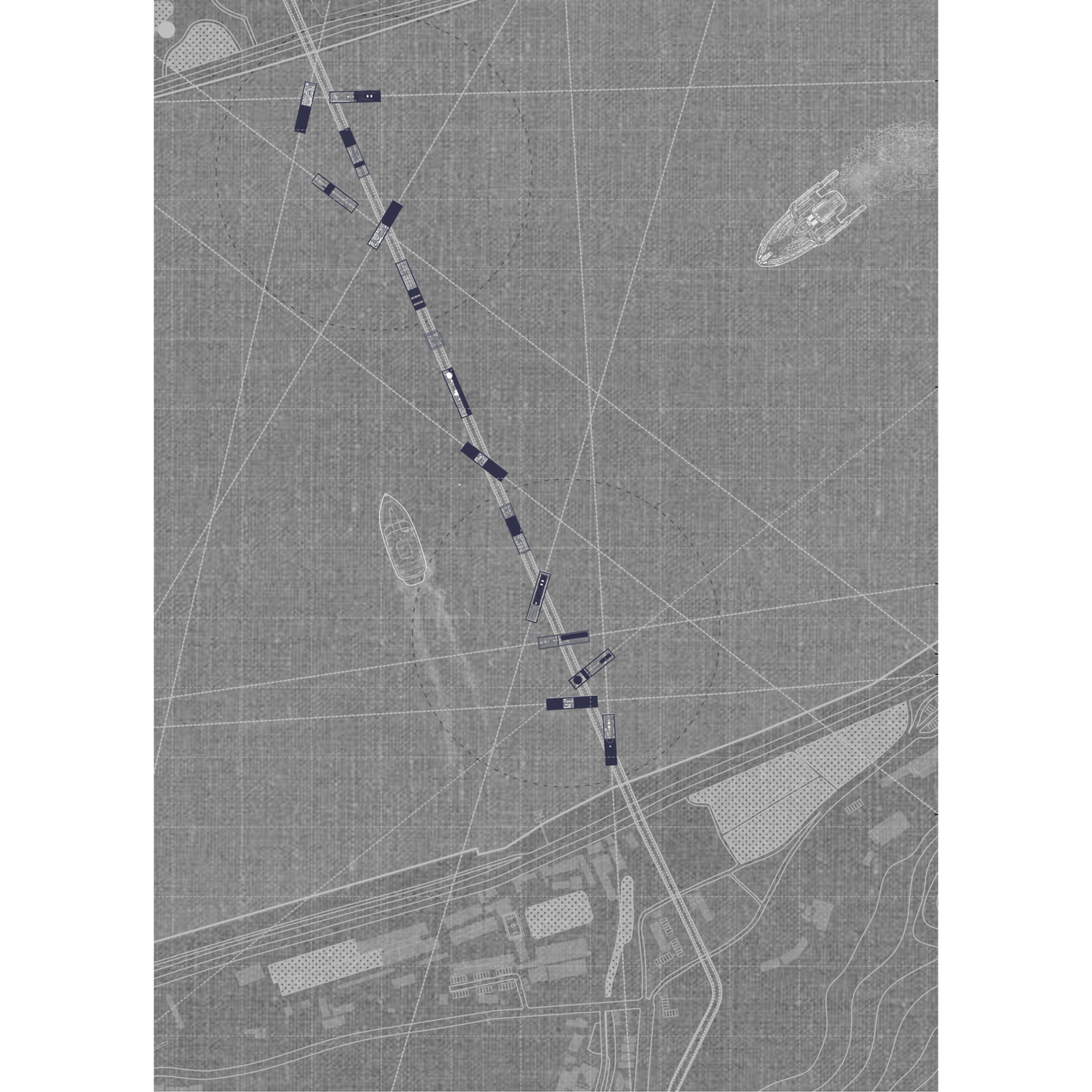
Emotional motions
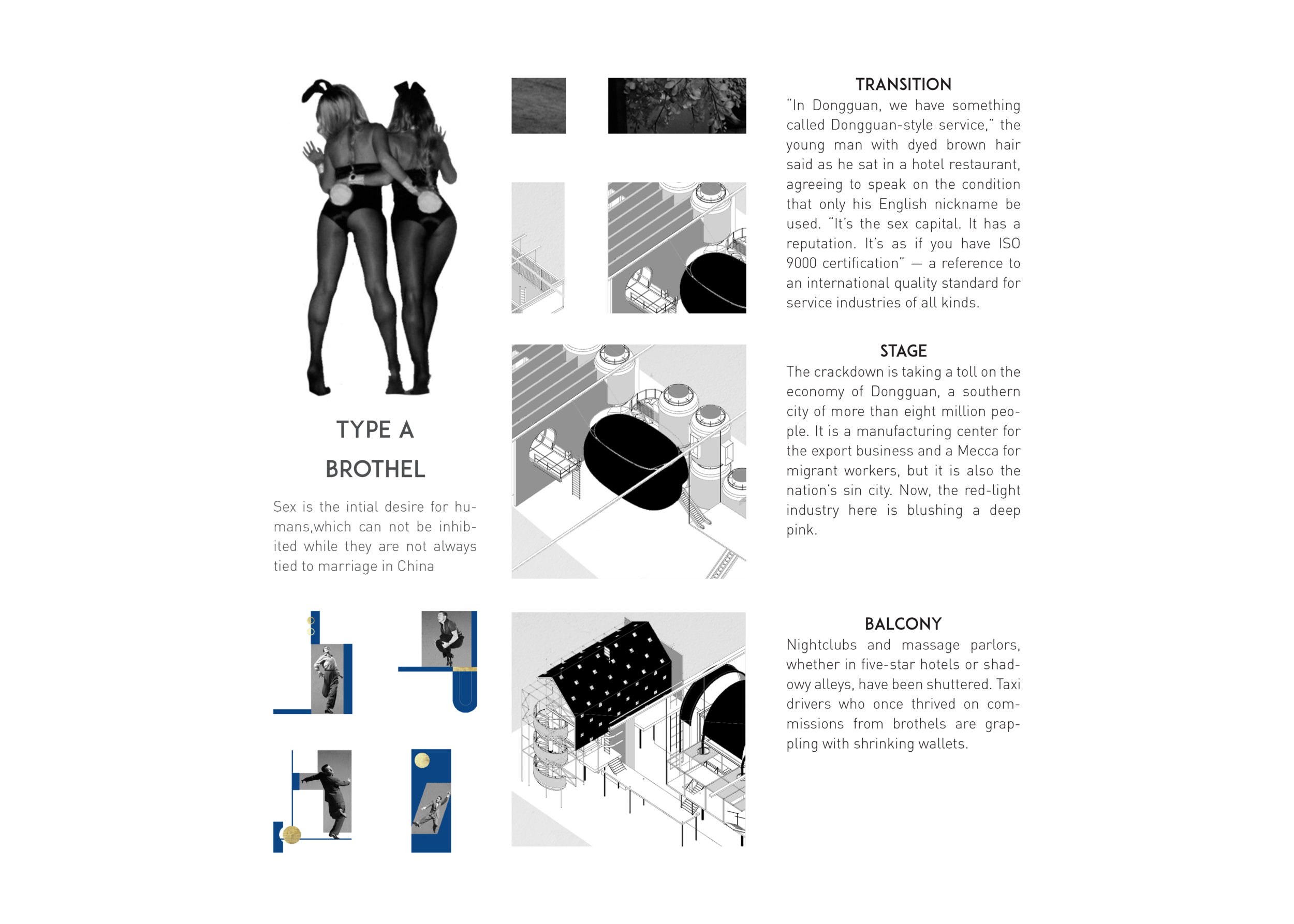
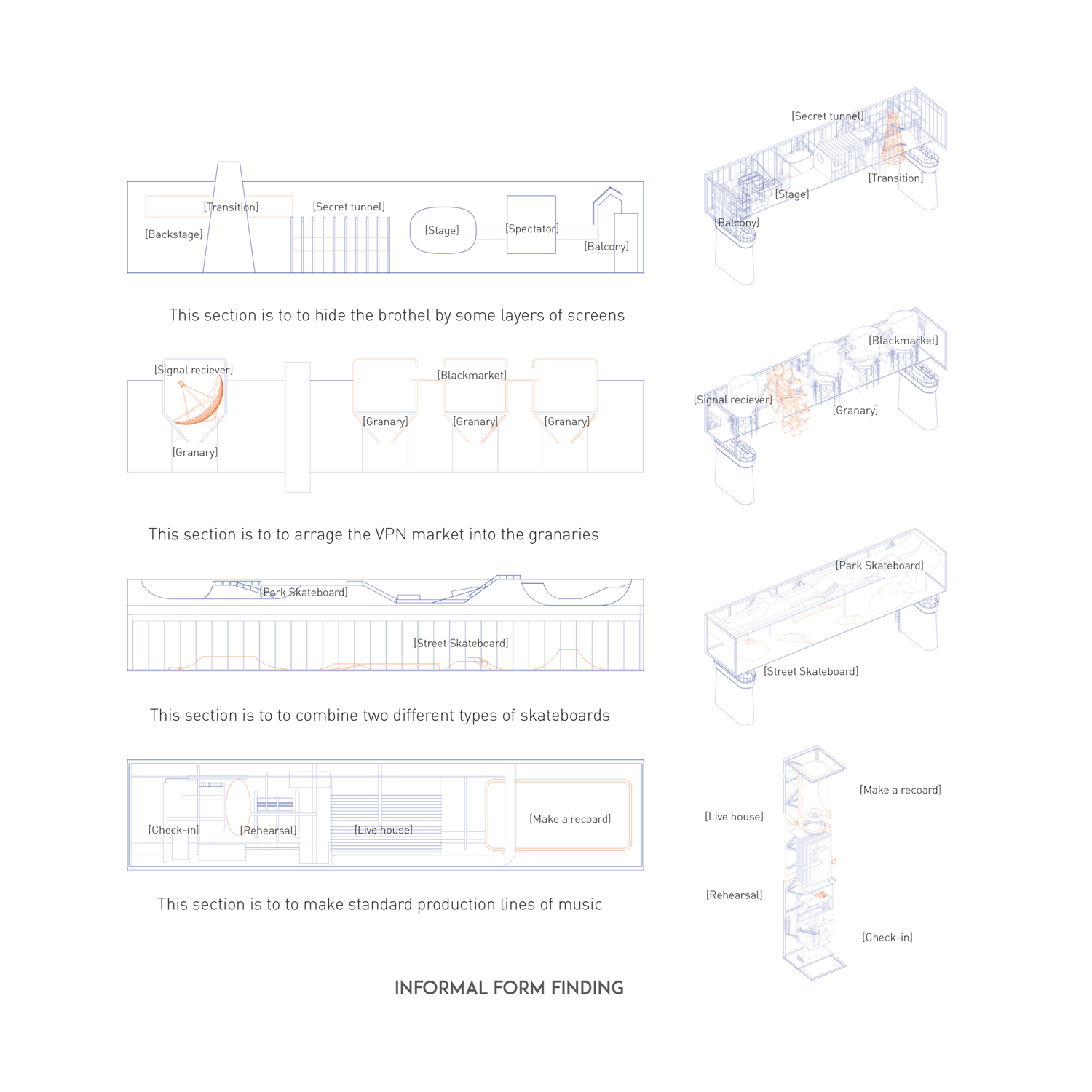
From there, a single unit is developed under one rule: how to conceal what it really houses. Among the gray economies that take root on the bridge is a brothel, and four moves — two separate classes of circulation, and a hidden tunnel among them — are worked out to protect the privacy and safety of those who come and go, in a country where censorship reaches everywhere.
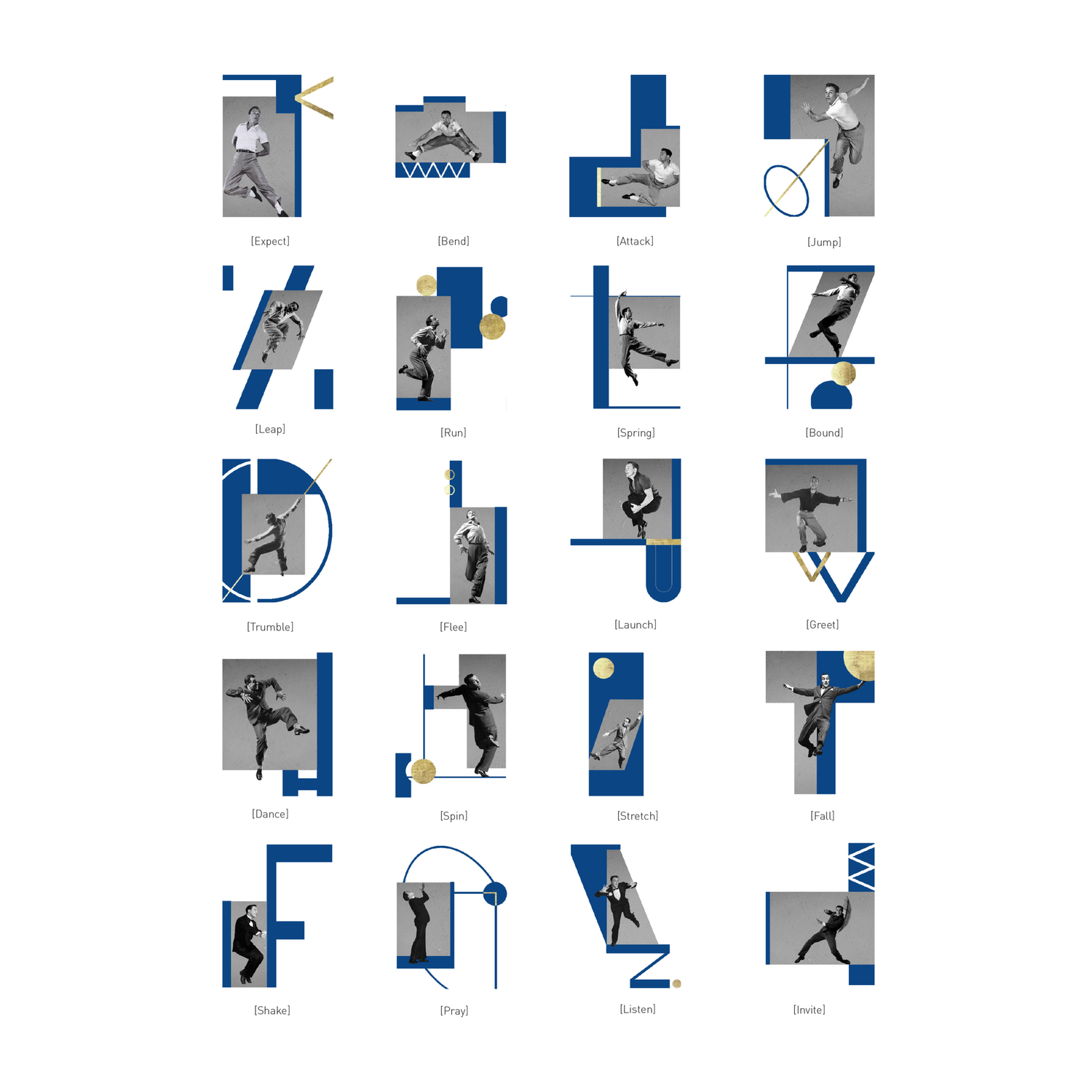
In Homo Ludens, social space is social spatiality. Space as a psychic dimension — abstract space — cannot be separated from the space of action — concrete space. Their divorce is only justified in a utilitarian society with arrested social relations, where concrete space necessarily takes on an anti-social character.
Ways to Homo Ludens
China runs the largest internet-censorship regime in the world, blocking thousands of sites — Google, Twitter, Instagram among them — and making news critical of the ruling party, or information about events like the 1989 Tiananmen Square massacre, almost impossible to find from inside the country. The same controls have made China one of the busiest markets on earth for VPNs: to get past the Great Firewall you need a key, and keys have to be traded somewhere. On the bridge, that somewhere is a black market buried deep inside the granary — a place to buy a way out from under the censor's eye.
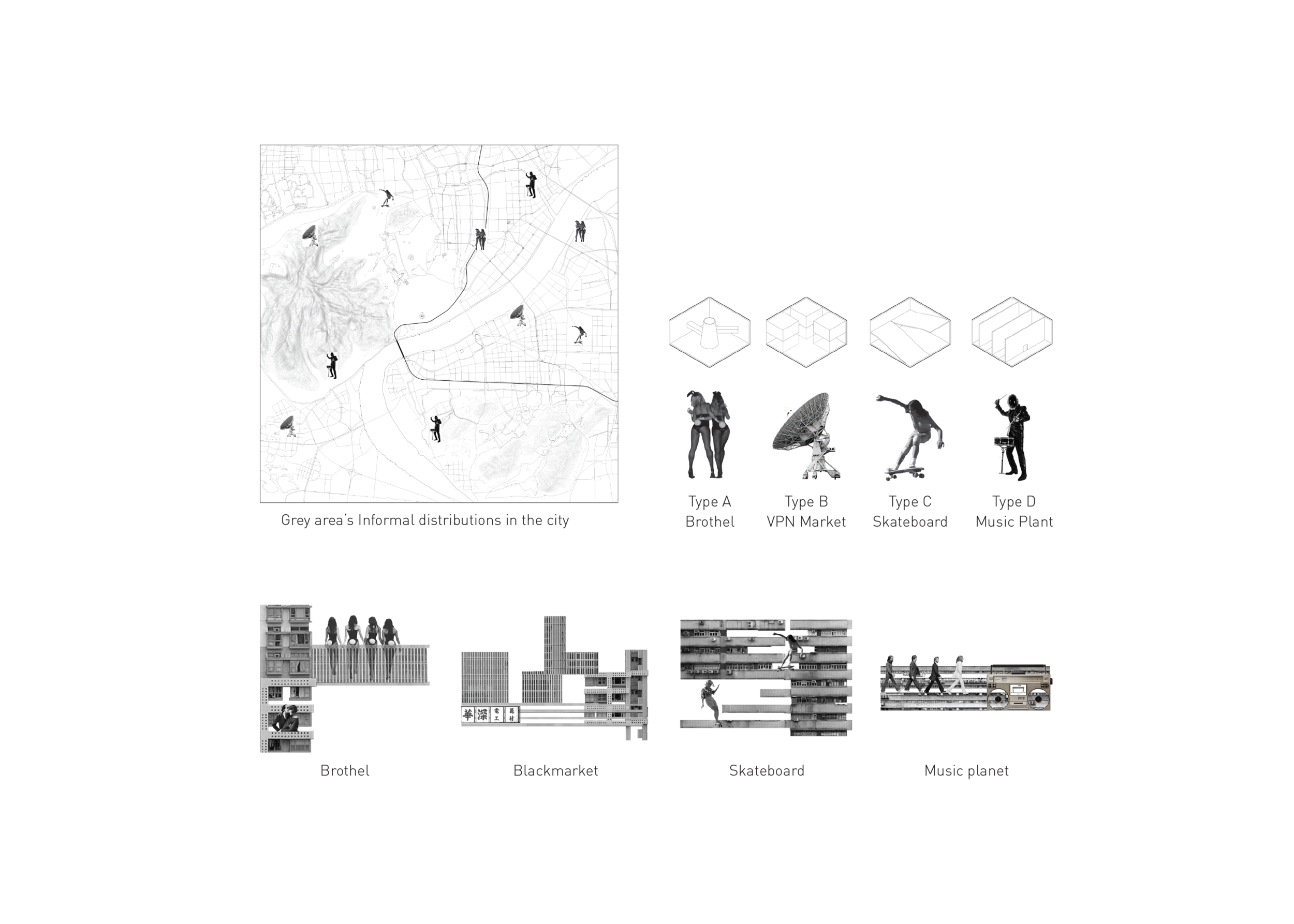
Type A — Brothel
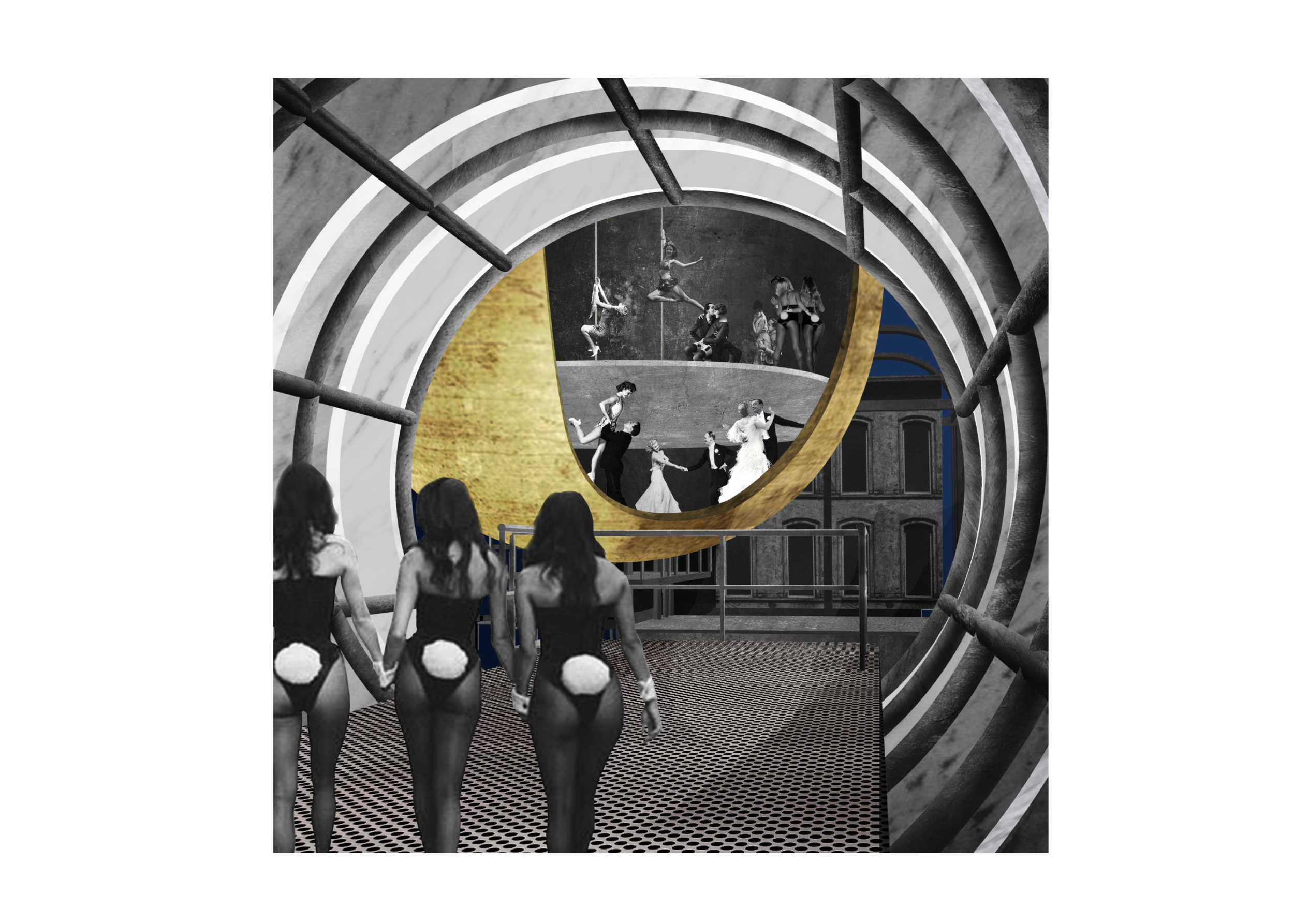
Type B — VPN Market
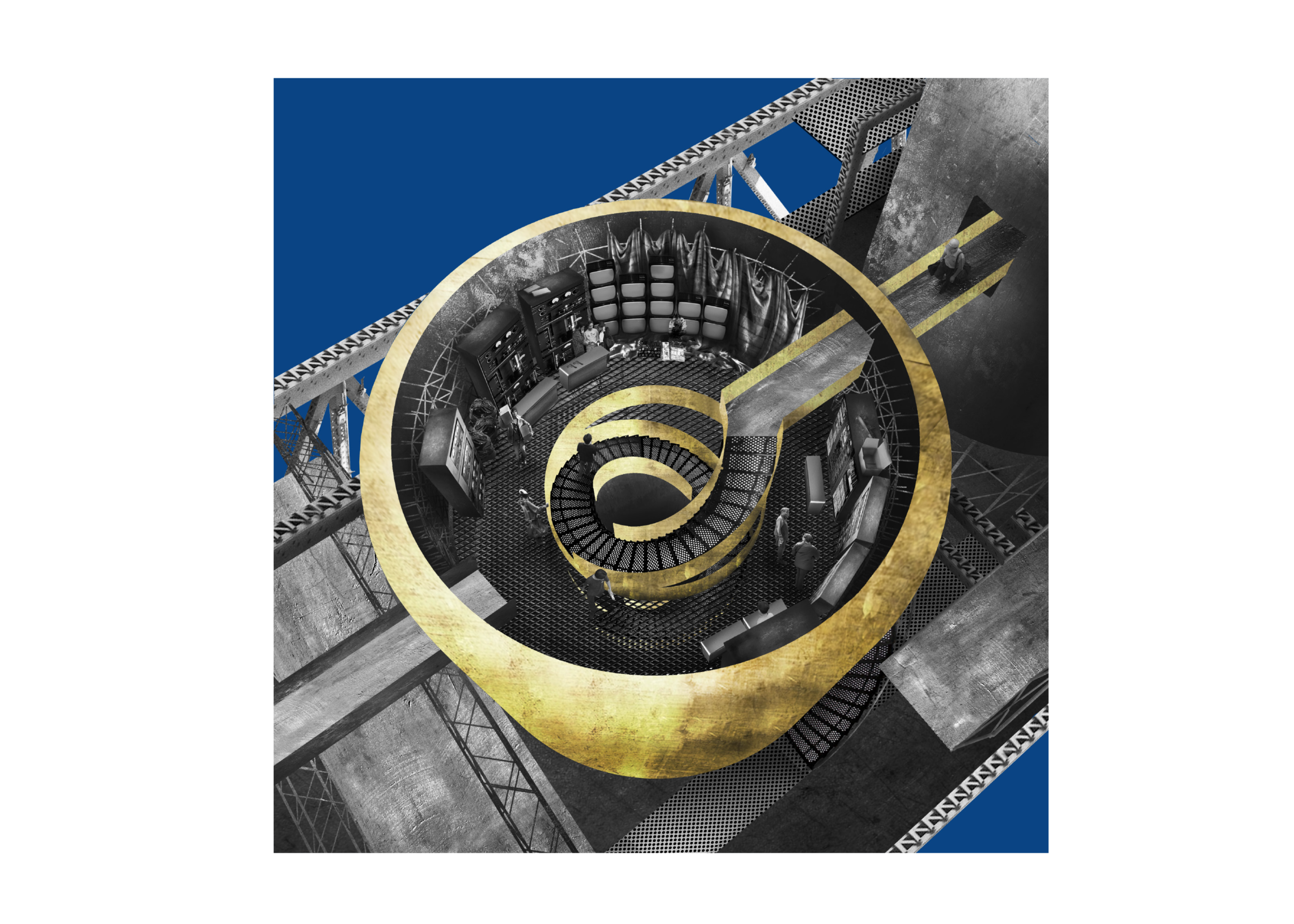
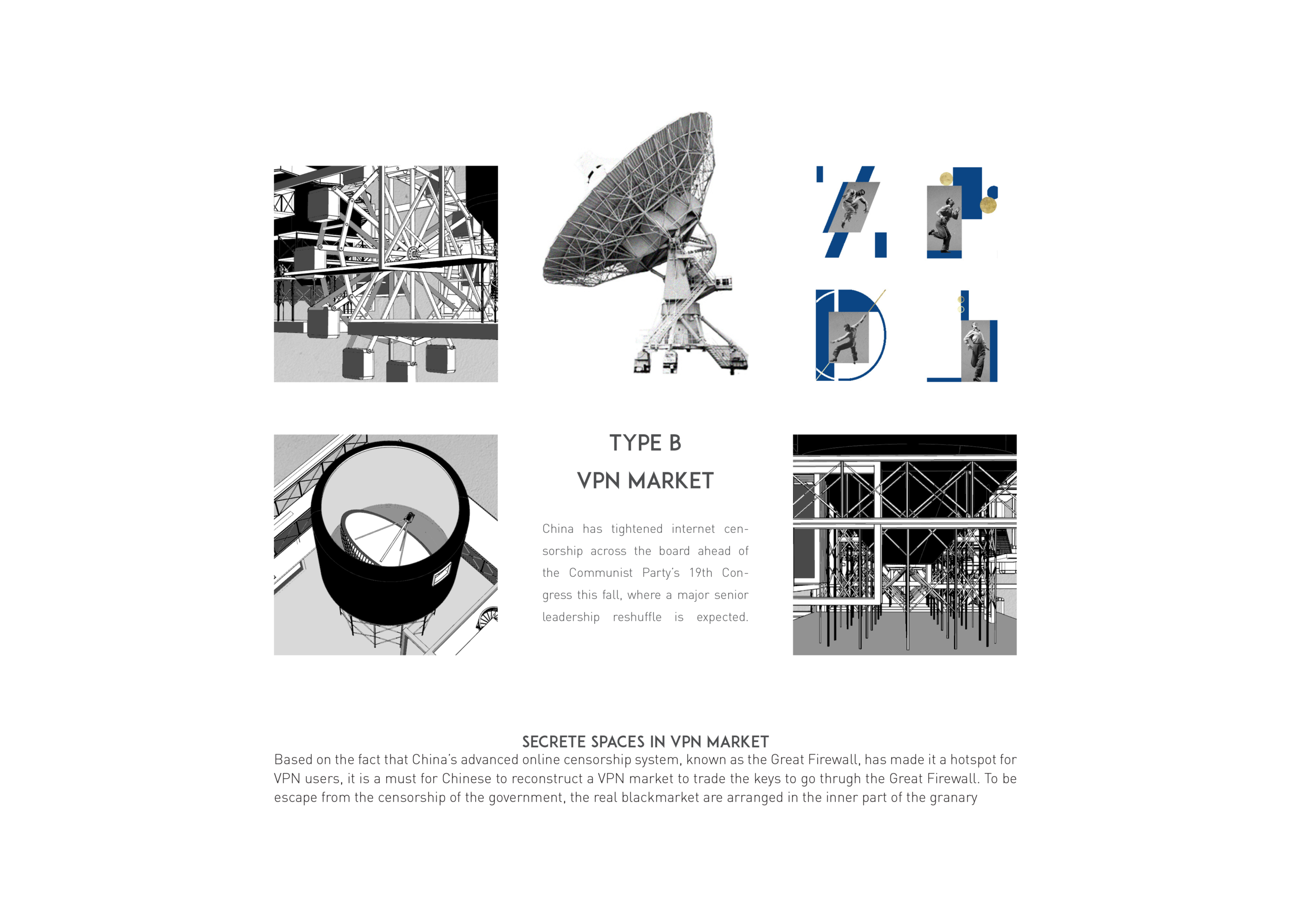
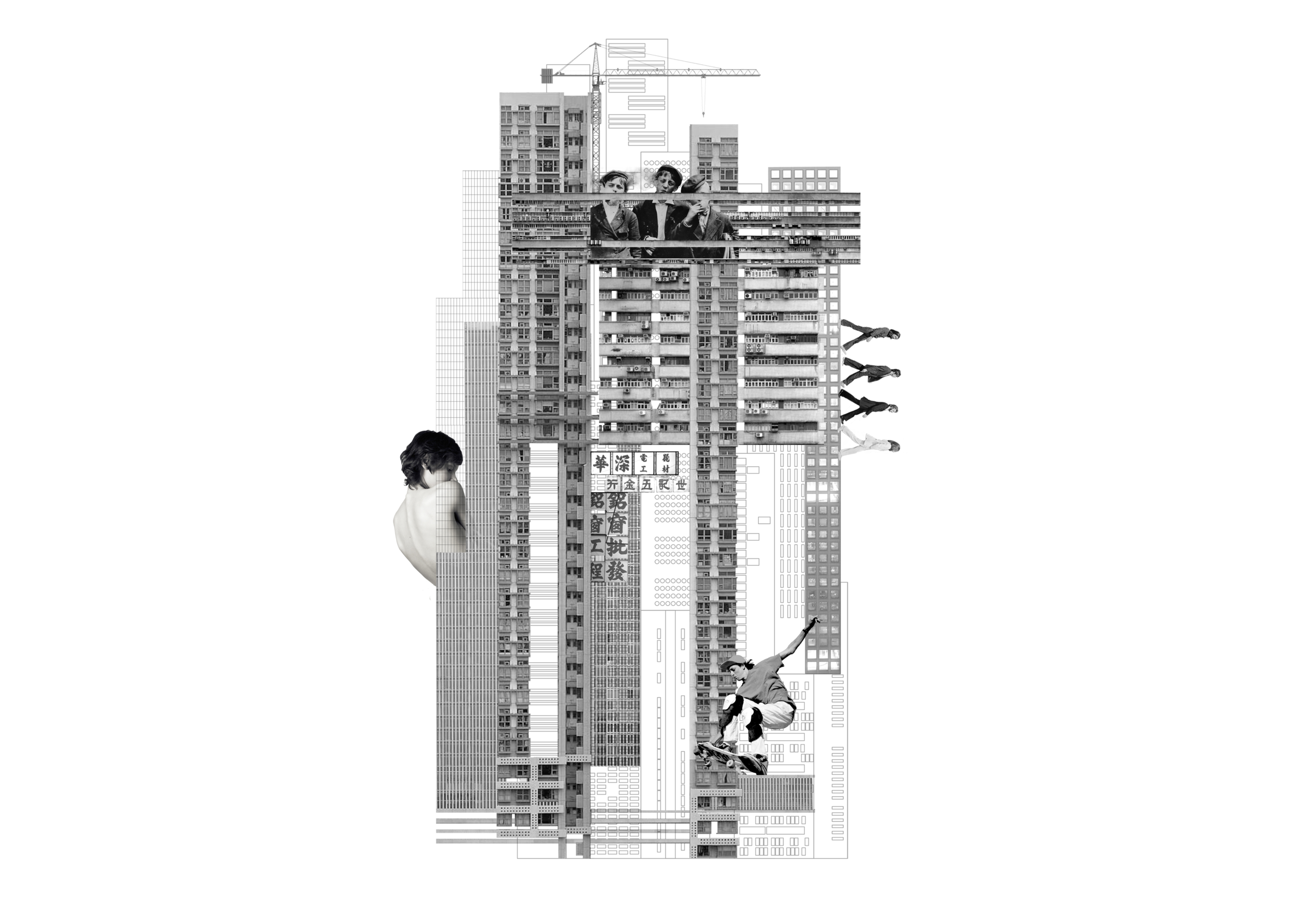
Type C — Skateboard
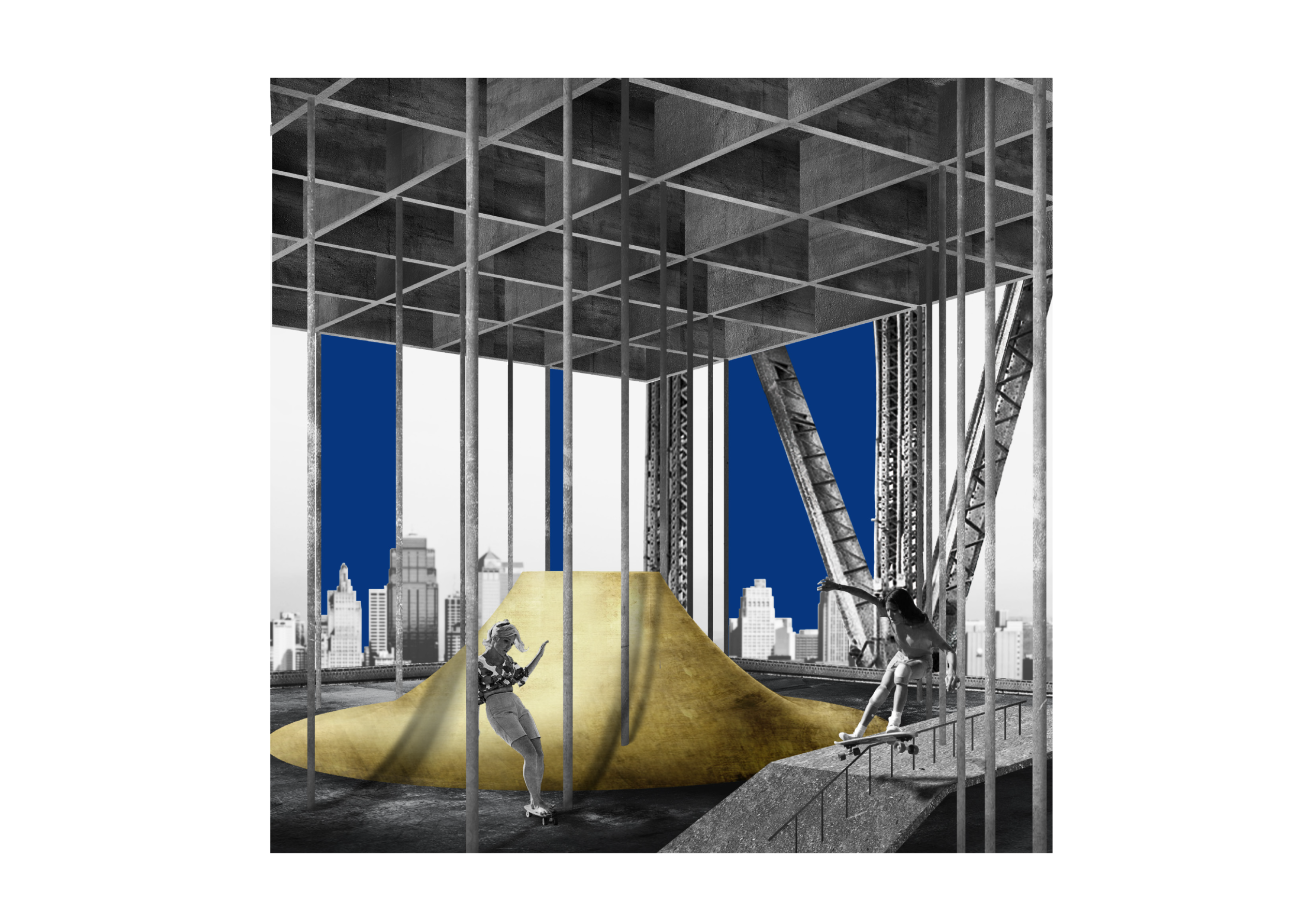
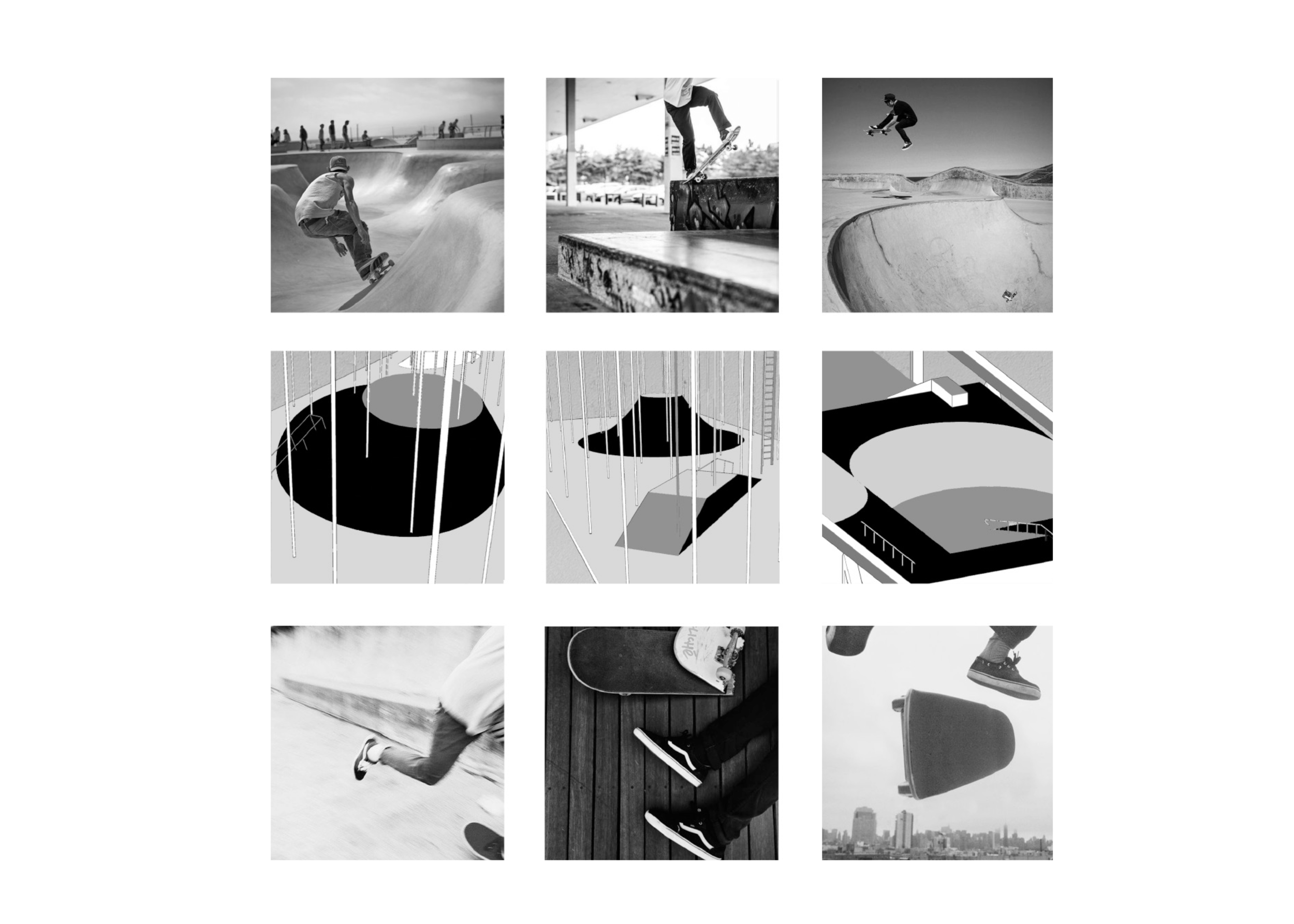
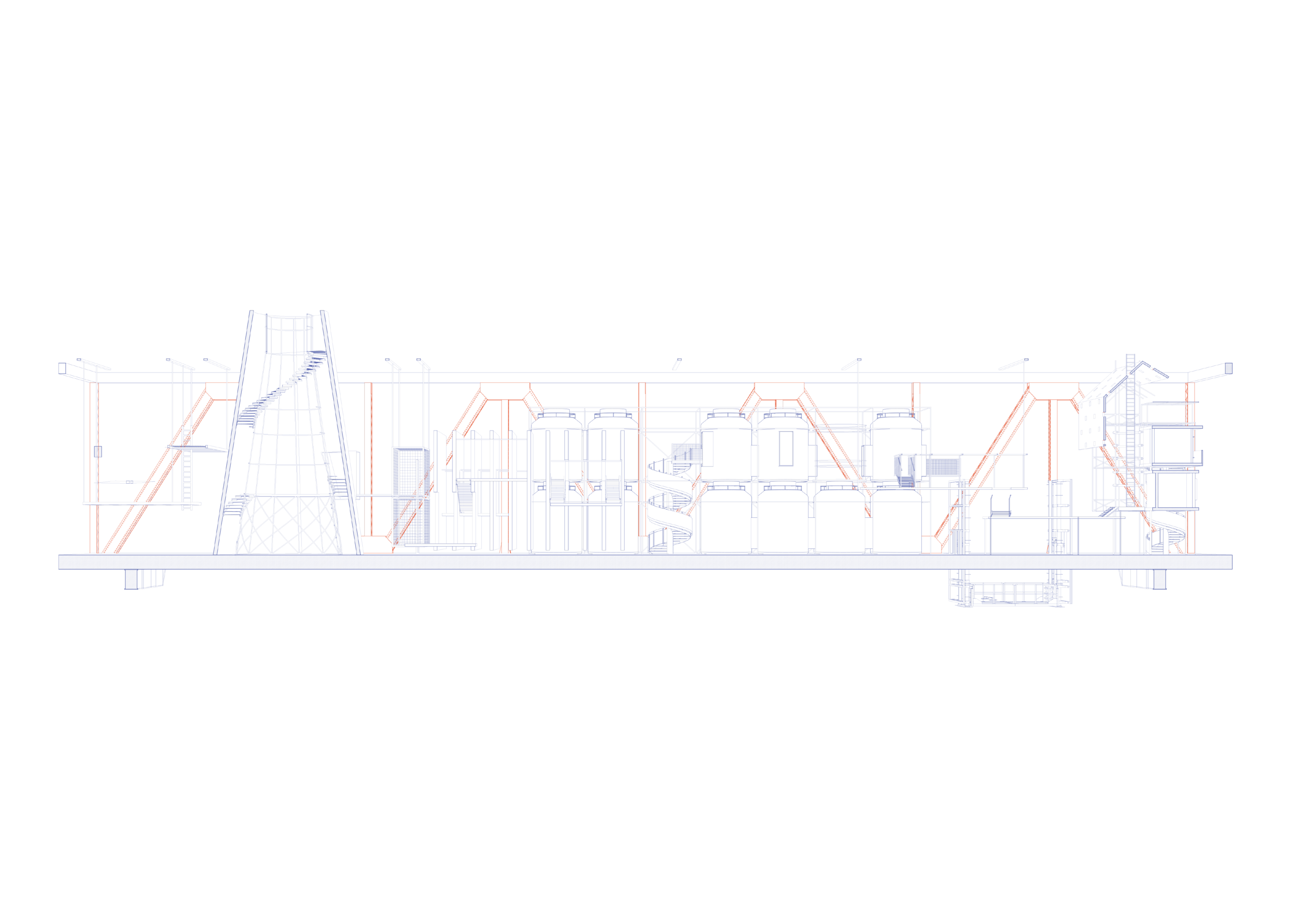
Sections & details
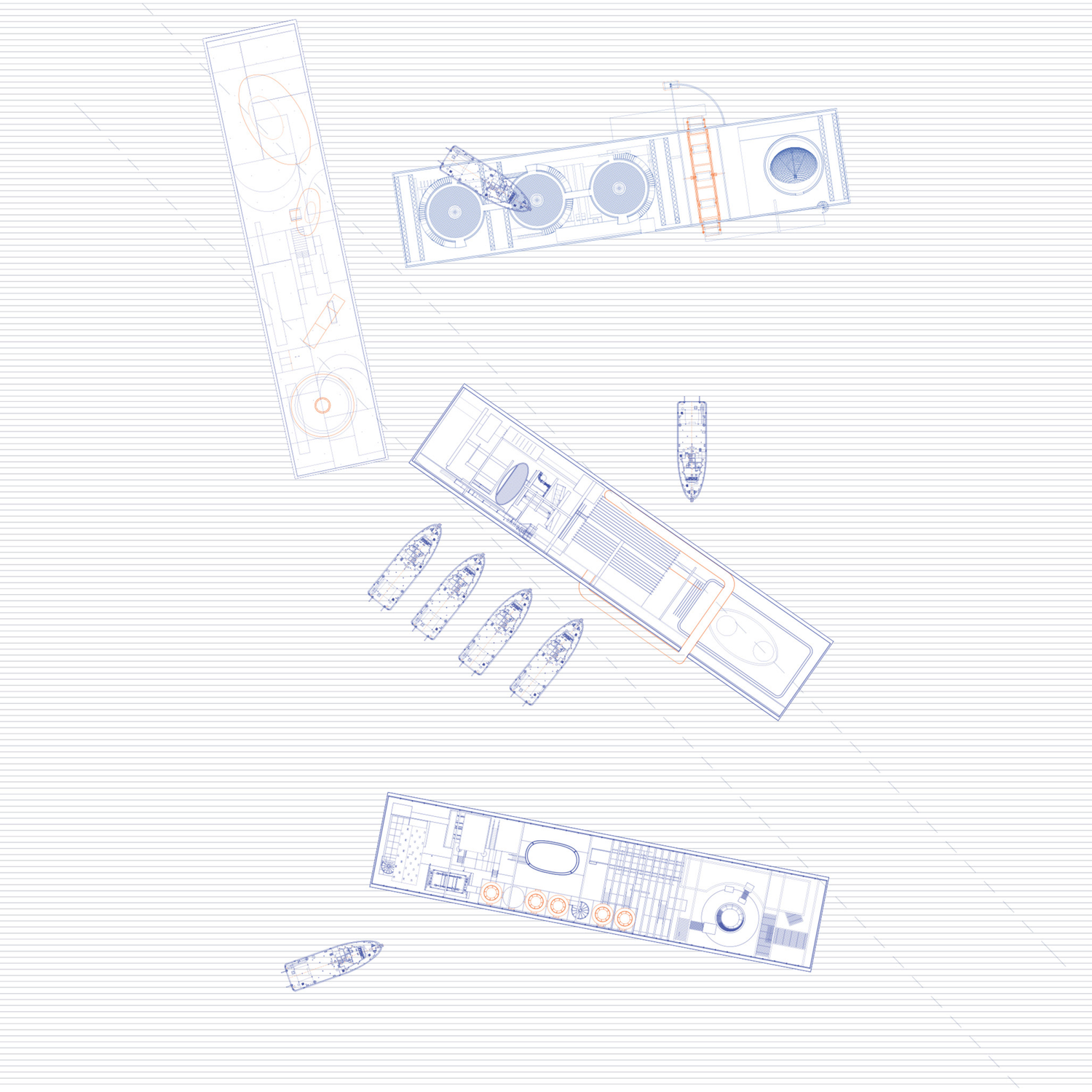
A heterotopia
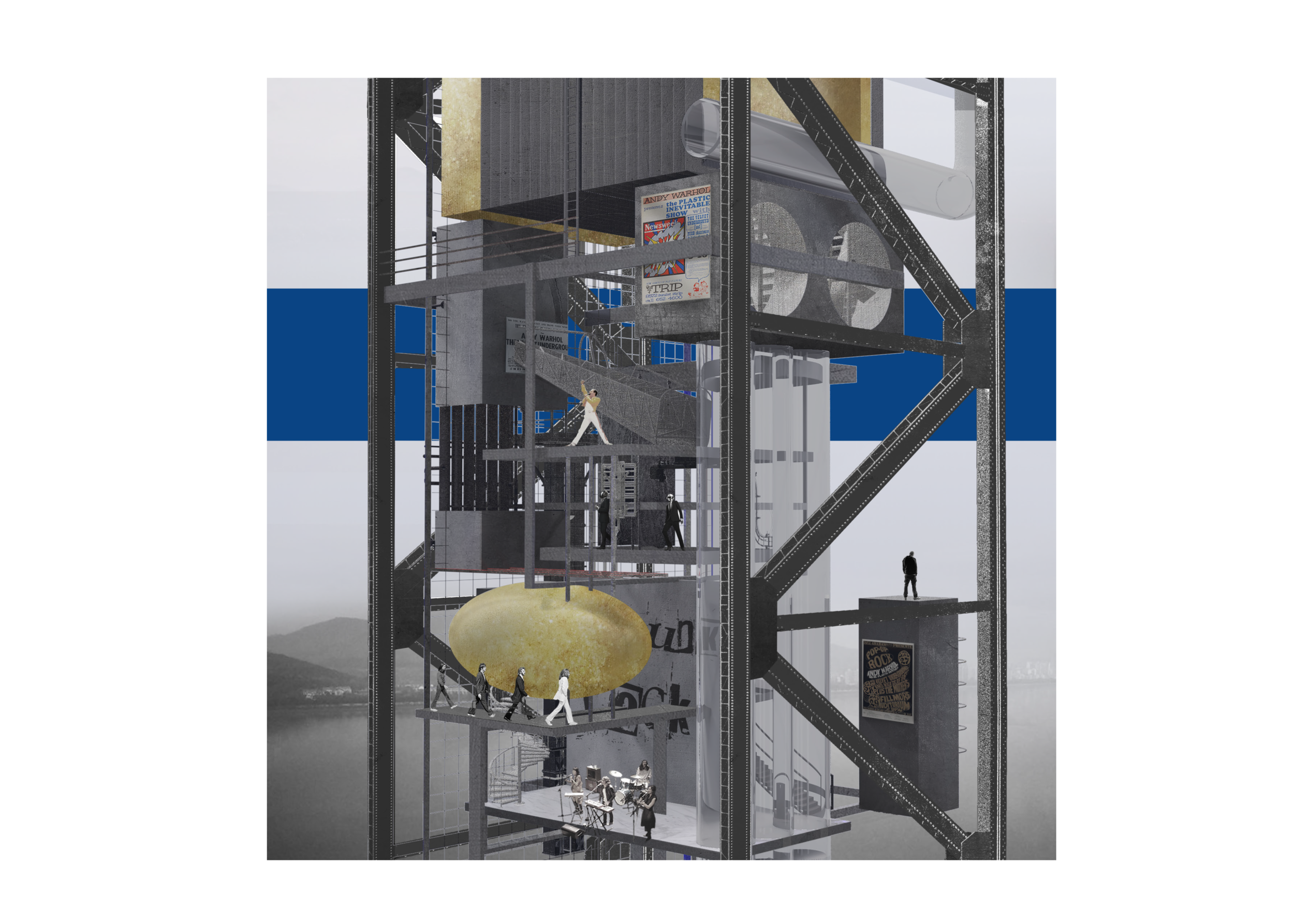
In the rebuilt bridge, people are no longer bound by spectacle or by the formal functions of the city. The pornography trade, the black market, and the other gray industries can live here, and in doing so they make the bridge a heterotopia — a space that absorbs desire and breaks time and space into fragments. For a while, one can step out from under the weight of urban life, and find a moment of physical and mental ease.
Recognition
Honorable Mention in the 2016 UIA-HYP Cup International Student Competition.