Archive — Collective housing
Moroccan Birdcage
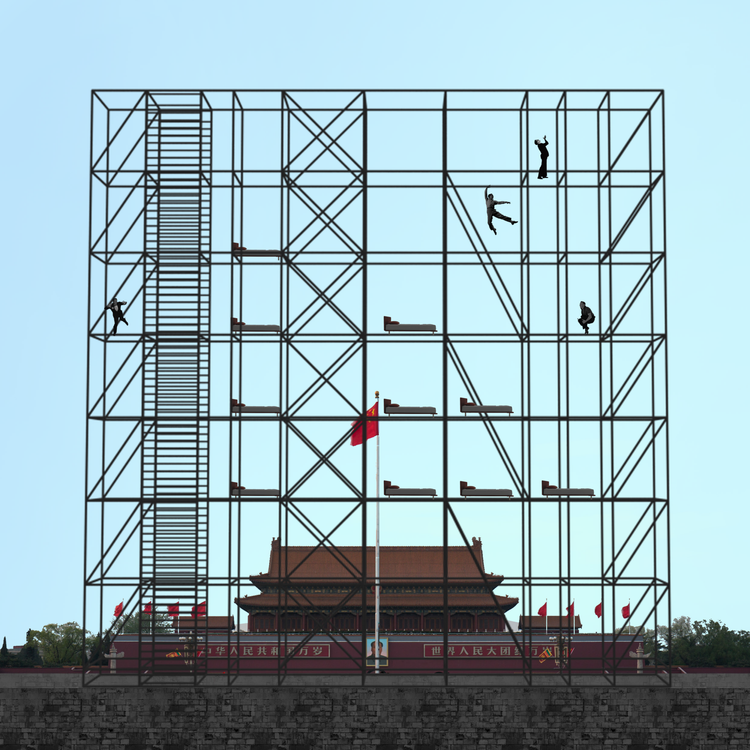
A relocatable, scaffolding-built collective house for the migrant workers a city expels once they've built it
2017 · Beijing, China
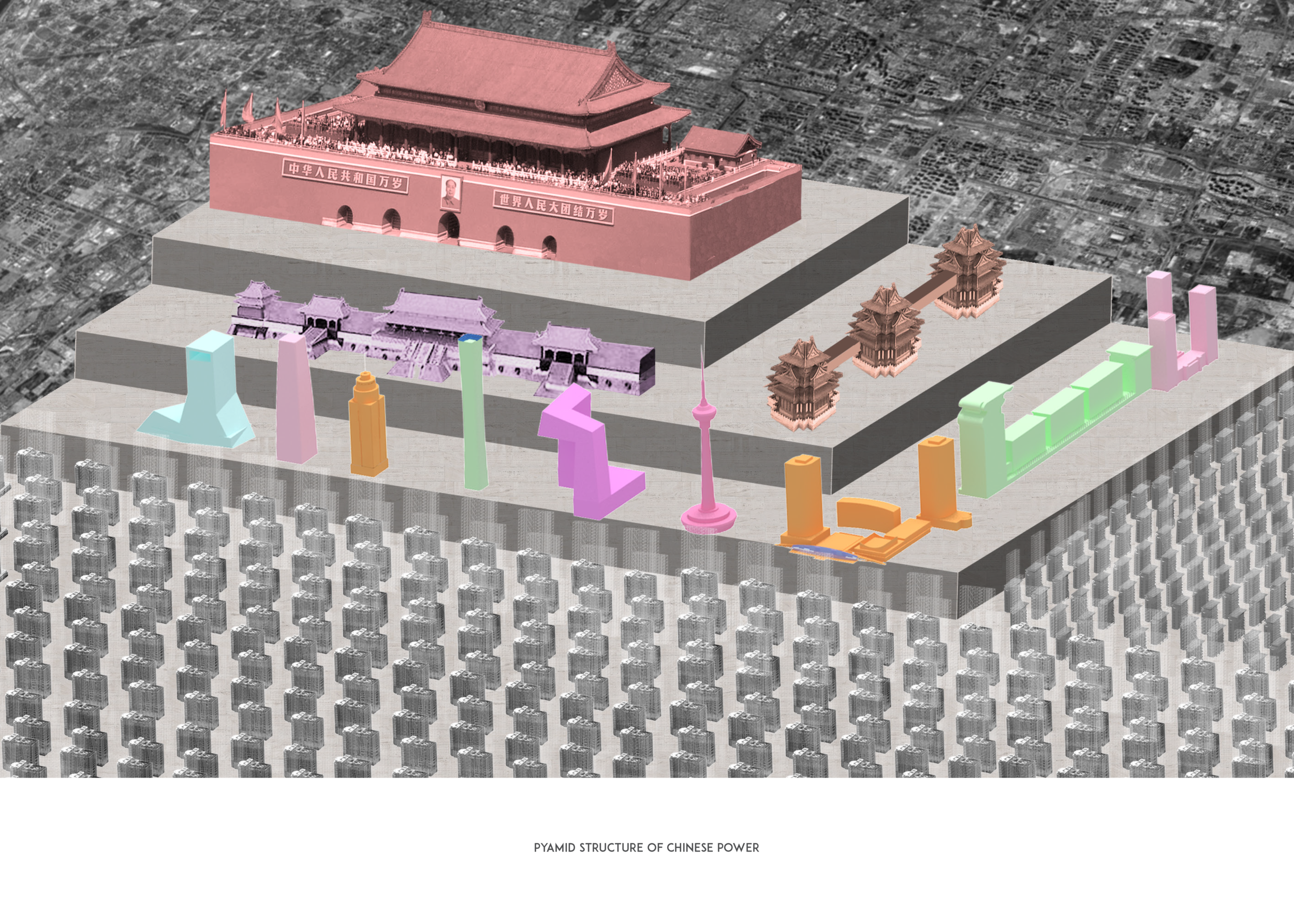
Peasant workers built China's cities — taking on the heavy, dirty, dangerous, low-paid work — yet their rural household registration (hukou) bars them from the welfare urban residents enjoy. Moroccan Birdcage is a collective house for these workers: a structure of scaffolding light enough to be set down anywhere — even at the centre of a spectacle city — as a guerrilla protest against the way they are used, and then expelled.
Peasant workers have made an enormous contribution to China's urban development, supplying the labour for the work no one else wants — heavy, dirty, dangerous, poorly paid. But because of their rural household registration, or hukou, they are denied the social welfare available to those with an urban hukou (Li 2011, 336). The term “floating population” was coined for exactly this: workers who have left their home villages, yet can never quite settle in the city.
In 2017, the Beijing government drove out millions of these workers, demolishing the crowded settlements they lived in to keep the city looking decent. It recalled the Urban Renewal of mid-century America — Robert Moses taking his axe to hundreds of communities in the Bronx. If a city can erase its workers this easily, a collective house of their own becomes essential.
01 — Expulsions
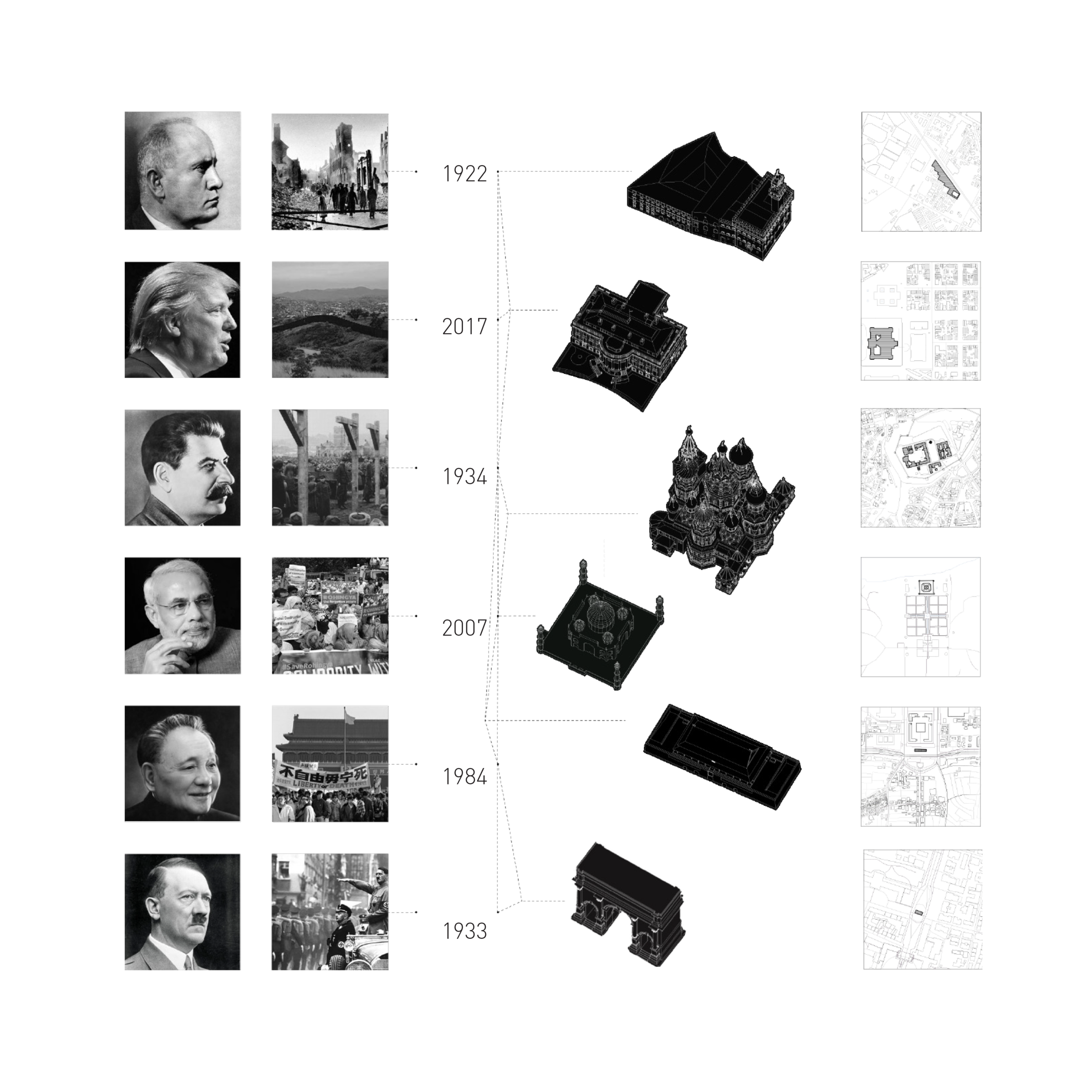
The sociologist Saskia Sassen argues that dynamic expulsions are under way across both the Global South and the Global North, even if by different means. One stark pairing: the swelling numbers of the internally displaced in the South, and the swelling numbers of the imprisoned in the North — in countries like the U.S. and the U.K. When Donald Trump proposed his wall between Mexico and the United States in 2016, that too was a kind of expulsion — a way of casting out cheap labour the moment it loses its value.
Expulsions happen all the time, in all kinds of places, and much of the time we simply look past them. The language of inequality is not enough to capture the extreme conditions we now face across much of the world. Inequality is a distribution, and it has always been with us; what is different now is the particular mix of conditions that has made it so extreme — and expelled so many from the lives they used to lead.
Seen across the long history of development, expulsion takes wildly different shapes from one period and place to the next — among them cultural revolution, massacre, and thought reform.
02 — The Moroccan Birdcage
The title comes from Jonathan Raban's Soft City. The Moroccan birdcage is his metaphor for the way people, like birds, are sorted into separate groups and hierarchies. Raban opens the chapter by noting how stubbornly a kind of “split” sensibility — Manichean, an either/or — persists in the way writers have understood the city.
He goes further: in the city, he argues, we are forced to define our identity — group or individual, or the tangle of the two — against others. Inclusion demands exclusion; to form one identity is to negate another. Whatever the cause, it proves his original point — that the city defies any single overview. He closes with a twist on the old encyclopaedia metaphor, calling the city “a maniac's scrapbook, filled with colourful entries which have no relation to each other…” (125).
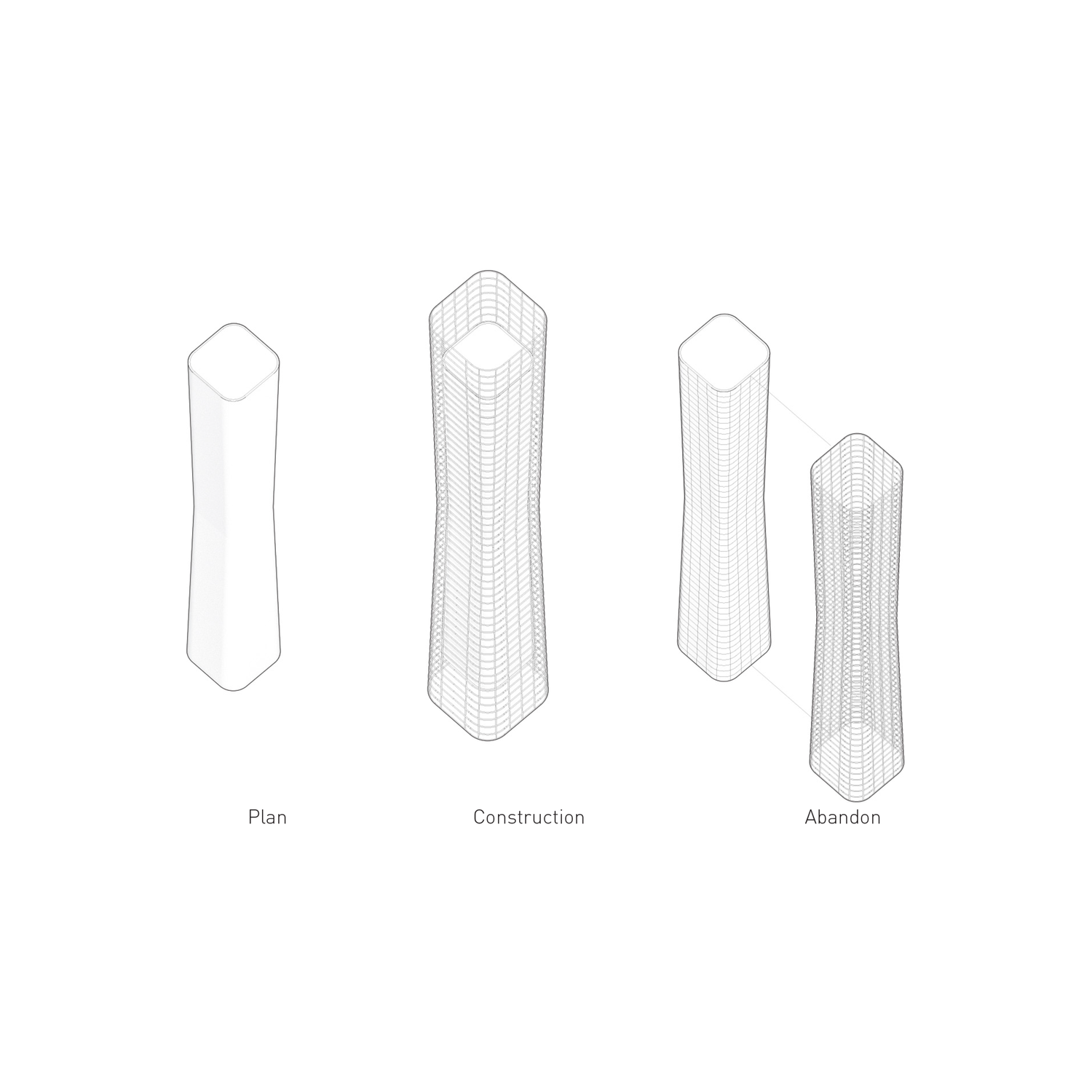
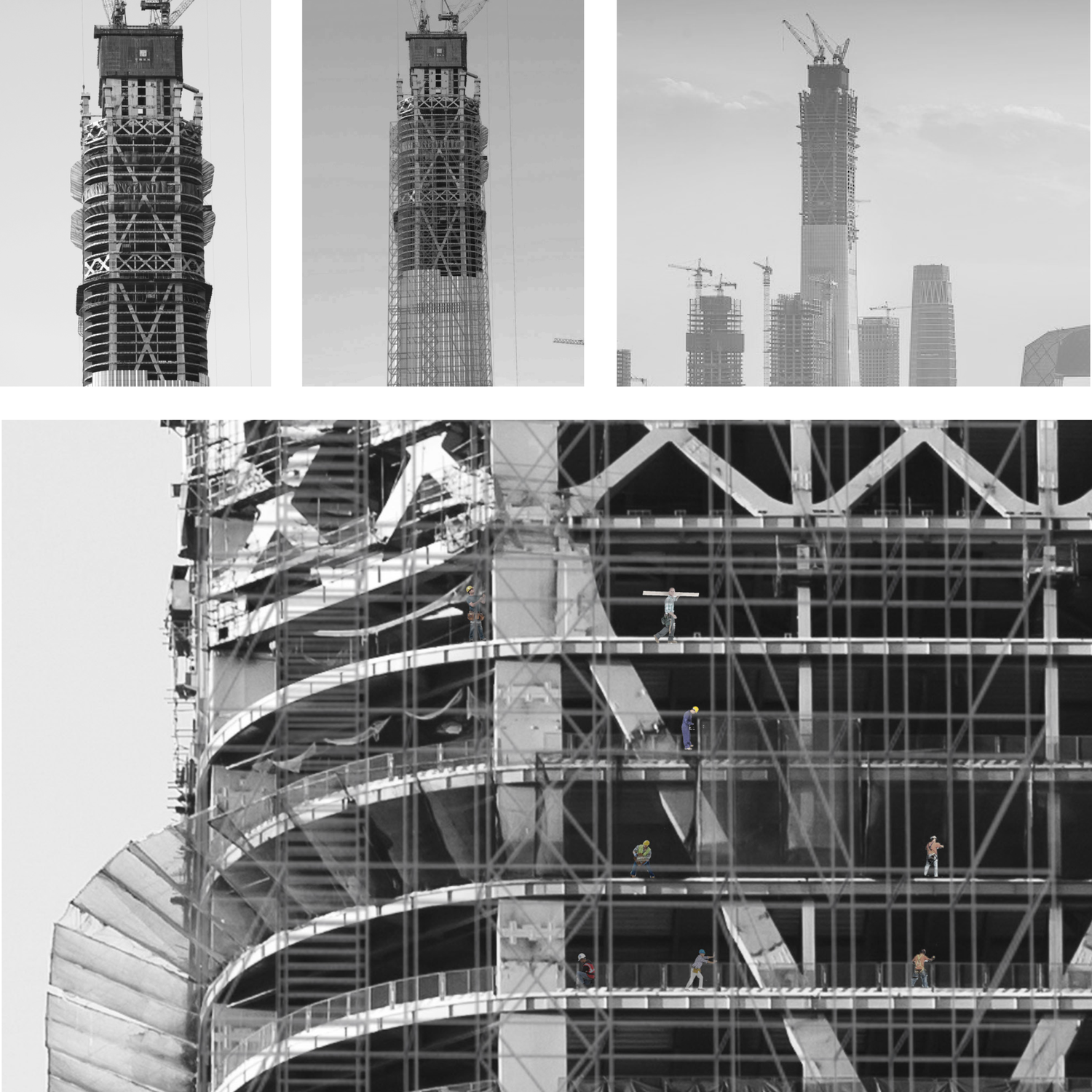
China's peasant-workers are deported from the city the moment their work is done — much like the scaffolding that is thrown away once a building is finished.
03 — Guerrilla Architecture
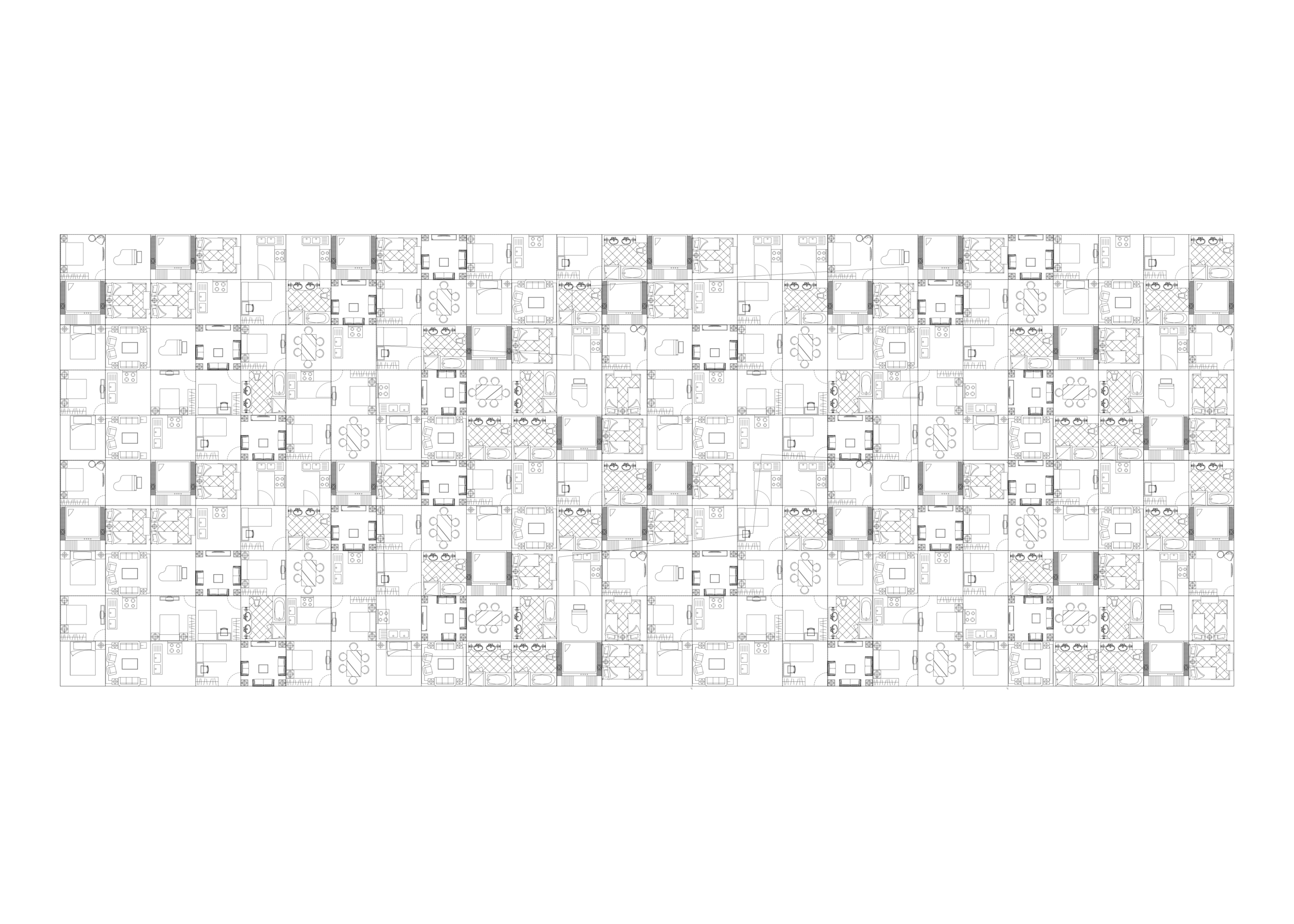
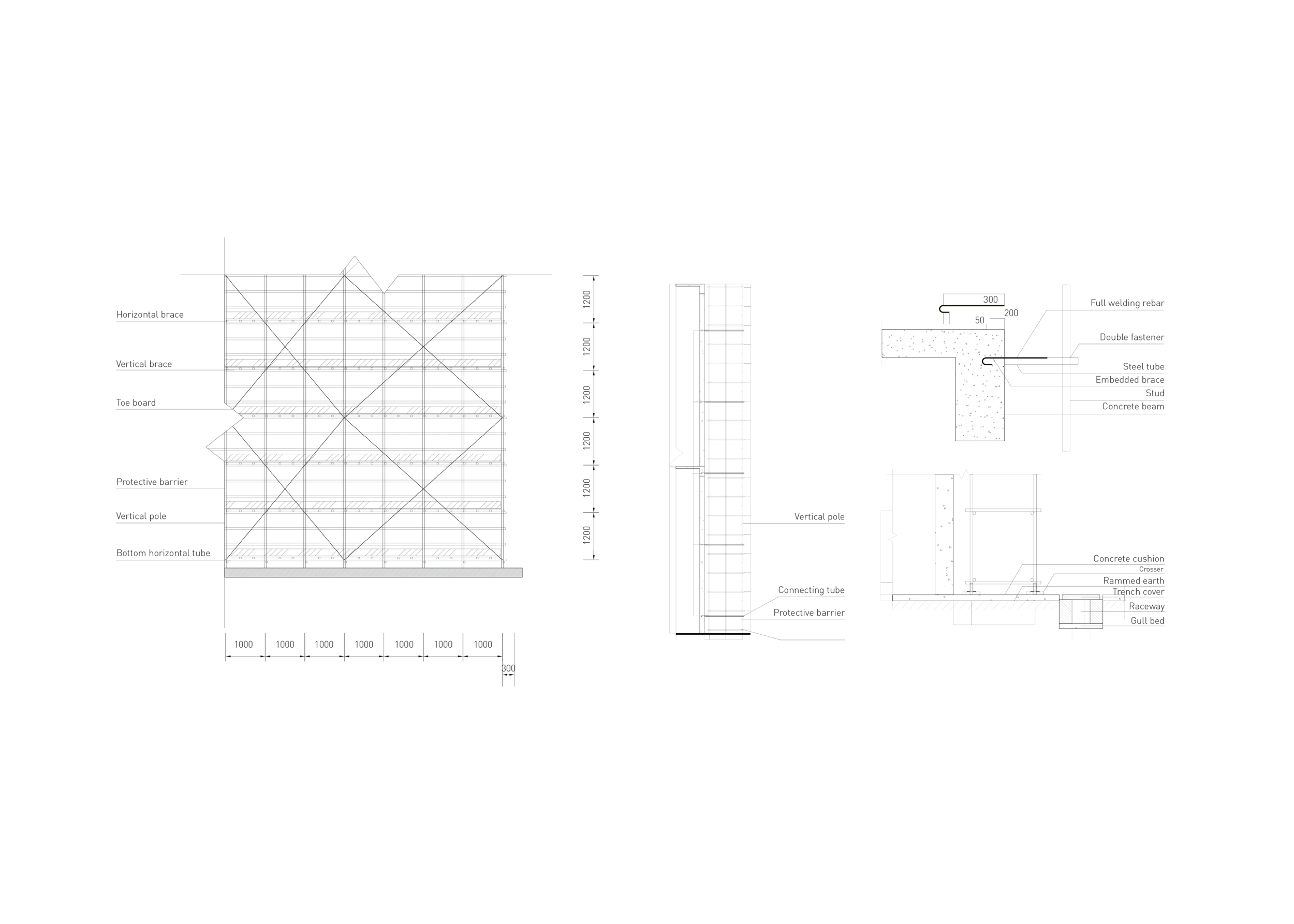
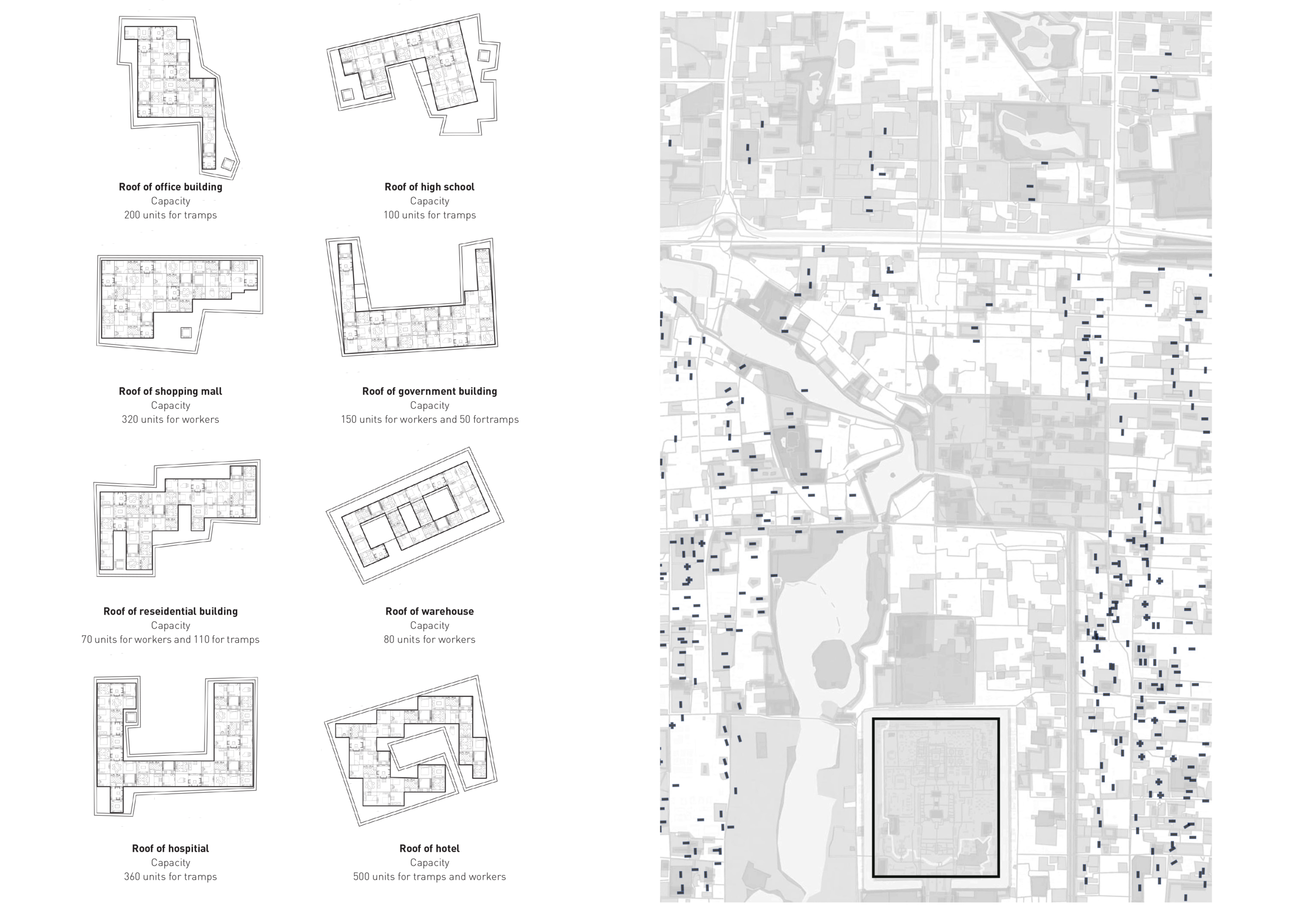
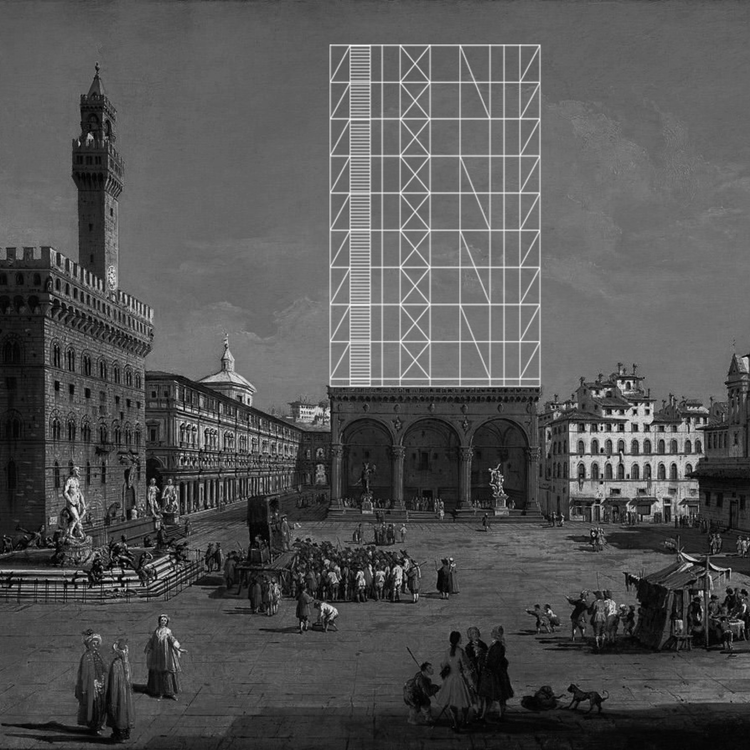
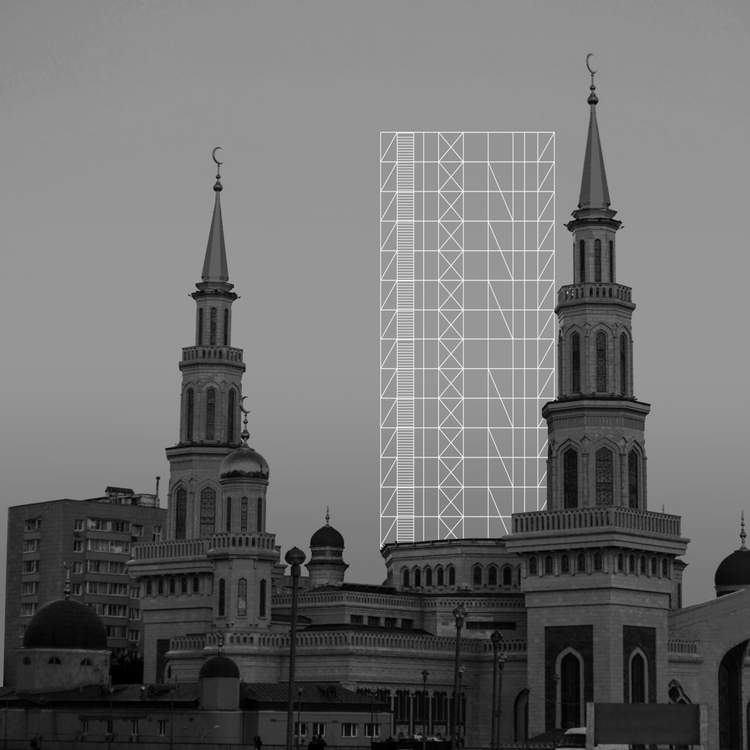
So the proposal takes scaffolding itself as both concept and material, leaning into its ephemeral, wasteland quality. The result is collective housing that is literally guerrilla — light enough to be relocated, temporarily, to anywhere at all: the middle of Tiananmen Square, the lawn of the White House — a satirical metaphor aimed squarely at the society of the spectacle.
04 — Scenes
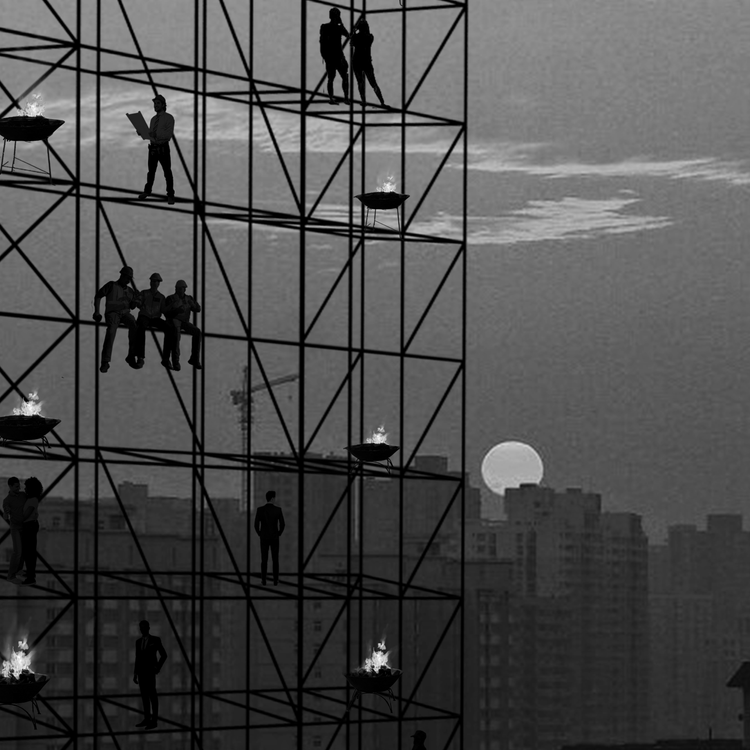
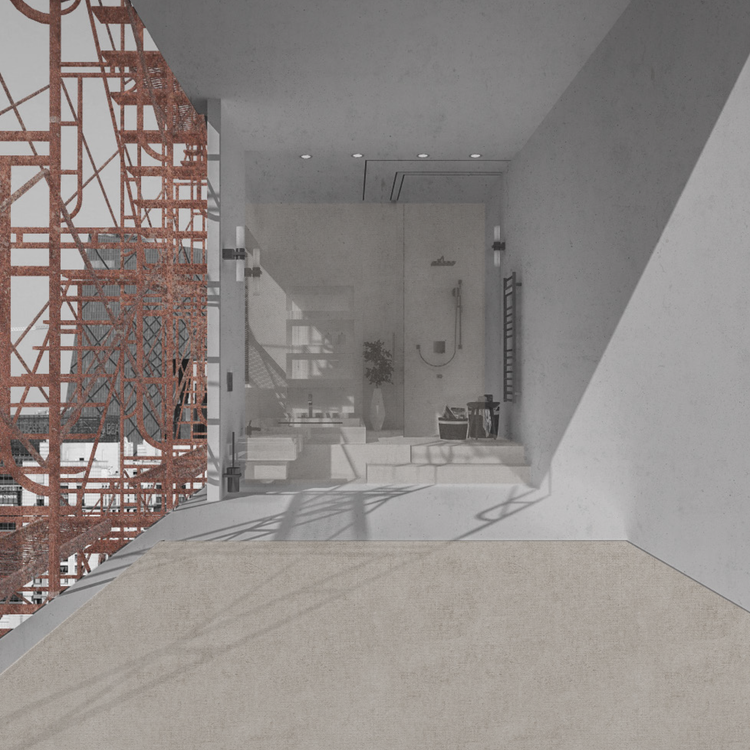
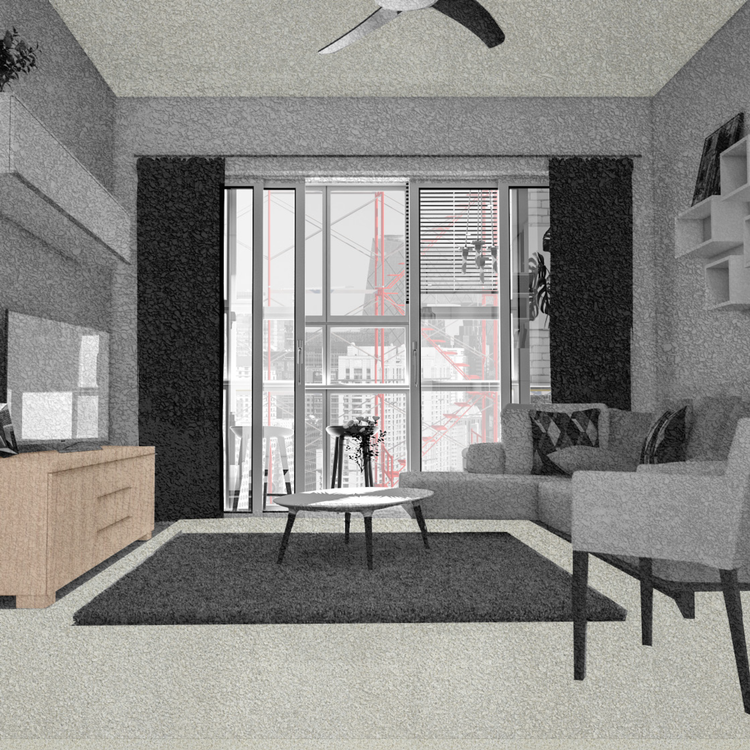
Six scenes of the house set down where it is least expected — a guerrilla structure dropped into the heart of the spectacle city.
Recognition
Finalist in the 2017 Global Students Design Competition.