Archive — Interdisciplinary Art & Design
Re:habilitation
A graphic recording of life and equipment in quarantine
2020 Spring · Harvard GSD
Instructor — Malkit Shoshan
In collaboration with Ivan Zhang & Birdia Zuo
The virus opened up questions about domesticity in isolation: how do you cope with quarantine when home becomes the front line — or when the people you live with are infected? The spatial dimension of the crisis became our focus.
Set in China during the first month of the outbreak, the project starts with four domestic typologies — a millennial's home (a studio or one-bedroom), a couple's dwelling (varying by age), a single-family dwelling, and a two-generation family dwelling. For each, we recorded the measurements a quarantine zone actually requires, and the space a person needs while recovering.
From there we graphically recorded the activities and equipment of this chaotic time, alongside the wider picture: the pandemic's spatial expansion, the casualties, the diverging policies of China and the U.S., the stock-market drops, and the mechanics of community control in China. The aim was to unpack the global process of the outbreak — a story whose cast, given the state of things, is potentially everyone.
It is also a story about socio-economic and political fault lines. The month-long pause on returning to work dealt a heavy blow to the global economy, and will keep doing so; part of our hope was to sketch, through diagrams, what a careful return to work might look like.
Pandemic breakout — China vs. the U.S.
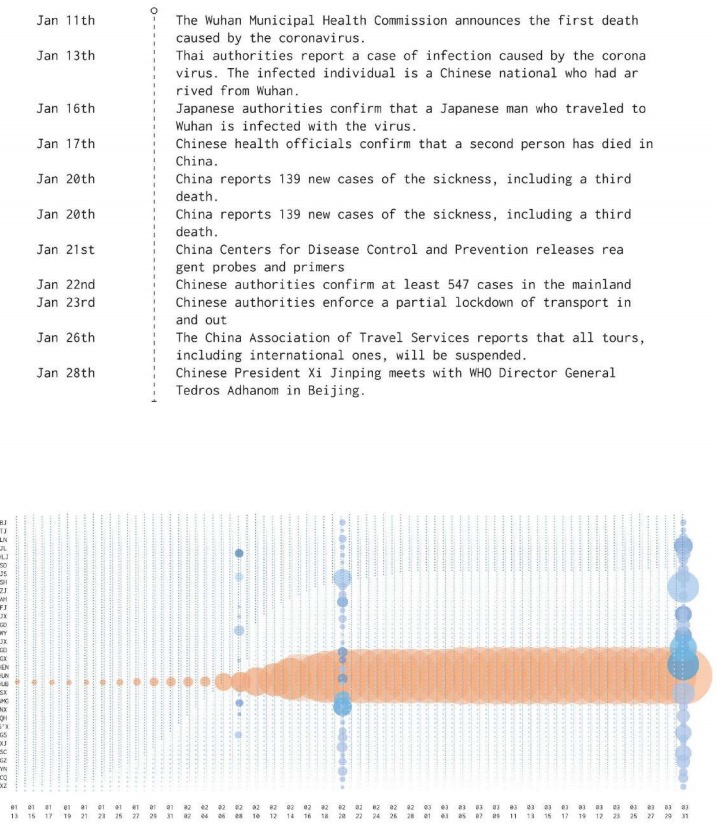
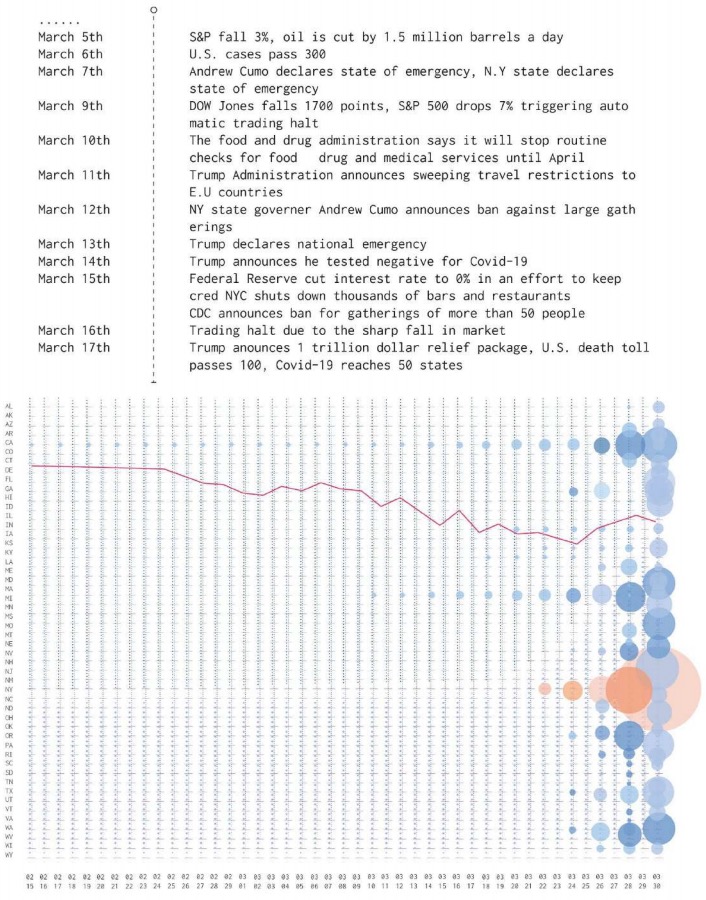
The next phase — our main focus — is a spatial analysis of quarantine zones, and of how China and the U.S. approach social separation differently.
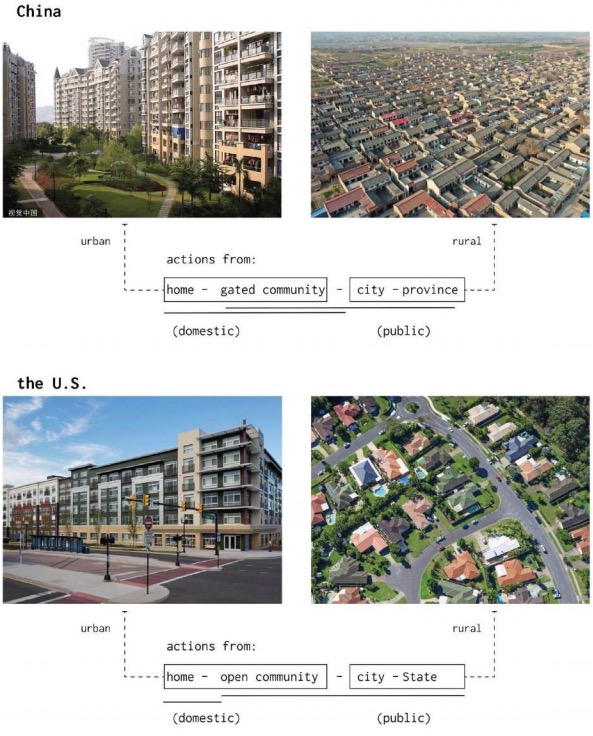
The living environments differ. China runs four nested stages of protective action, from the domestic outward: home → gated community → city → province. In the U.S., it depends on the state. Self-isolation itself, though, looks broadly similar in both.
We tried to stay home and cut down on grocery runs. In the U.S., some states required masks in public; China began its protocols in January 2020, with stricter body-temperature checks at public entrances.
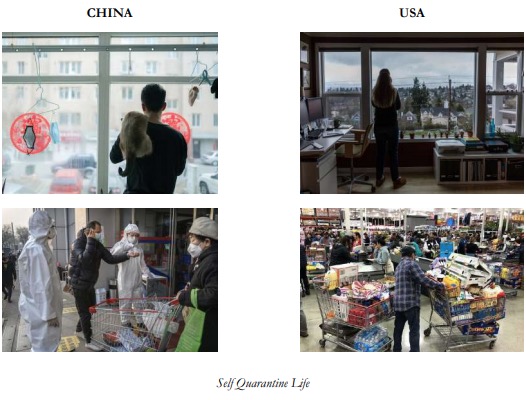
The sharpest differences are in how communities monitor outbreaks. China leans on community committees and volunteers checking on neighbors, plus drones for public sanitization; the U.S. uses drive-through testing and sanitation at a more public scale. Both practice social distancing — and people improvise non-contact methods in inventive ways.
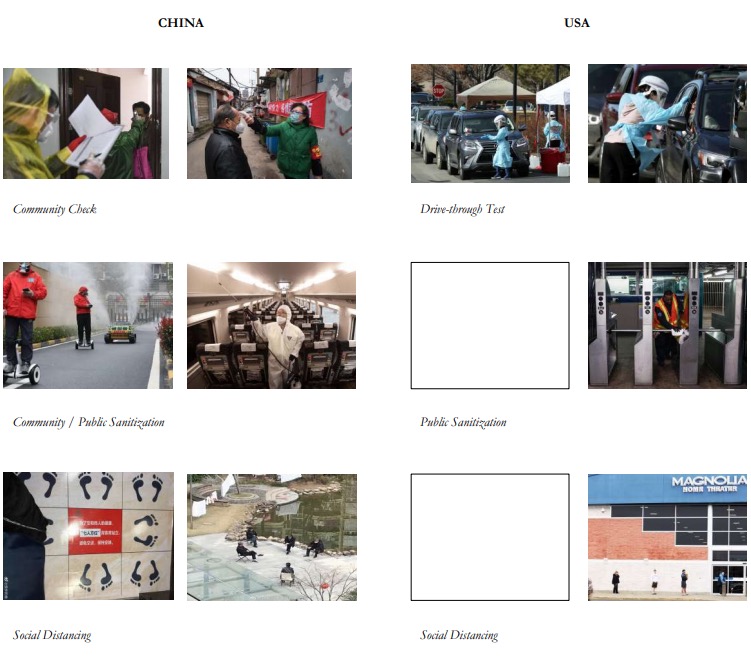
Border at different scales
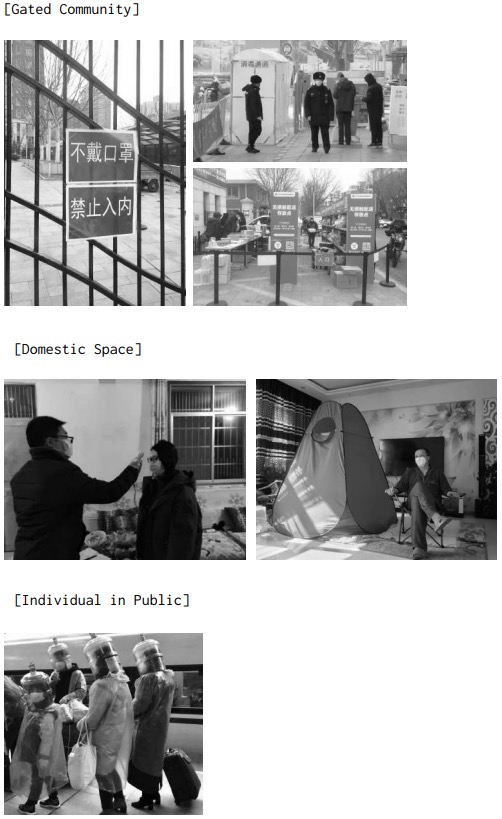
Recognition
Featured in the Corona Essays of the Copenhagen Architecture Festival.