Archive — Computational design
Phantom Monument
Projection mapping that mis-registers a form's own geometry, in light and shadow
2020 Spring · Harvard GSD
In collaboration with Zhengyu Yang
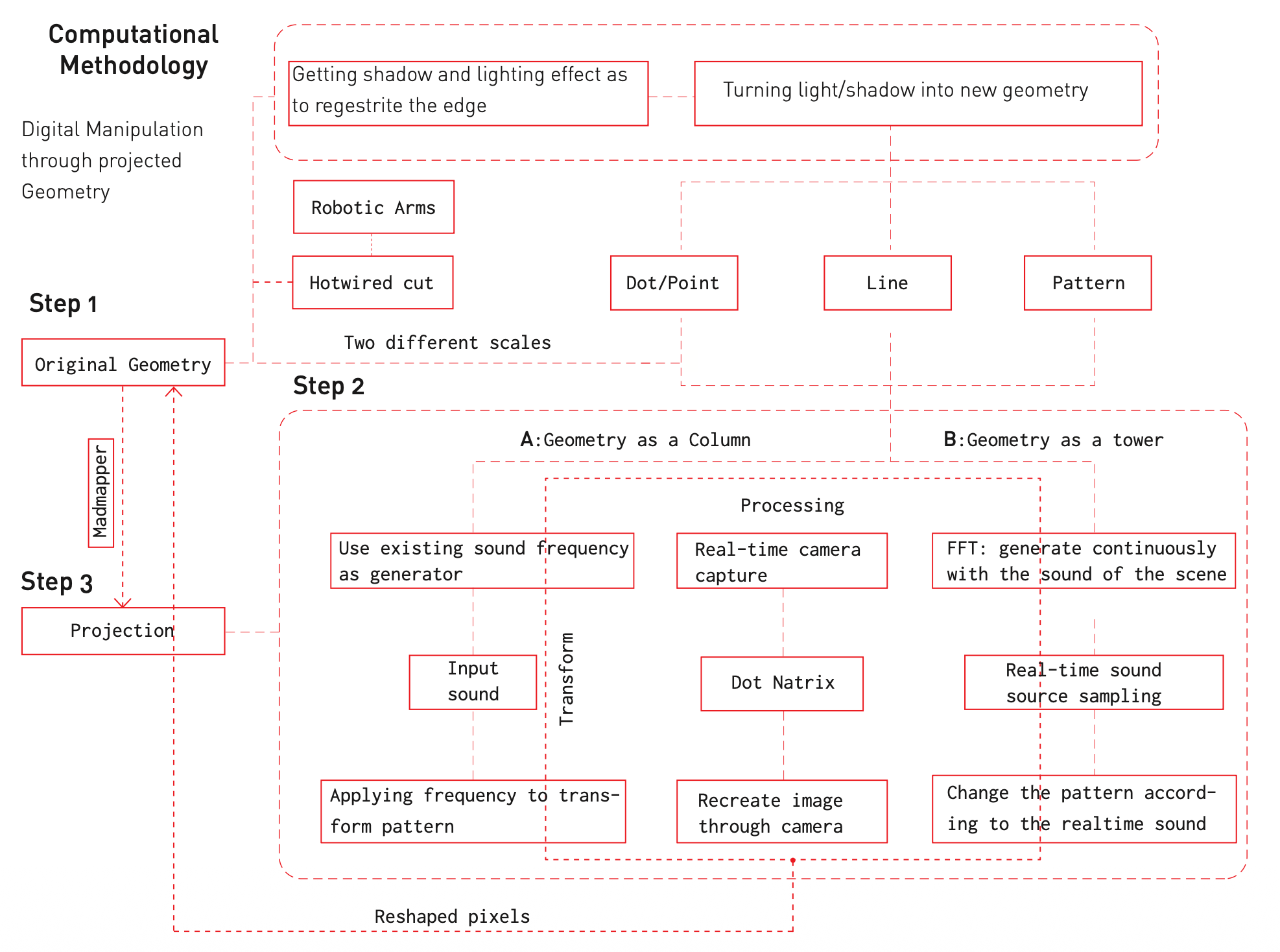
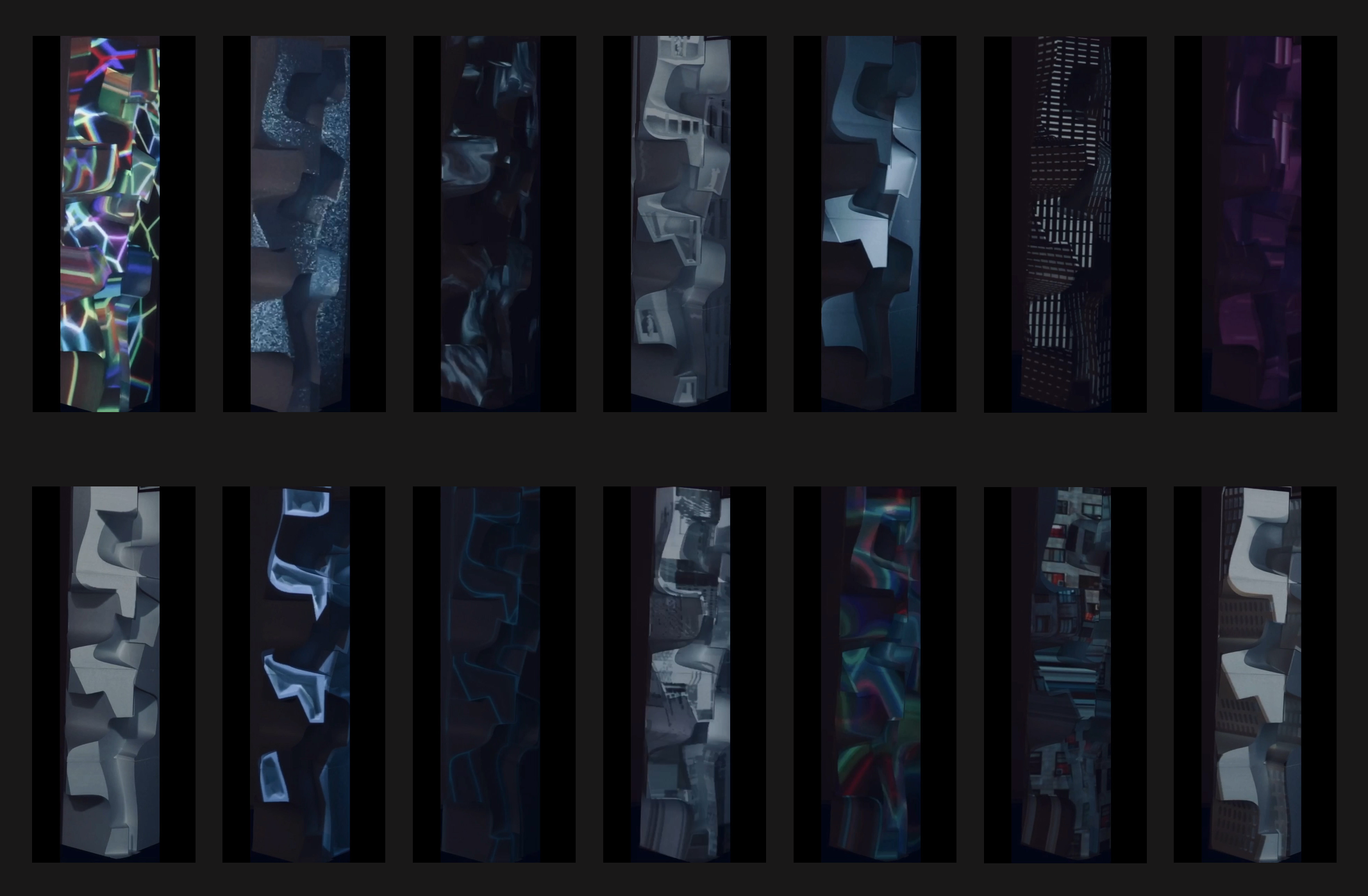
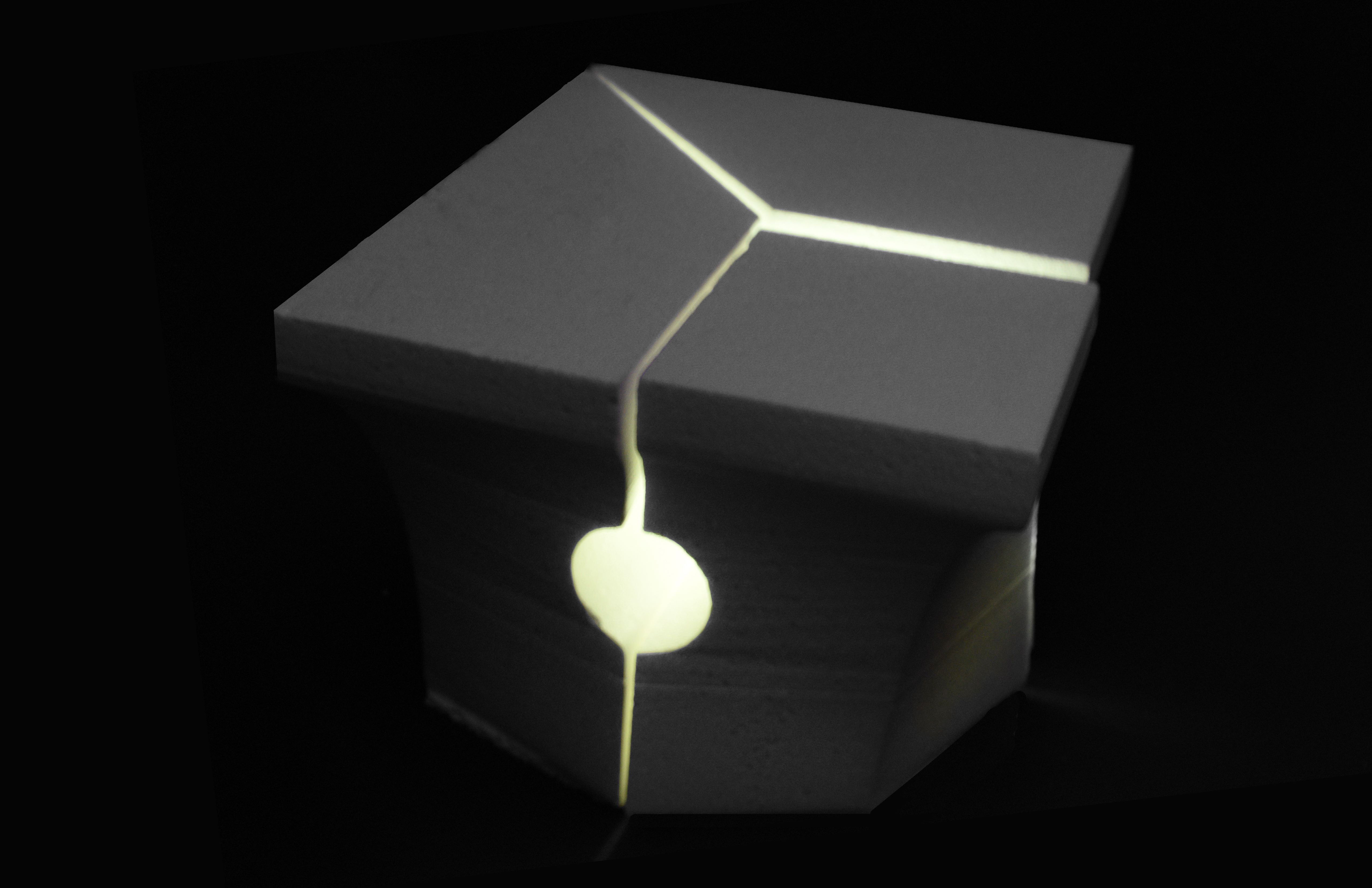
Phantom Monument lays an augmented reading over a physical form. Using projection as a kind of digital description, it builds a notional system that can reinforce — or deliberately mis-register — the formal logic of an original geometry, turning light and shadow into a way to re-state a form's boundary, size, scale and spatial character, at once as a monument and as an occupiable volume.
Phantom Monument lays an augmented reading over a physical form. Using projection as a kind of digital description, it builds up a notional system that can either reinforce or deliberately mis-register the formal logic of an original geometry. Light and shadow are the medium: a way to re-interpret a form's boundaries and attributes — at the scale of a monument, and at the scale of an occupiable volume — with shifting shadow, colour and texture constantly re-stating its boundary, size, scale and spatial feel.
Projection as misregistration
The work takes its cue from projection-mapping practice — pieces like Cathedral of Thieves and the Limelight projection mappings — where light cast onto a surface rewrites what the eye believes the surface to be. Projection becomes a way to assign new, alternative readings to a form.
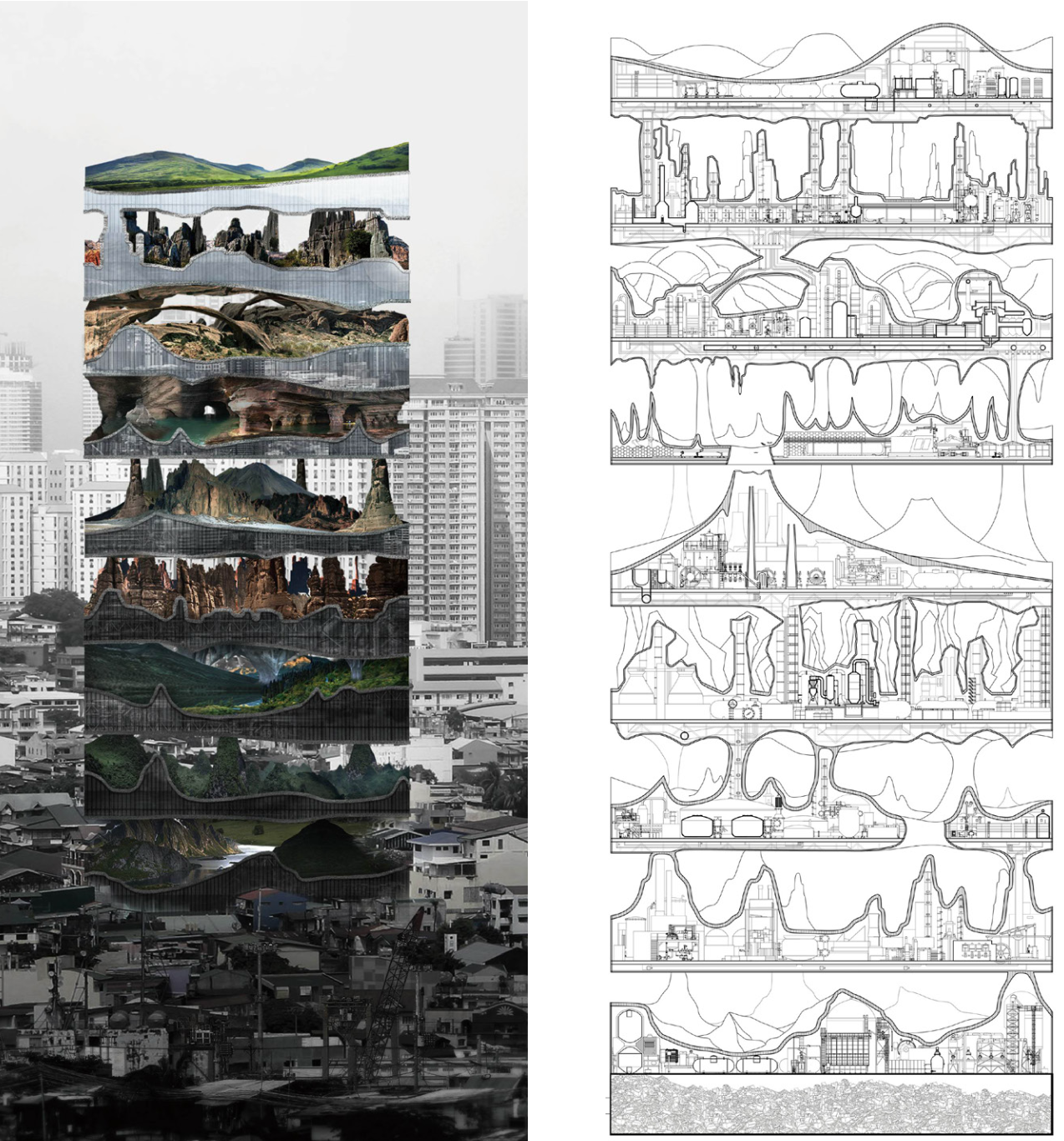
Factories moved outside the cities because they were noisy and polluting. But many are now cleaner, and could find a new place in the urban environment. Bringing them back would raise quality of life — letting employees walk to work rather than commute — and put them closer to skilled workers, suppliers and research centres. This is our vision for the cities of tomorrow: factories dissolved into small pieces and stacked together into high-rise vertical factories.
Vertical Factories — Linshen Xie & Tianshu Liu, 2nd place, 2017 eVolo Skyscraper Competition
Curvature through geometries
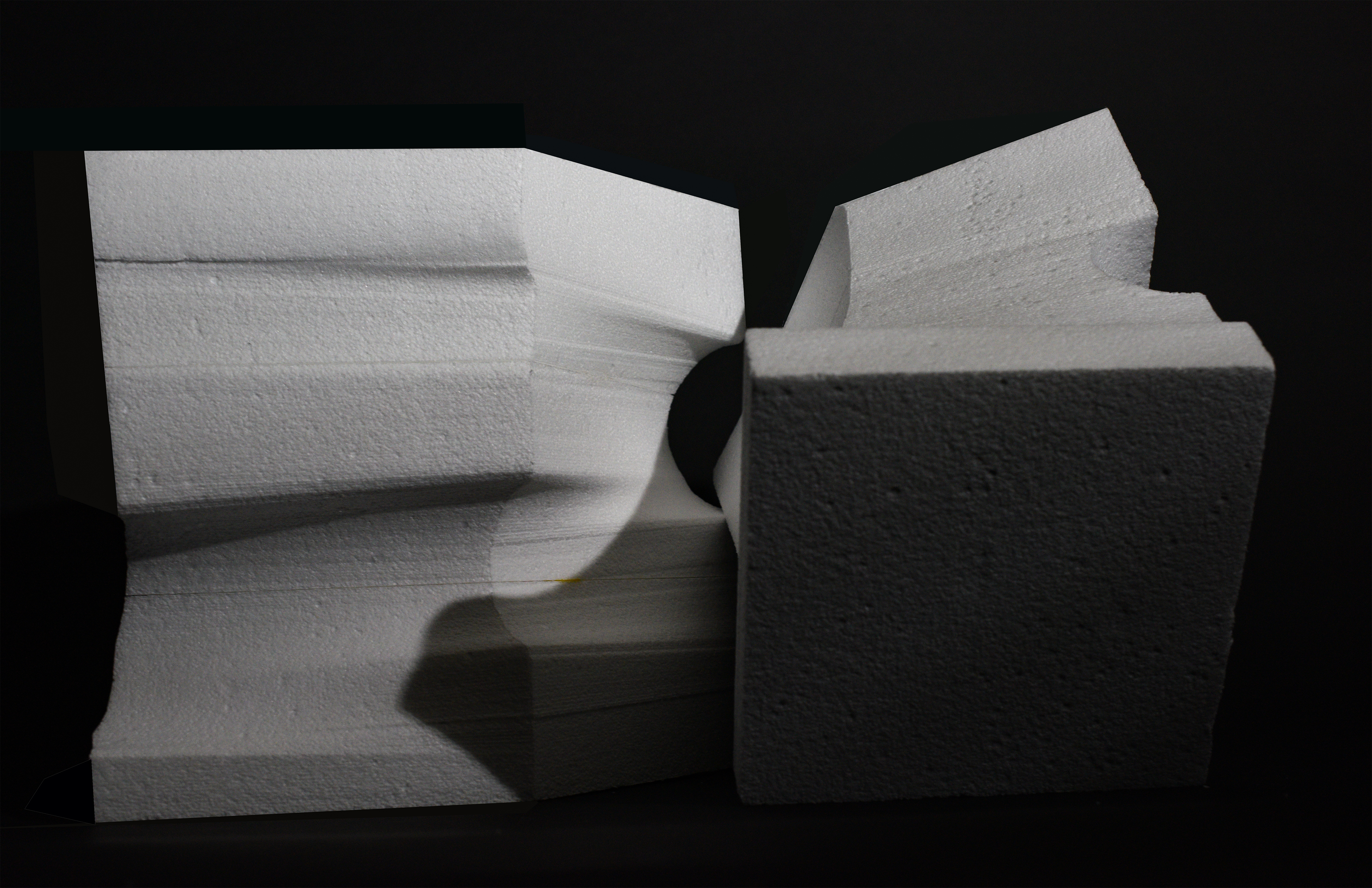
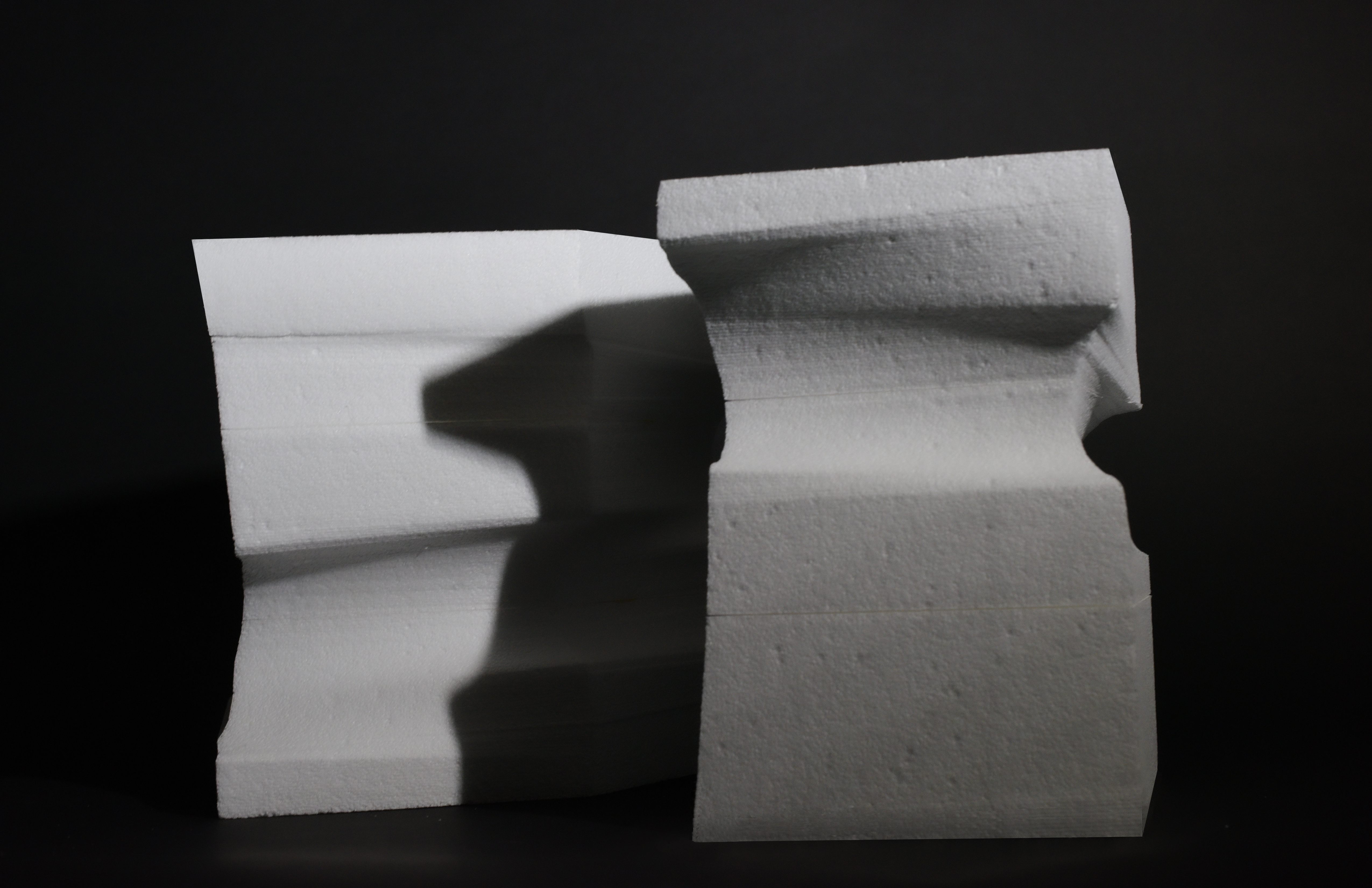
Curvature plays an essential role in those facades, and the project takes its cue from them — mocking up the silhouettes of a typical Chinese landscape, mountains and water, as the geometry to be cut and projected upon. Light and shadow then re-interpret that form's boundaries and attributes, monument and occupiable volume at once, the shifting effects continually re-stating its size, scale and spatial character.
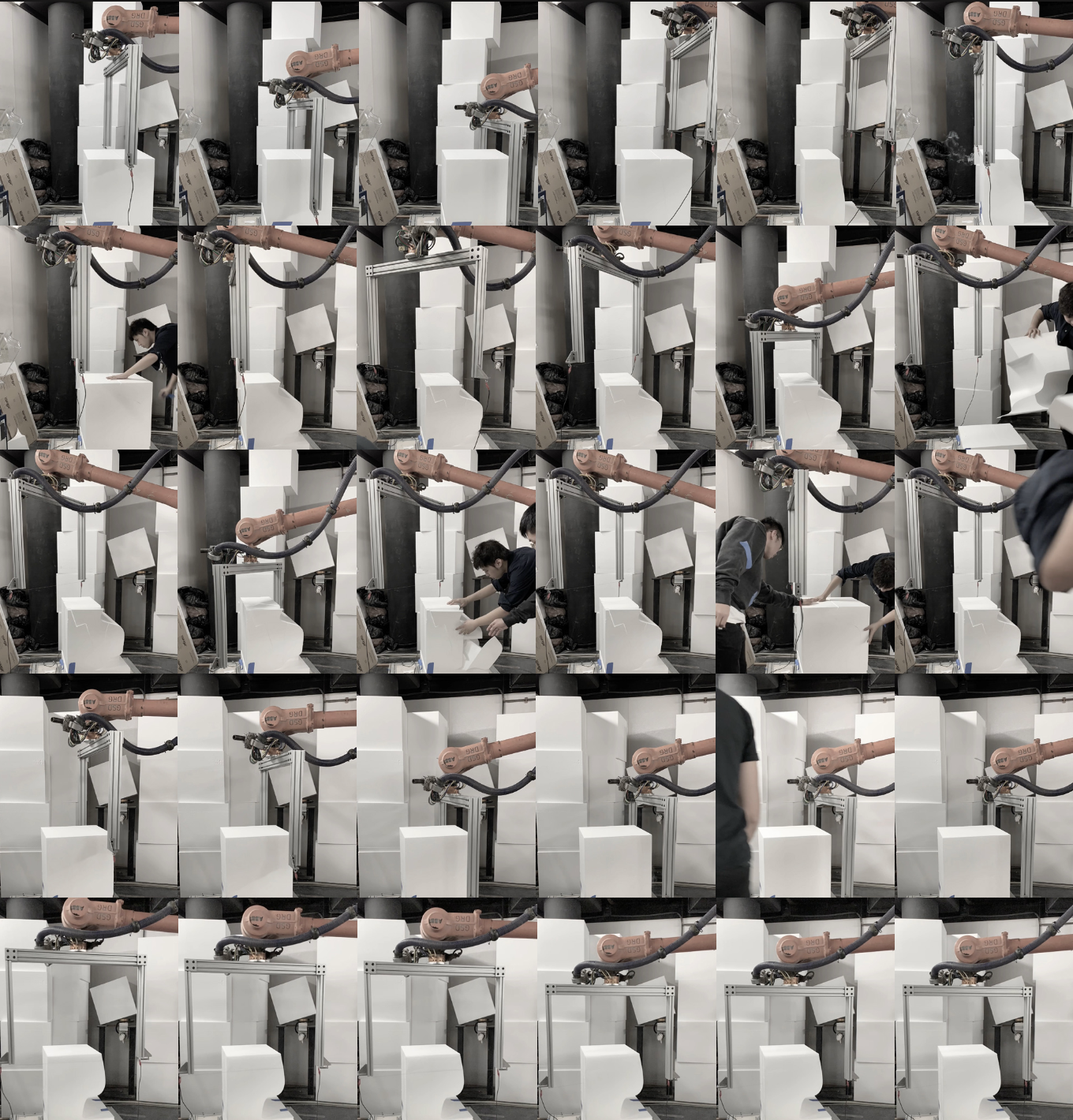
Hot-wire cutting
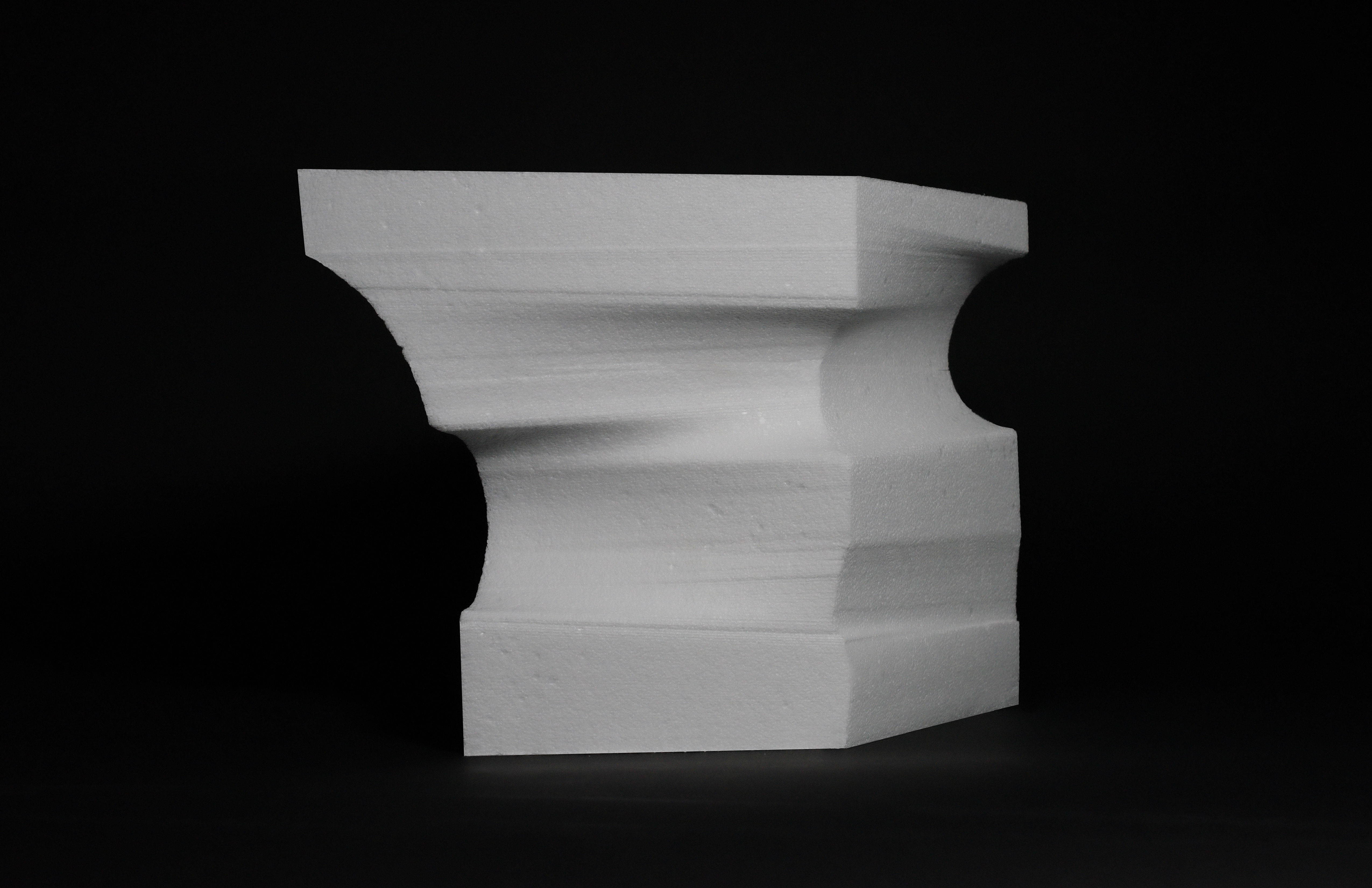
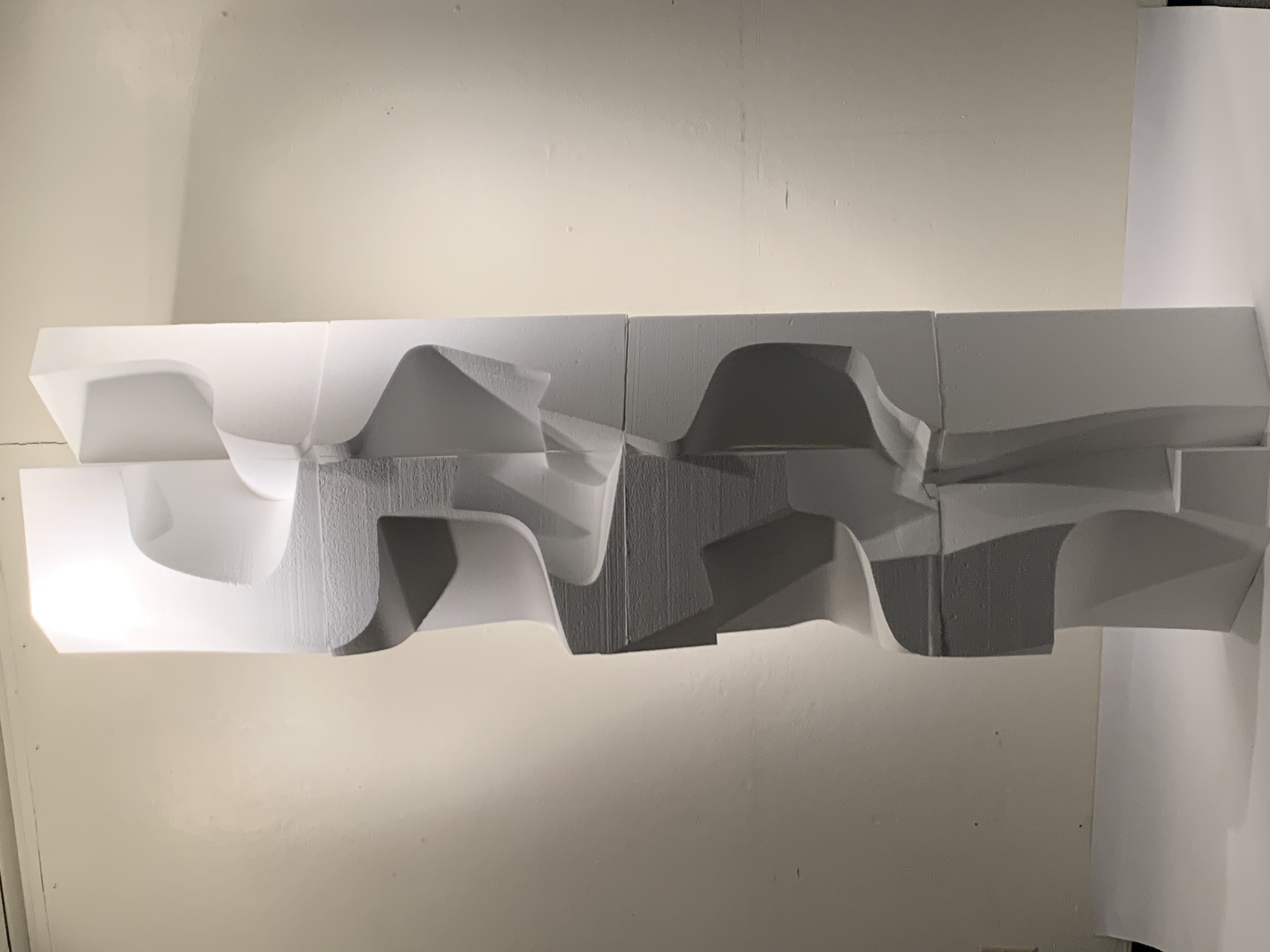
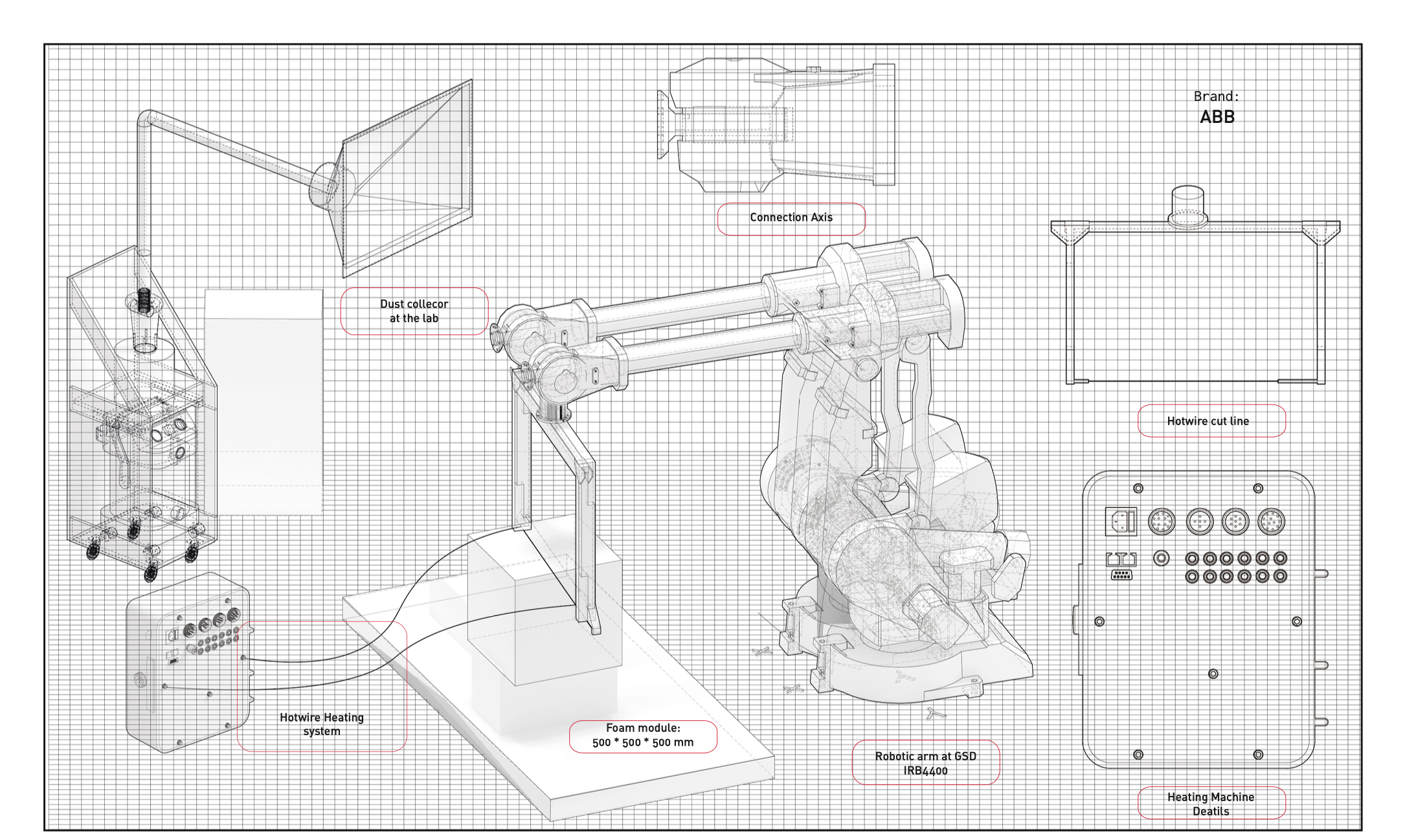
The form is made by hot-wire cutting — a heated wire driven through foam to carve the curved geometry. The project sits where digital process meets physical craft, asking how digital tools shape the way we design, produce and experience form, across two registers: the artifact and the event. New computational strategies fold material-specific considerations into the design itself, and open fresh methods of material exploration.
Cutting paths
Gaps always remain between how we design and how we actually fabricate and assemble. Beyond the control those processes afford, digital technology can also assign new readings to a form — projection mapping can enhance it, efface it, transfigure it, or disintegrate it altogether. Here the object is divided into four cube-like parts, with three cuts applied to each; the cutting paths are generated from the very curves used to loft the object's surfaces, which kept the whole process quick and clean.
Digital media in an over-urbanised context
In his Phantom Landscape, the artist Yang Yongliang superimposes scenes of modern city life over the mountains and waterfalls of a Northern Song dynasty shanshui — “mountains and water” — painting. There is a deep nostalgia in it for an older culture and way of life, and the implication that the intrusion and sheer speed of modern progress is inevitable and relentless — a juxtaposition of time and culture.
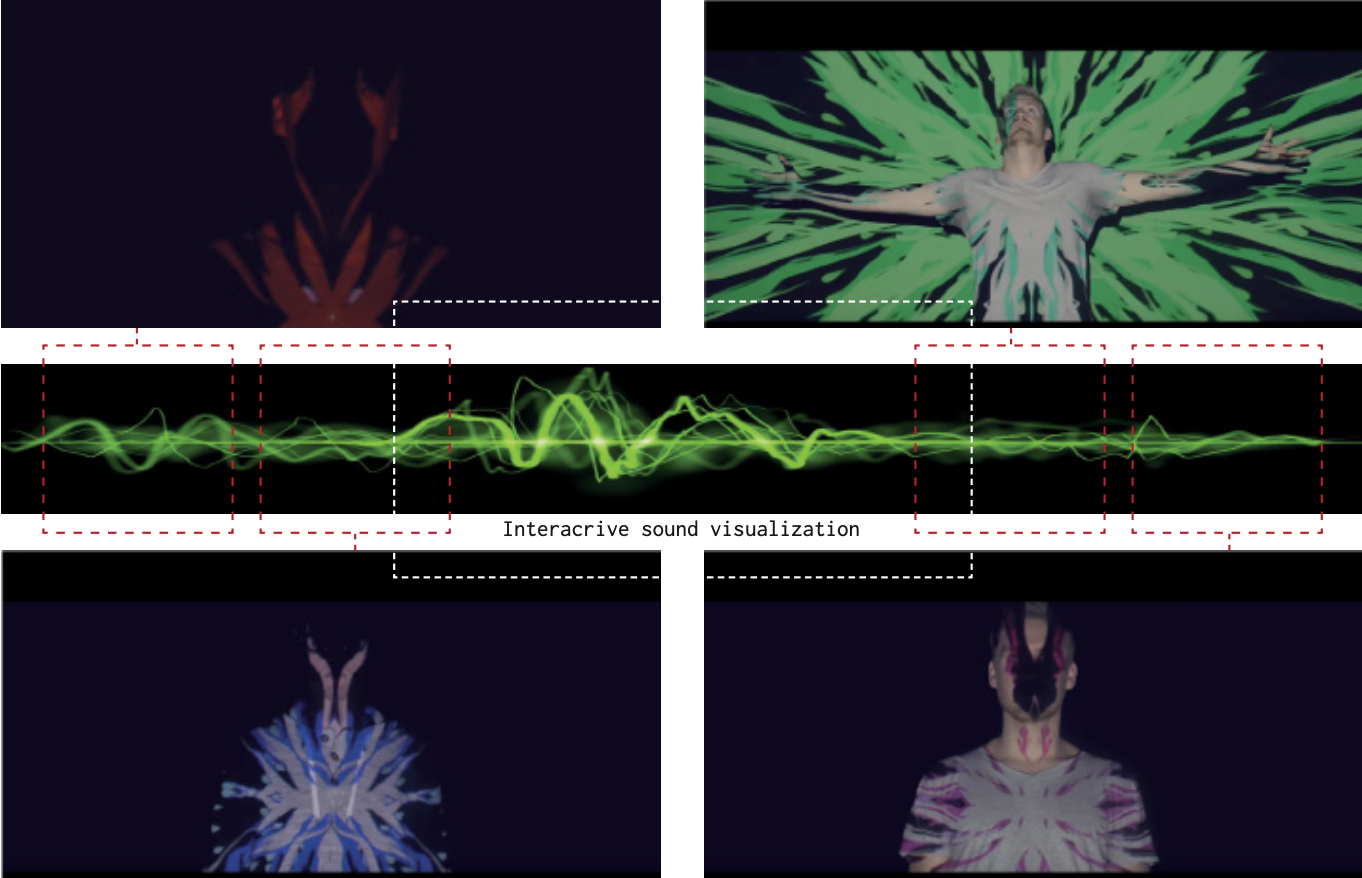
Inspired by Yang's installation, the project tries to summon that same nostalgia from China's modern cities, in a similar but different way. Where his work began as a two-dimensional drawing layered with fishing villages, modern cities and time, we wanted to add the one layer daily life can't do without: sound — the surest way to render a city abustle with crowds, and to set it against the quiet of the traditional village.
Sound recorded at different hours of the city becomes the project's main parameter. Its shifting amplitude and frequency are transformed into changing visual patterns — the sound made visible — and, with a high-rise form as the canvas, projected back onto it.