Archive — Design studio
Anti-walling Rules
A public theatre that lifts the political weight from a wall, without tearing it down
2017 Spring · Guangzhou, China
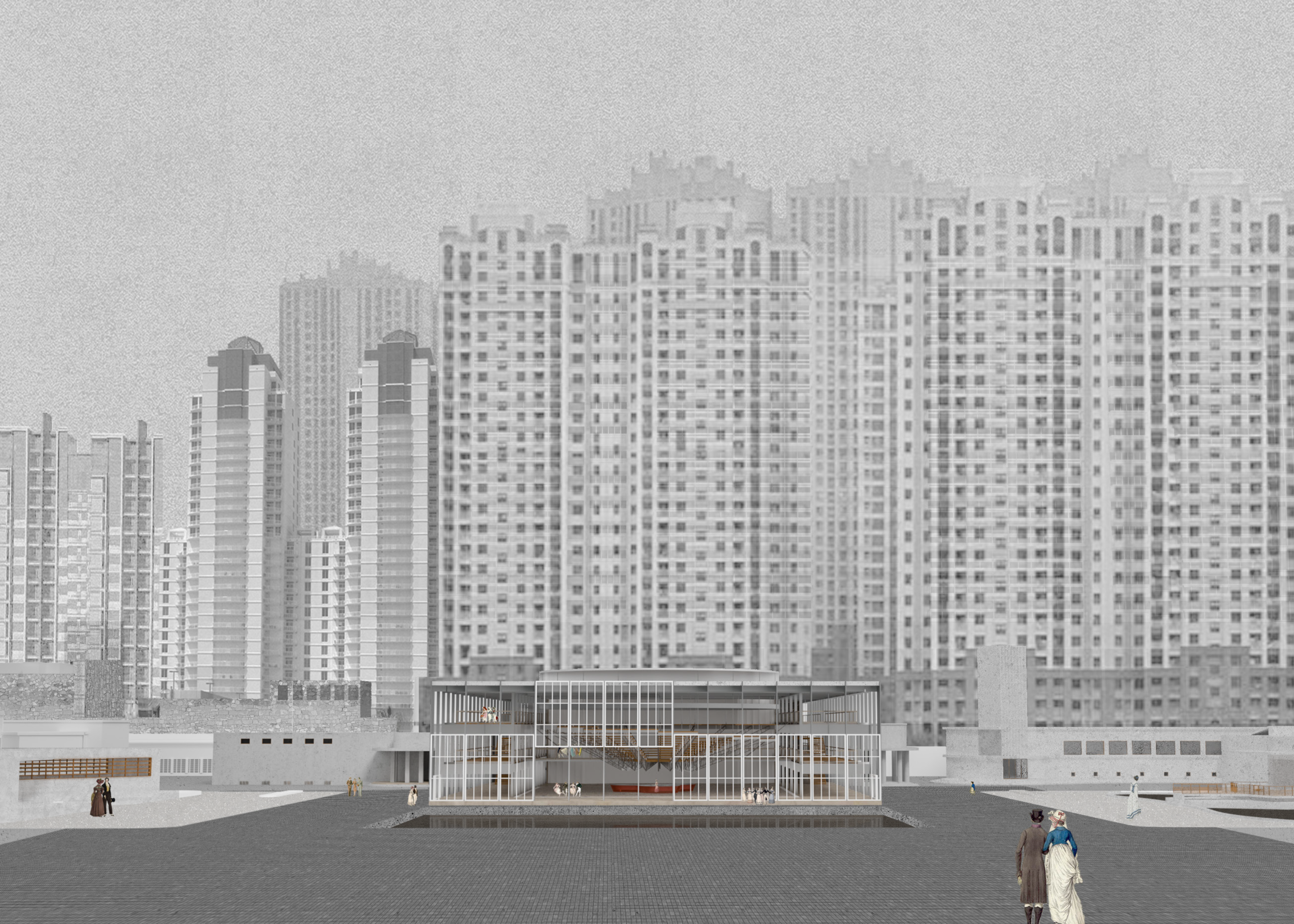
A spring-2017 design studio at the South China University of Technology (SCUT). In 1952 a Guangzhou park hosted the Fair of Southern China Local and Special Products — an event of real political weight in the post-war recovery of the south. A wall at the centre of the park, once the Fair's backdrop and read as a symbol of the Party, still stands. Anti-walling Rules sets out not to demolish that wall but to relieve the political pressure behind it — inserting a public theatre to bring a note of freedom into a place heavy with history.
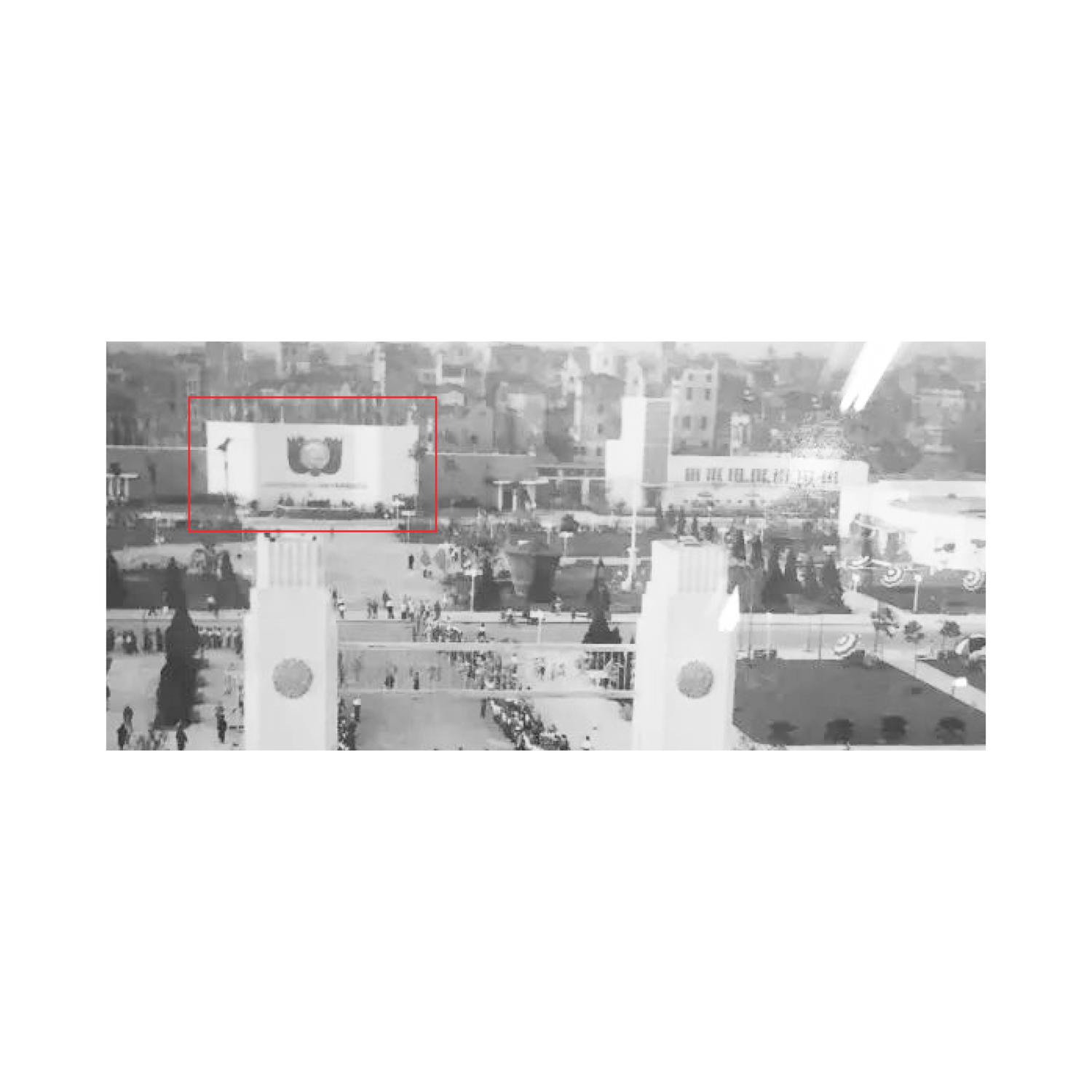
The Fair of Southern China Local and Special Products, held in Guangzhou in 1952, was an important social and economic event — and, in its way, a strong political signal. It helped rebuild the relationship between city and countryside and revive the southern economy through the years of national recovery. After the Fair, the park became a stage for the Cultural Revolution. Many of its pavilions were dismantled, but the wall in the middle of the park remained: once the Fair's backdrop, it had been read as a symbol of the Communist Party, and it has witnessed every change the park has gone through since.
Today the park draws few visitors, though it is almost the only one in its district. Anti-walling Rules is dedicated not to destroying the wall, but to easing the heavy political pressure it carries. A public theatre felt like the right answer — a way to let a voice of freedom into a place burdened by its own history.
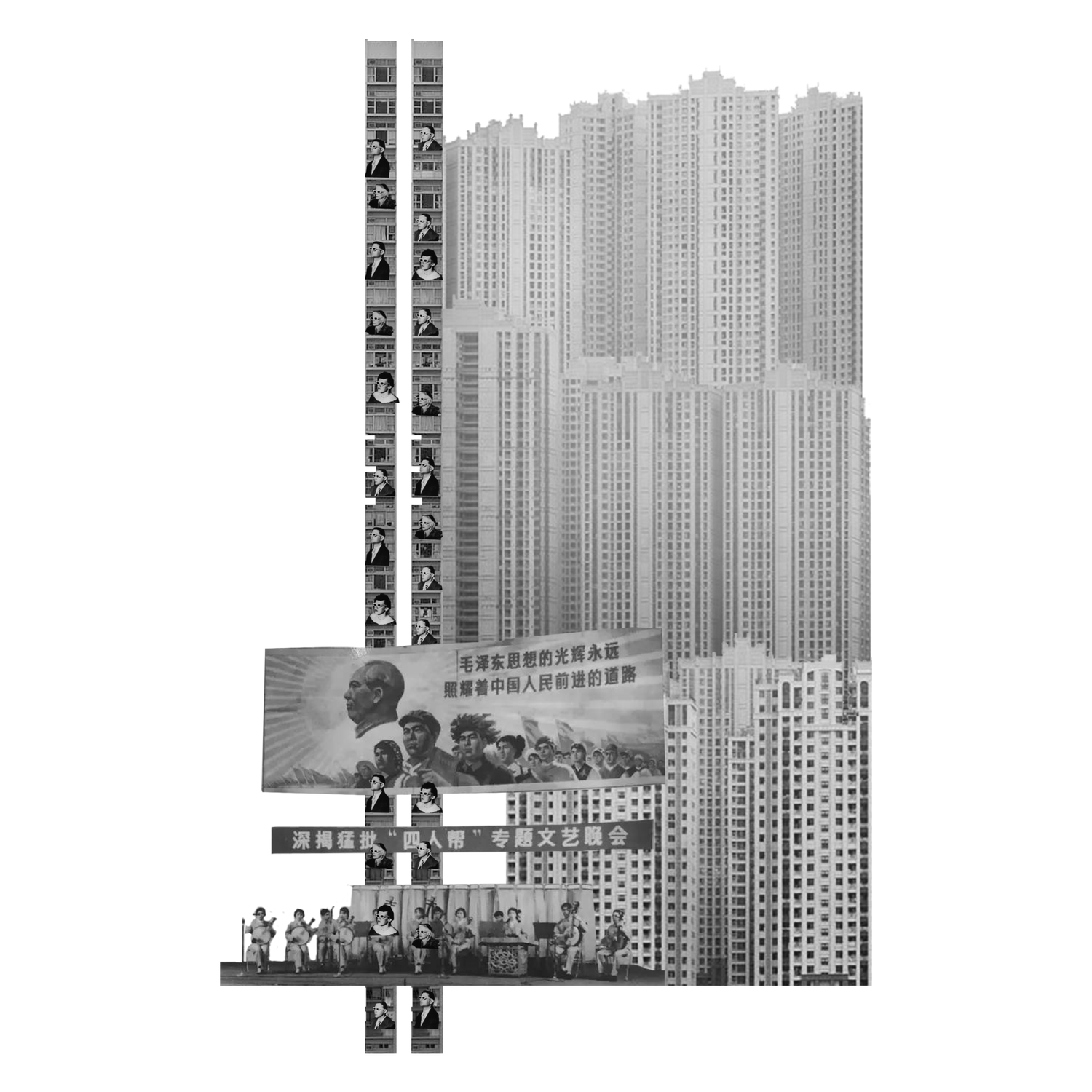
01 — A Wall Made of Political Pressure
For decades, a high-pressure political context shaped everyday life. On this site the government held its agricultural exhibitions and, after the founding of the PRC, the events of the Cultural Revolution. The layout was rigidly symmetrical — all emphasis on the centralization of authority — and that solemnity cut the park off from everything around it. As its surroundings turned into prosperous, busy spectacles, the park was left behind: stark, lifeless, a “park” only in the government's naming of it. The wall, in the end, is made of political pressure.
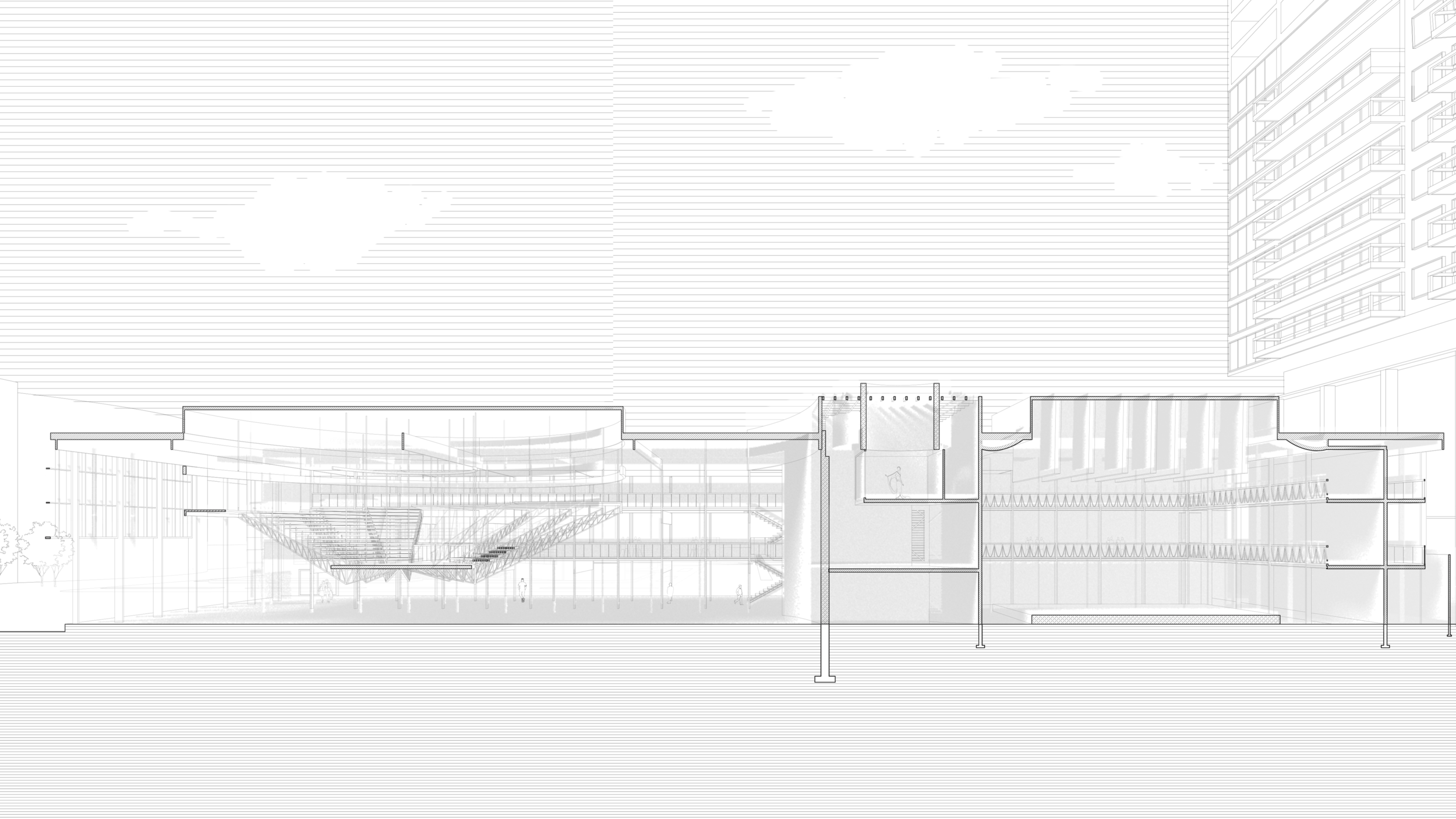
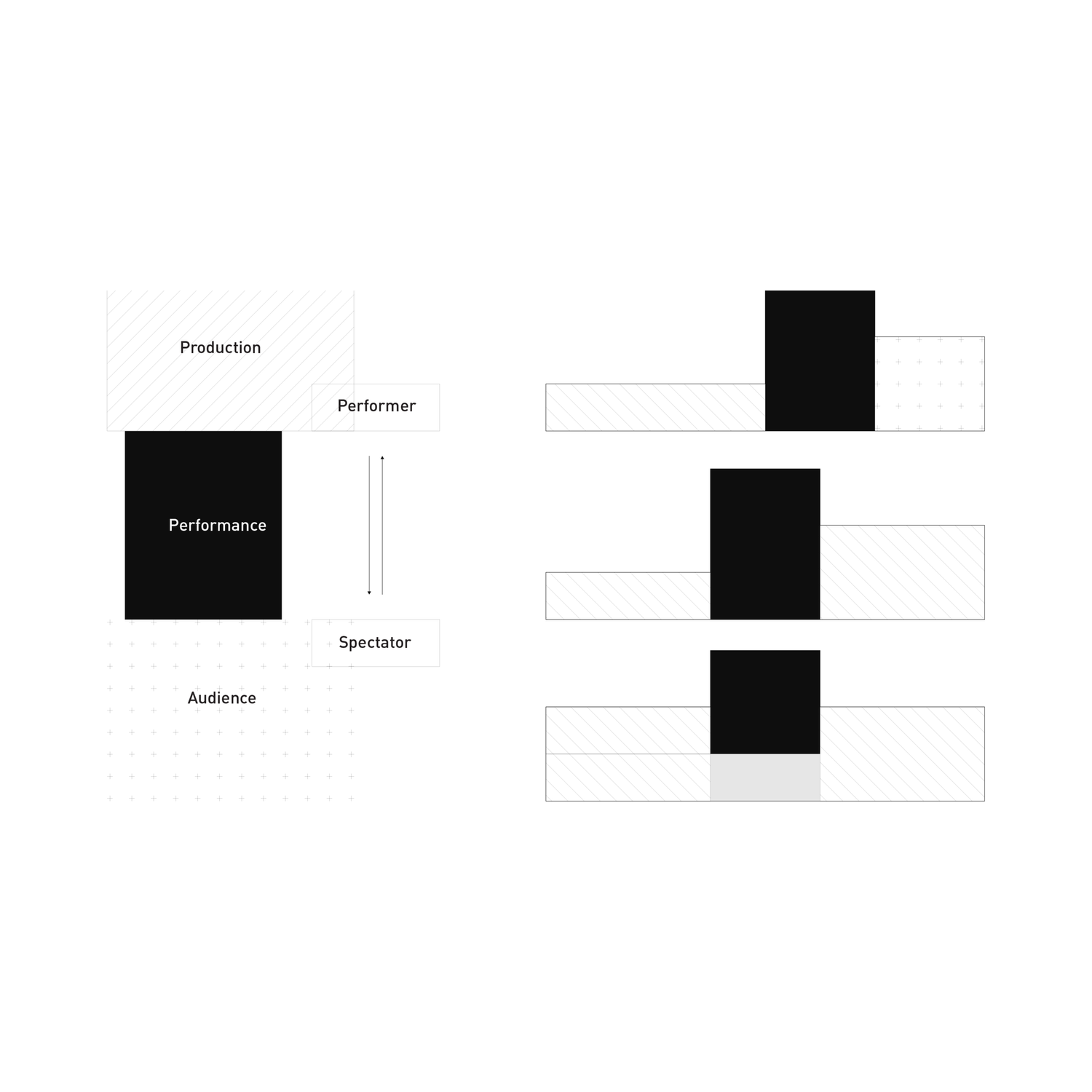
The question, then, is how to reduce the pressure behind the wall rather than the wall itself. Studying theatre types in section, I traced the possible relationships between actor and audience — with the wall doing the work of dividing space. Guangzhou is marked by a sharp border between its historic centre and the periphery around it; in the tension between those two worlds there is room for a new kind of urban scene — a place where, within a plural context, one might contribute to a fuller understanding of the city and its edges.
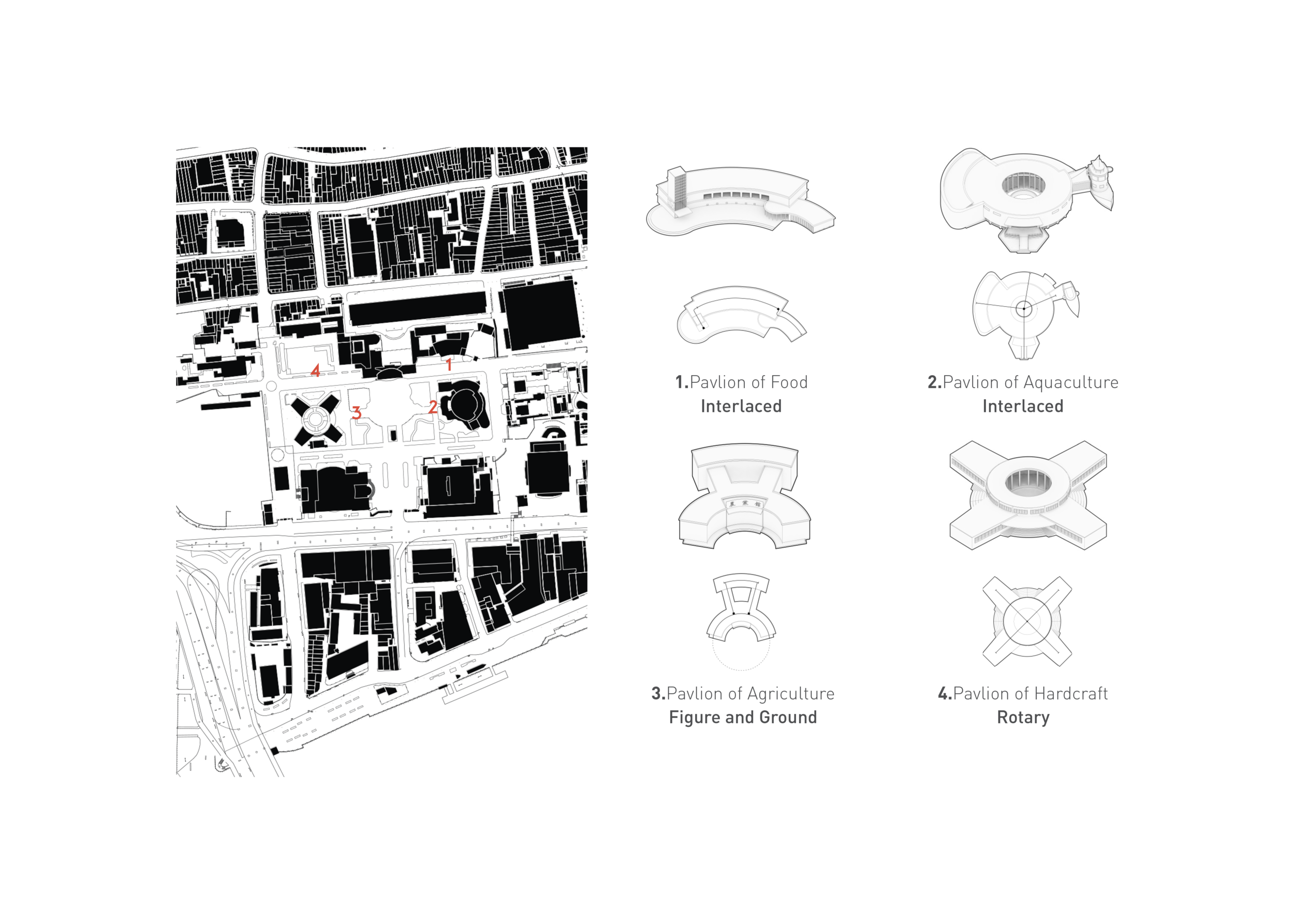
02 — From Context to Form
The wall in front of the pavilion had served as the backdrop to the agricultural exhibition's podium. When some residents refused to give up their houses, the architects shaped the wall to step around them — and, with the houses staying put, held the courtyard back from the ground behind the wall.
The aim is to gather back the peripheral parts of the city — the places left undefined in its landscape — to reconnect them to the centralized urban structure and restore their collective value. The park, with its formal exhibition spaces, made an ideal site for a kind of guerrilla architecture.
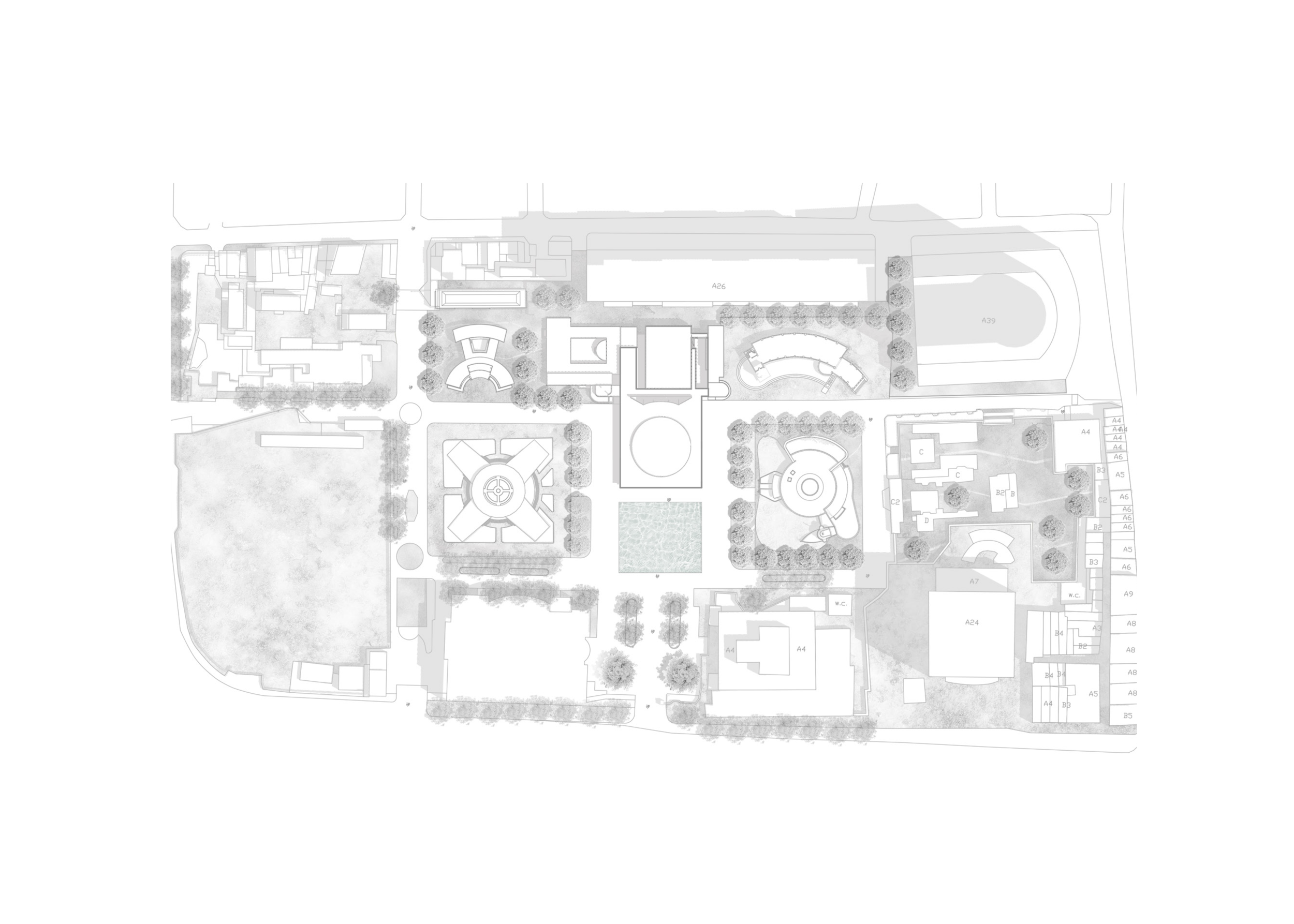
03 — A Central Performance Space
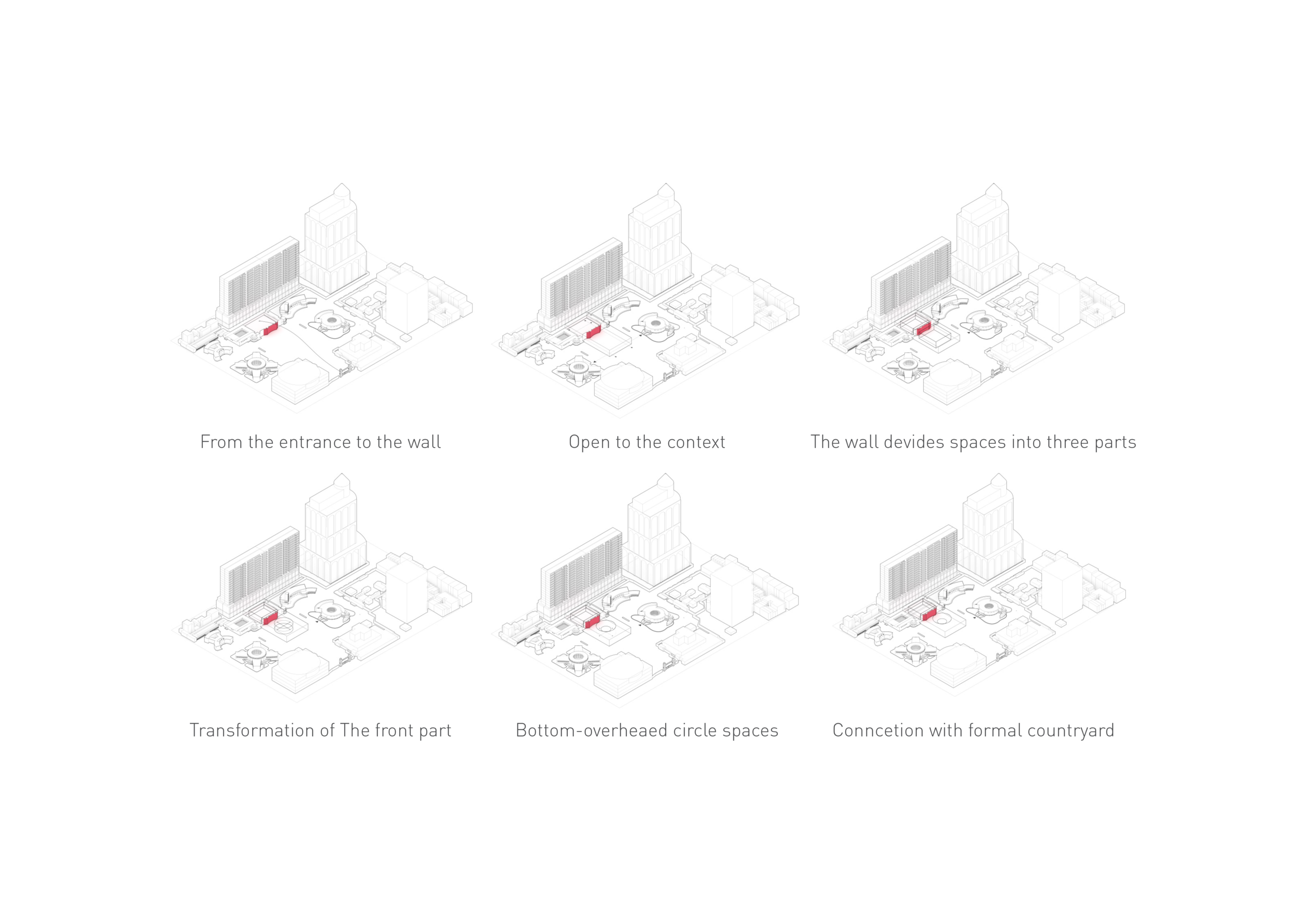
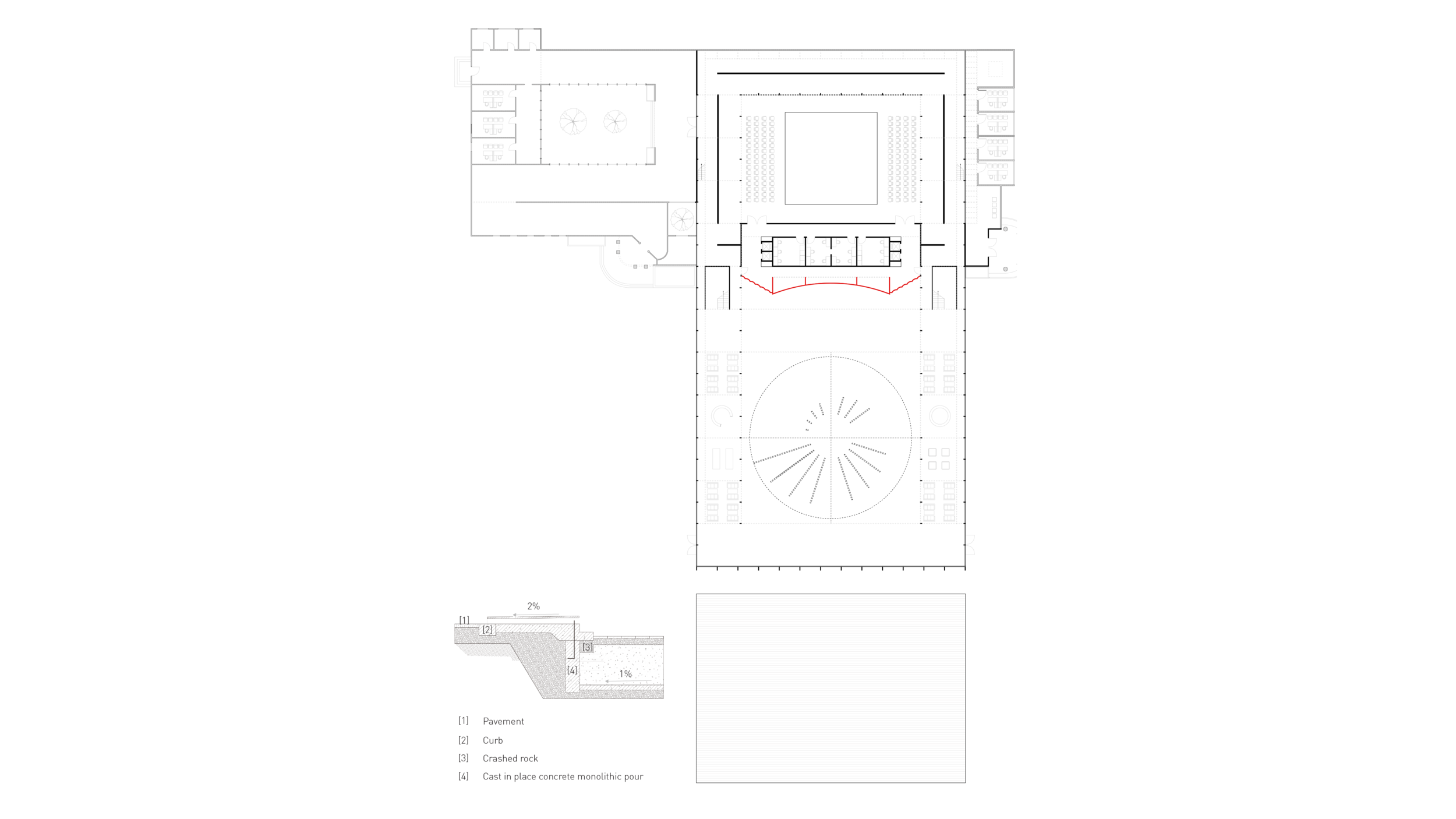
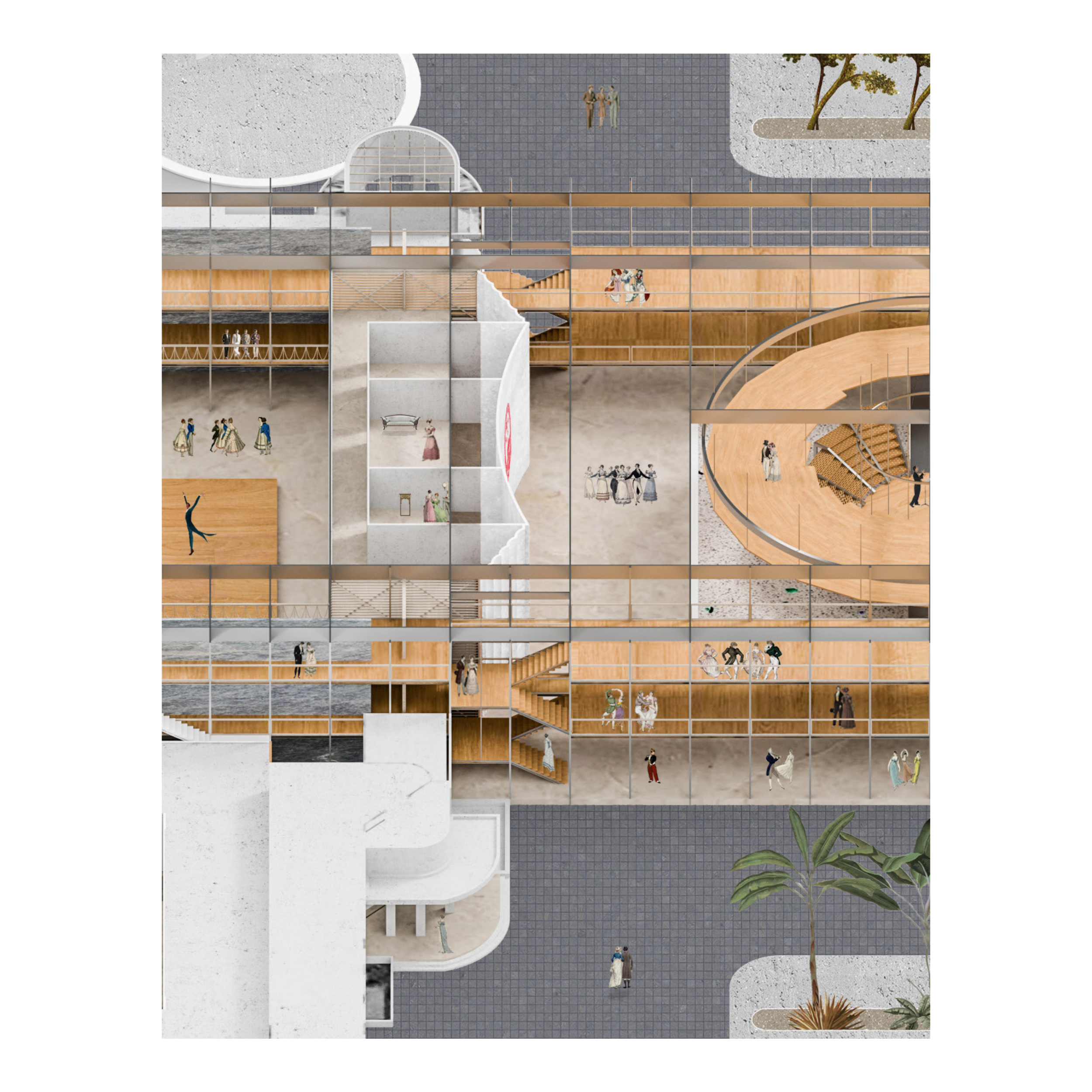
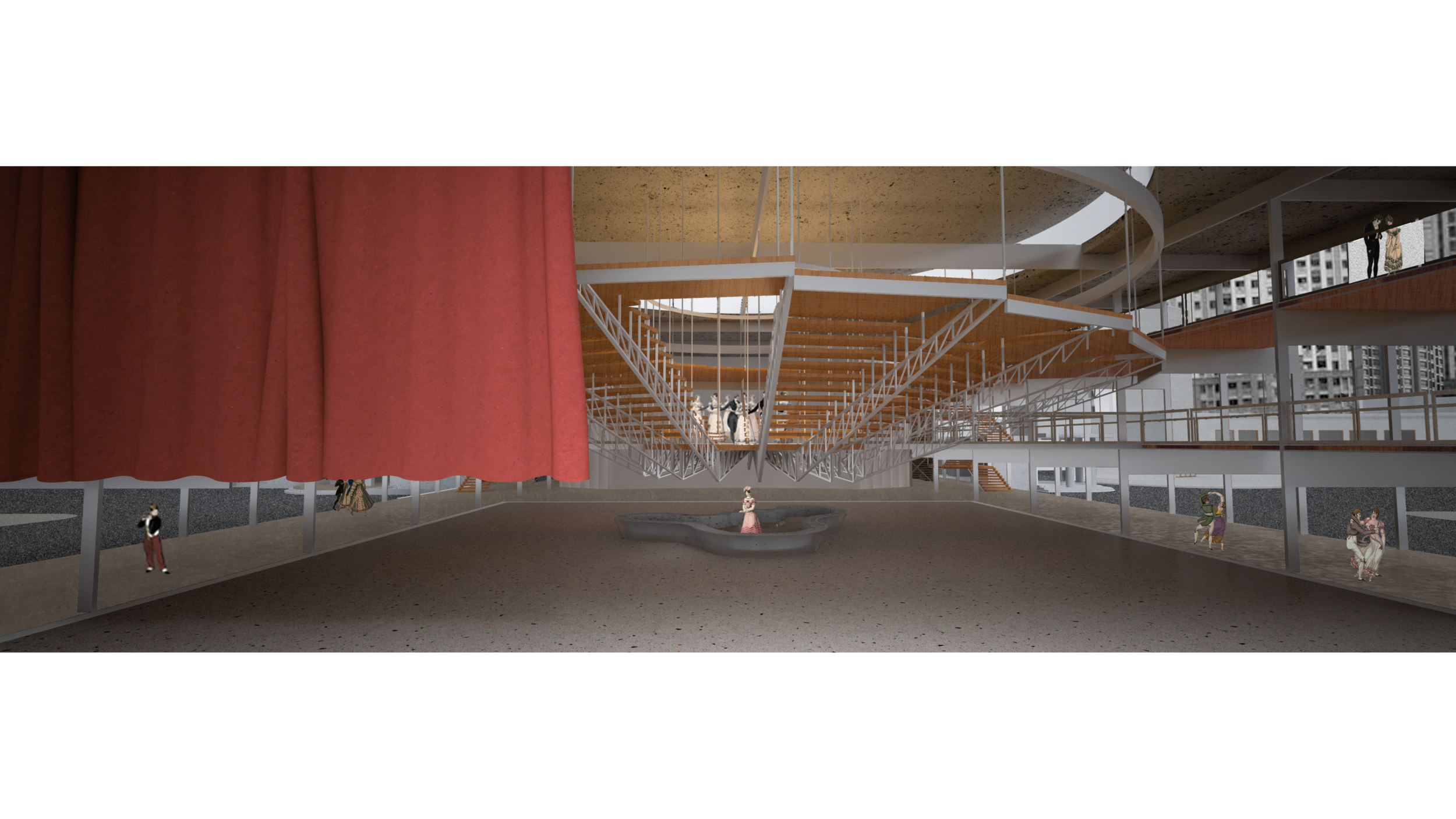
The project tries to reconstruct the process of theatre, and to set out a city route of immersive cultural experience. Theatrical architecture is redefined here by blending and redistributing the traditional spaces of production, performance, and audience — and, in doing so, by activating the boundary between the pavilion and the public space around it.
A pool sits in front of the theatre. Together with a glass curtain wall, it dissolves the hard profile of the old formal wall; and it gives people a way to let go of the pressures of daily life. In Chinese tradition, water benefits all things without provoking conflict or resistance.
04 — Inside-Out
The wall divides the pavilion from the open ground. The space behind it is more private than the square along its other side — so it can hold a commercial hall, while the public life of the square never disturbs the residents who live behind the pavilion. In a park whose rigid, politically driven master plan is the very reason it sees so little use, this quiet inversion matters.
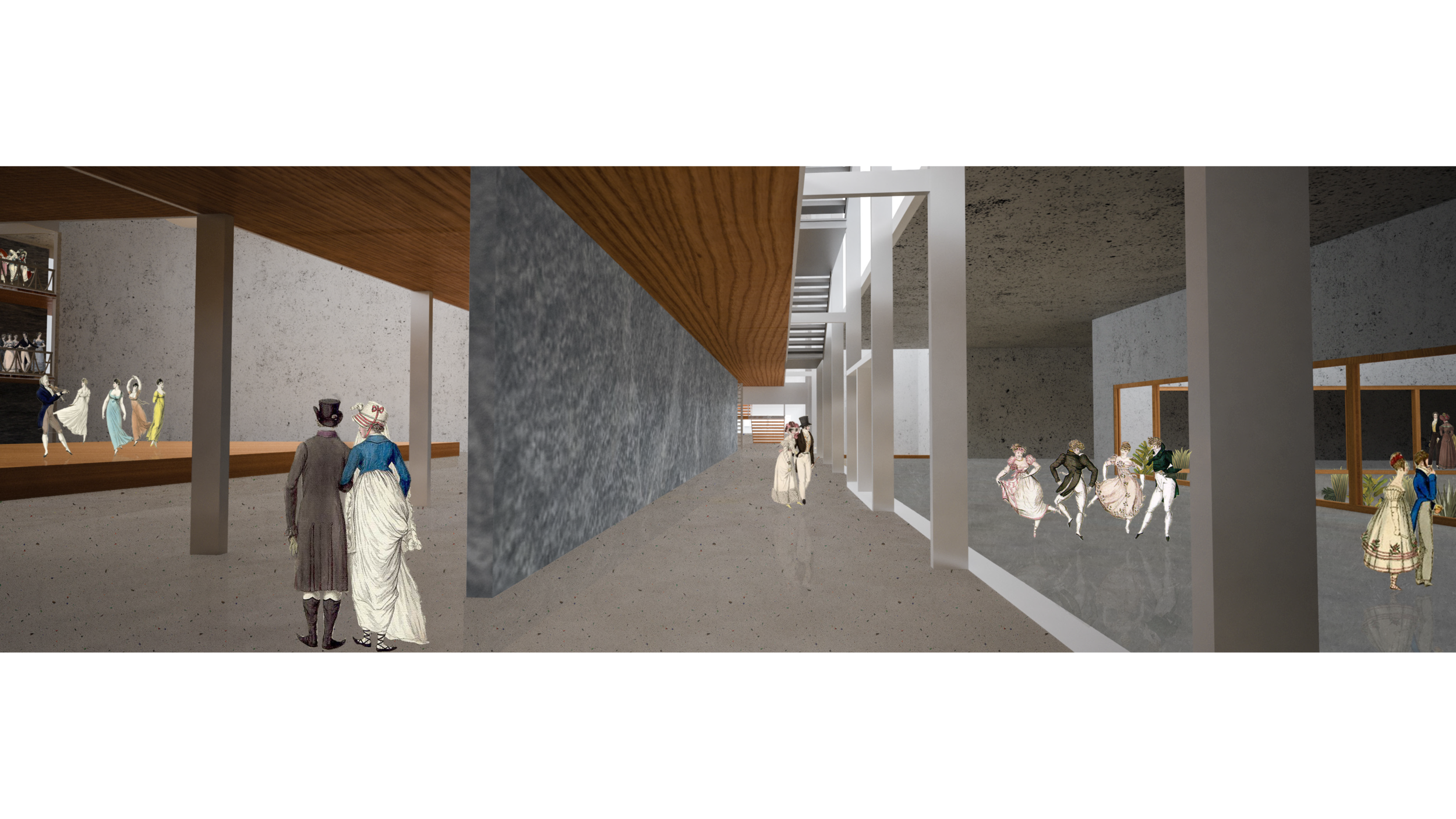
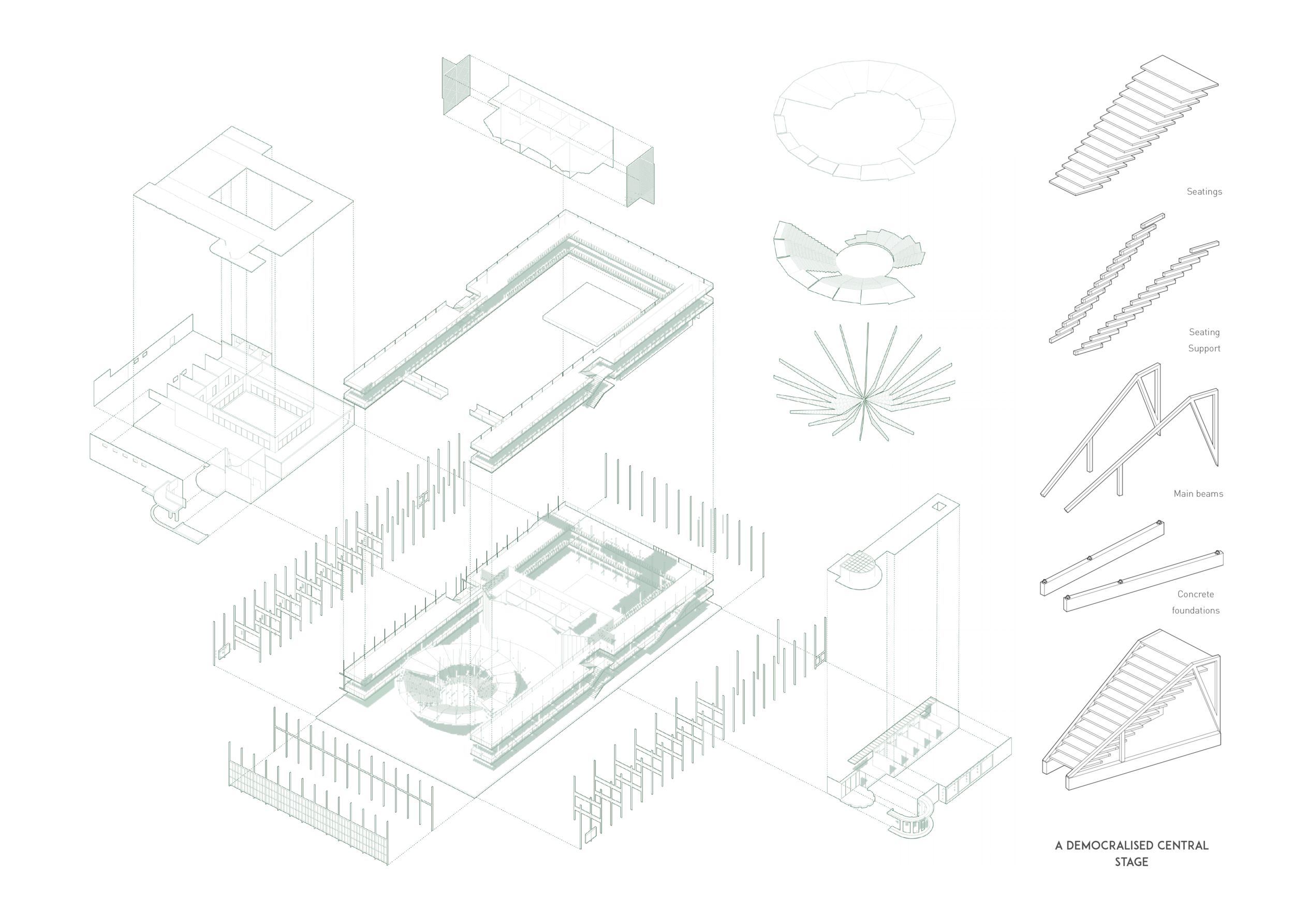
05 — A Democratized Central Stage
To play down the building's profile and open it to its surroundings, the project takes glass and steel as its main materials — a deliberate contrast with the existing masonry pavilions and the brick wall at the centre of the site. The concrete roof of the formal pavilion beside the wall is remade in glass, too, letting far more light into the space below.