Archive — Urban-village renewal
People's Communes
Returning a hollowing urban village to its collective life
2018 Spring · Xiaozhou Village, Guangzhou
Rapid industrialization and urbanization have produced a phenomenon with few parallels elsewhere — “village-hollowing” — in which rural housing land is left locked and unused even as the cities sprawl outward. People's Communes studies that condition through Xiaozhou, the most characteristic historic watery village still surviving inside Guangzhou, and asks how a renewal driven by its own financial logic might revive the collective memory and public space the village is losing.
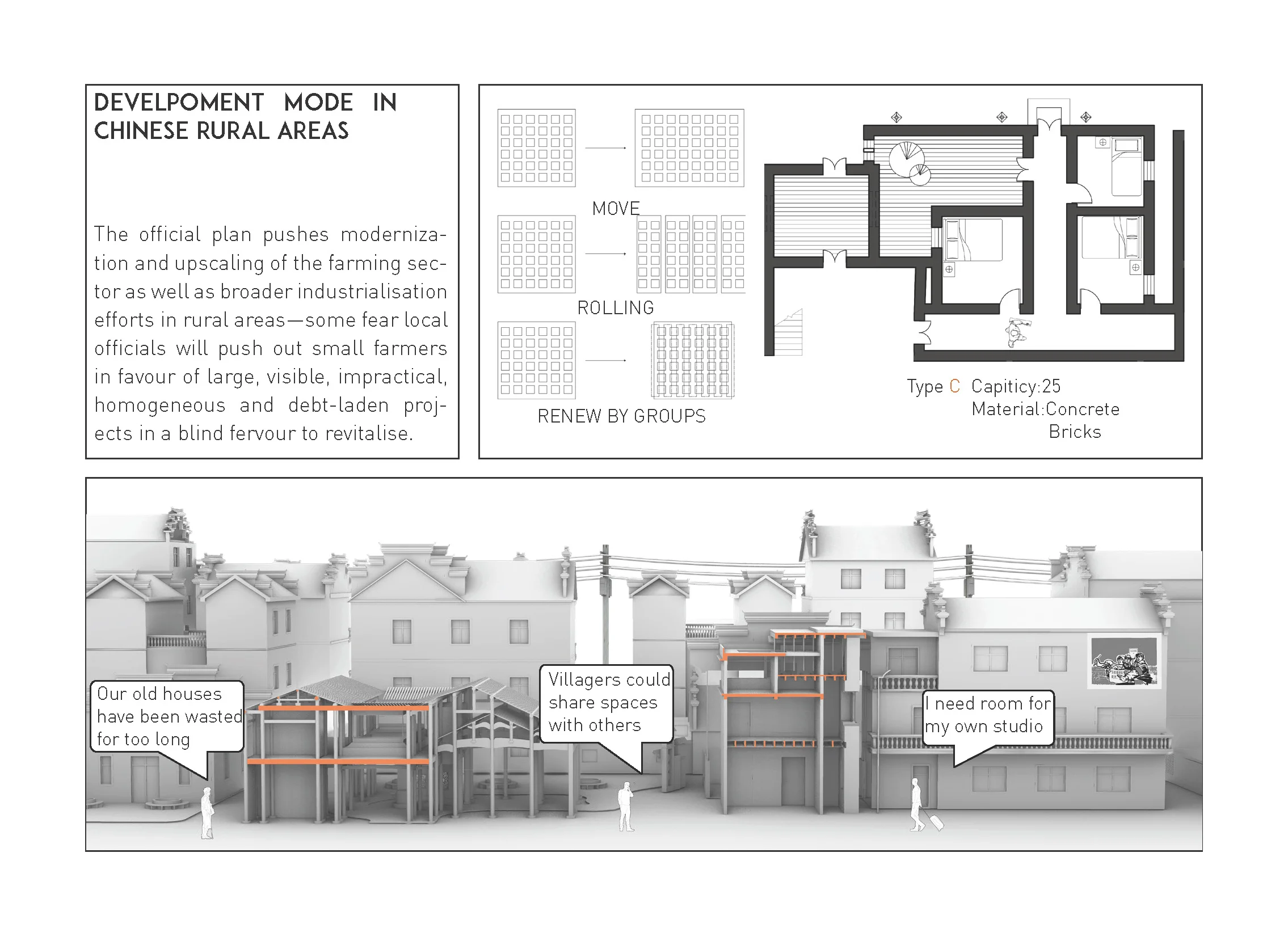
Rapid industrialization and urbanization in China have produced a phenomenon with few parallels elsewhere — “village-hollowing” — shaped by the country's dual-track structure of social and economic development. As people leave for the cities, the housing land they leave behind in “hollowed villages” is locked up and unused; and that locking-up sits awkwardly against two of the state's largest anxieties: the pressure for new urban construction land, and the security of the national food supply.
In response, the government has adopted an “increasing-versus-decreasing balance” land-use policy, which sets each increase in urban construction land against a matching reduction in rural construction land. But a failure to engage local actors has bred resistance — in places, violent protest against the demolition of homes. There are lessons to borrow from Europe here: rural restructuring in China is a dynamic, multi-scalar, hybrid process that shares much with restructuring elsewhere, even as it is strongly shaped by the country's own political, economic, social and cultural ground — and it might be softened by folding elements of “bottom-up” planning into a process that has so far been imposed from the top.
Wrinkle of the villages
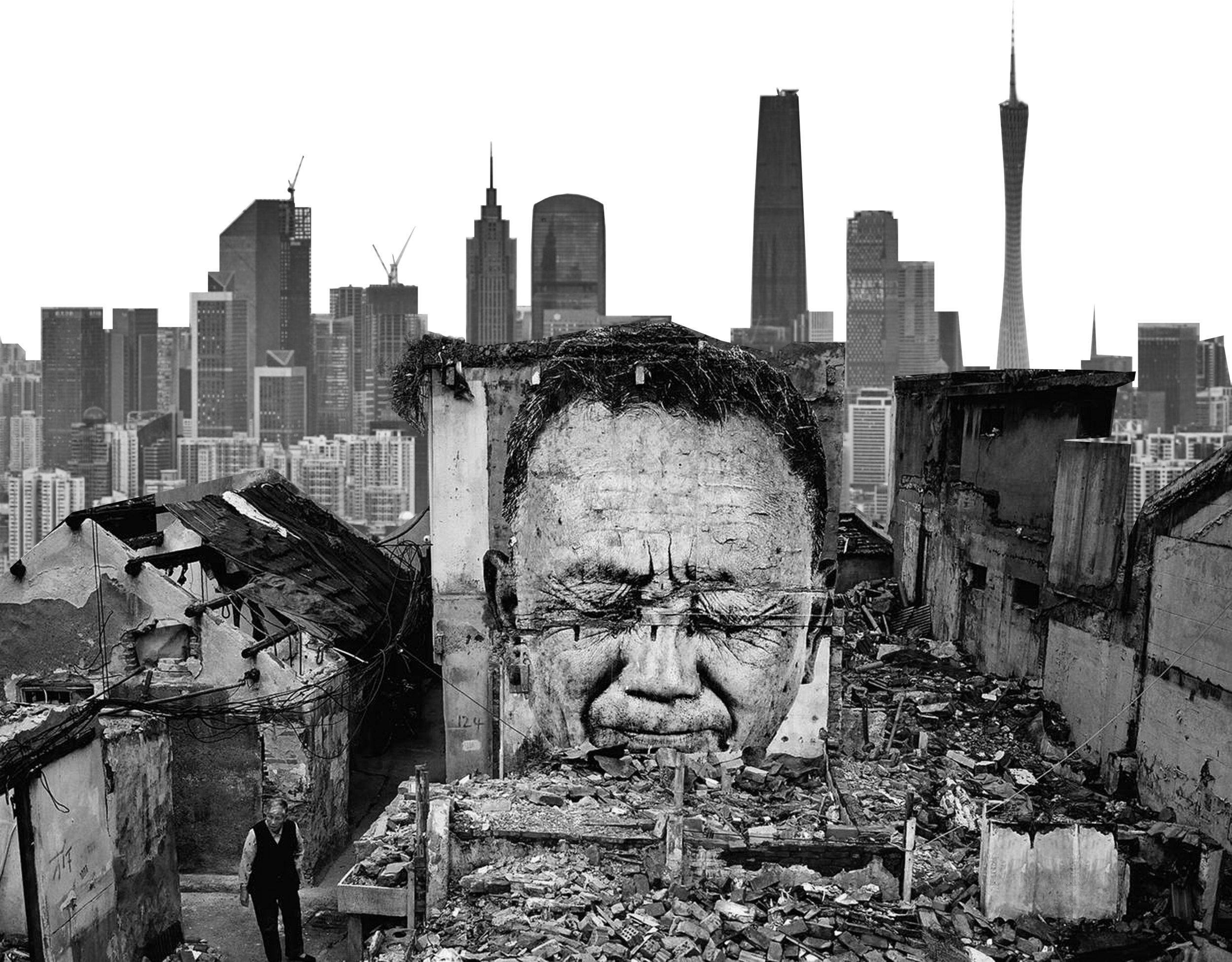
From early 2012, the French artist JR pasted a series of large-scale public installations across the city — portraits of its older residents, their lined faces and their stories blown up to the scale of the buildings they had lived beside. Twenty separate pieces, scattered through the sprawling metropolis. Deliberately apolitical, JR left the meaning to the passer-by: a community made visible inside the modern city, an encounter staged between subject and observer, grounding the stranger in the humanity and the history of a place that rarely pauses for either.
Social mode & the development of the village
On the surface, Xiaozhou is simply aging — its population growing older, its traditional architecture falling away. But the deeper loss is harder to photograph: the old public spaces have gone quiet, and the public life that once filled them has scattered into fragments. What is draining out of the village is its collective memory — and that runs directly counter to the clear, rational core a place needs if it is going to develop at all.
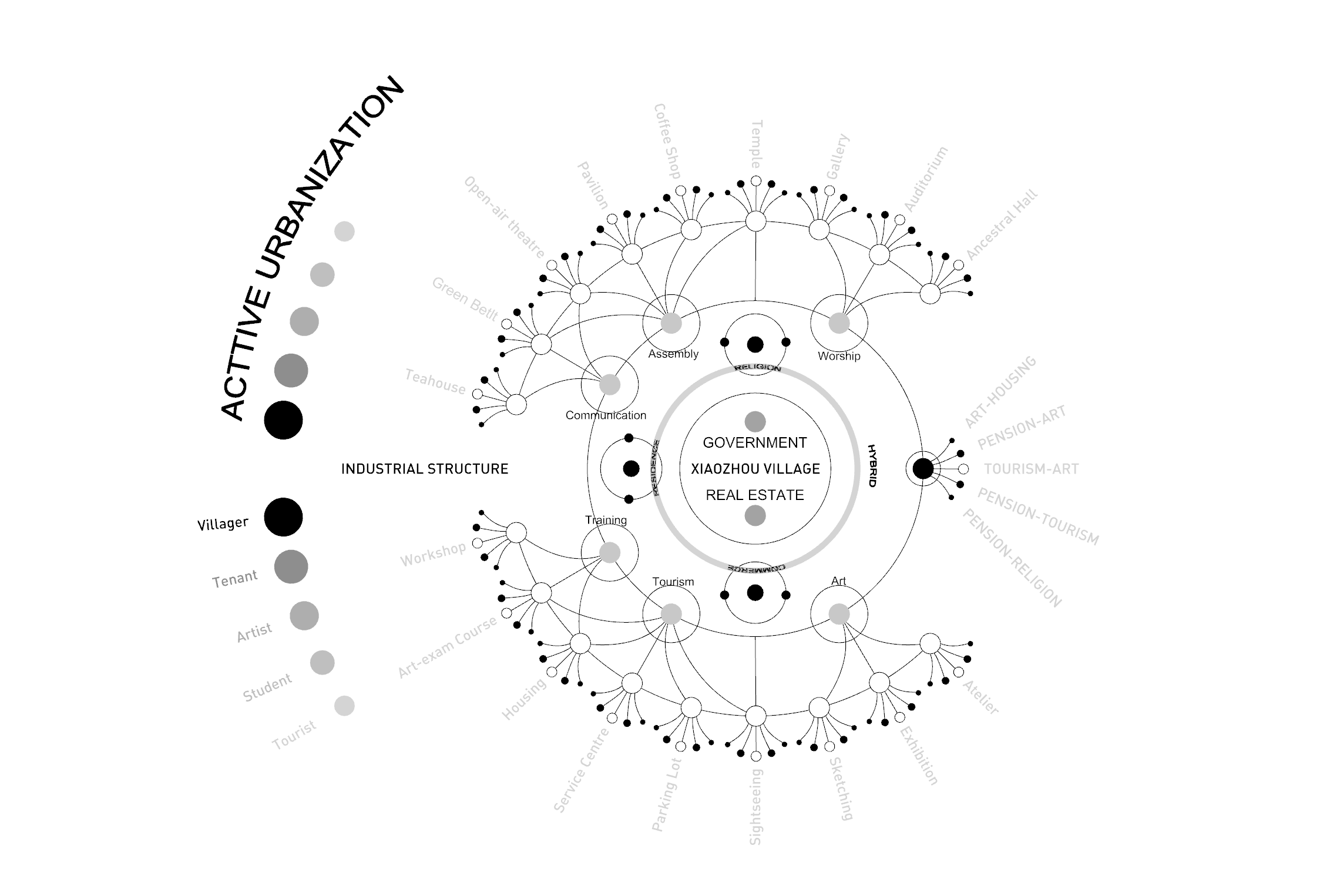
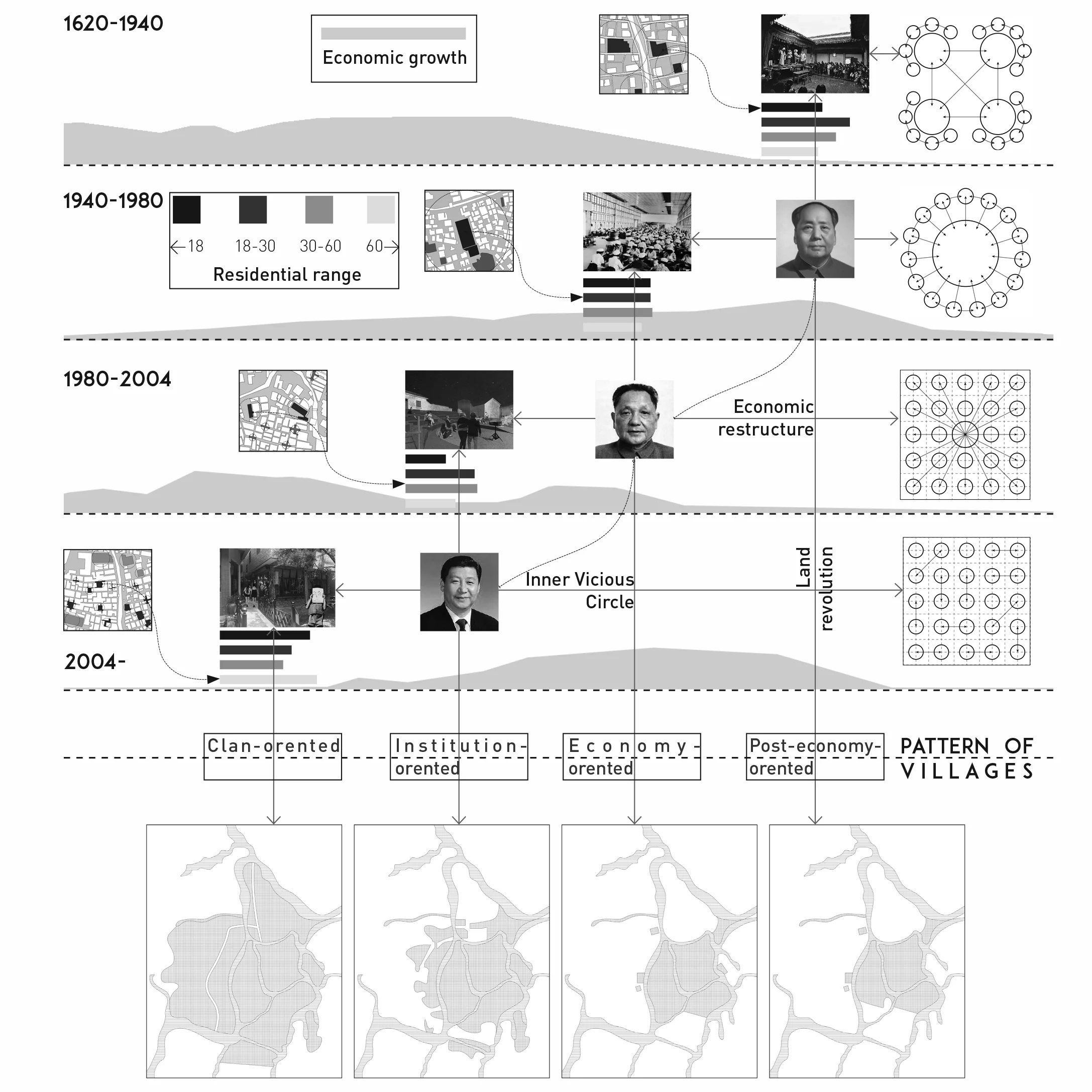
Renewal typologies based on a built-in financial mode
Xiaozhou is the most characteristic historic watery village still surviving in Guangzhou, and the city's plans cast it as a destination — themed tourism and ecological agriculture. On that reading, its historic architecture and the cultural life bound up with its public space are not incidental; they are the very thing the future depends on. Yet the methods the Guangzhou government reaches for are the ordinary ones, and they only ever reach so far.
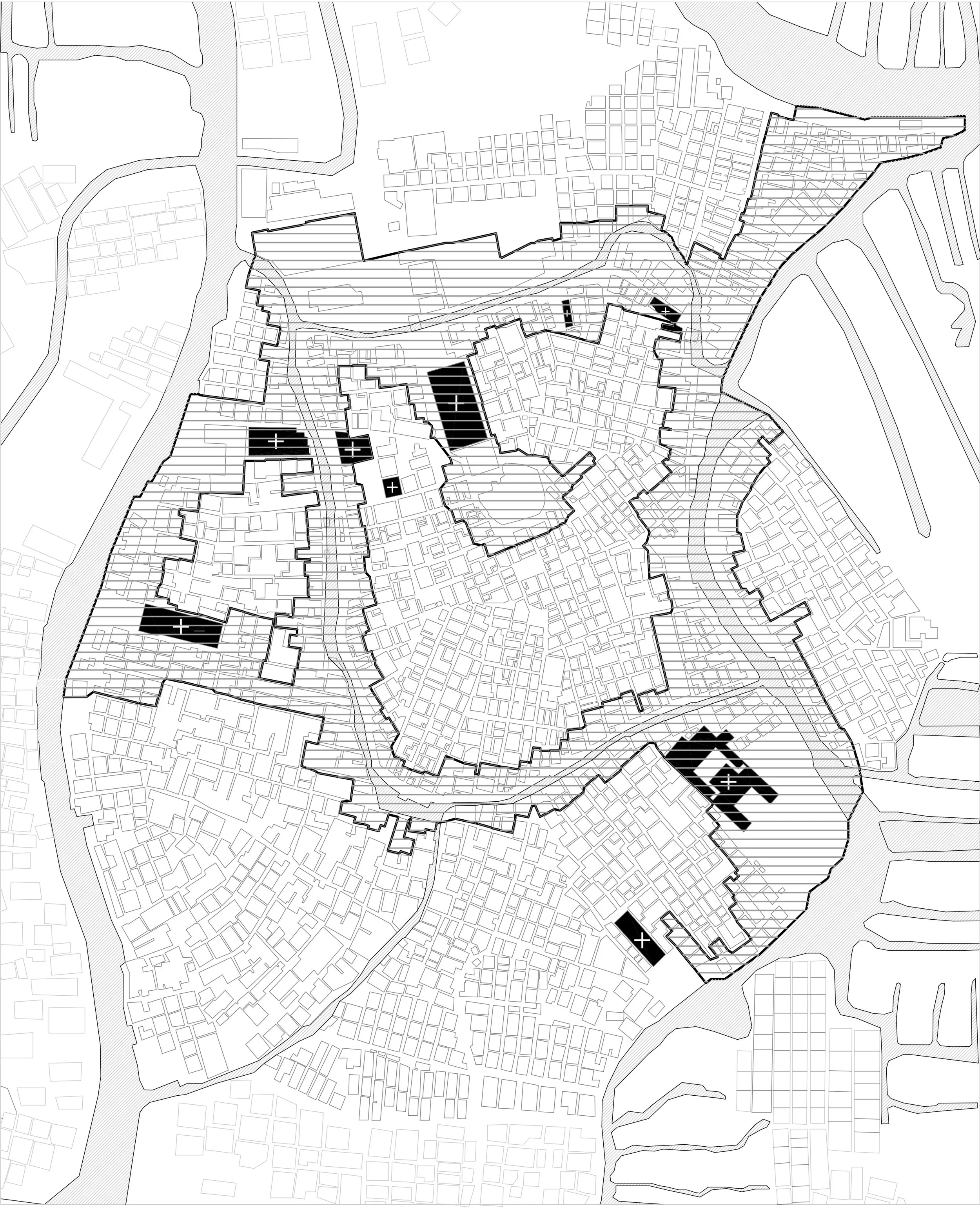
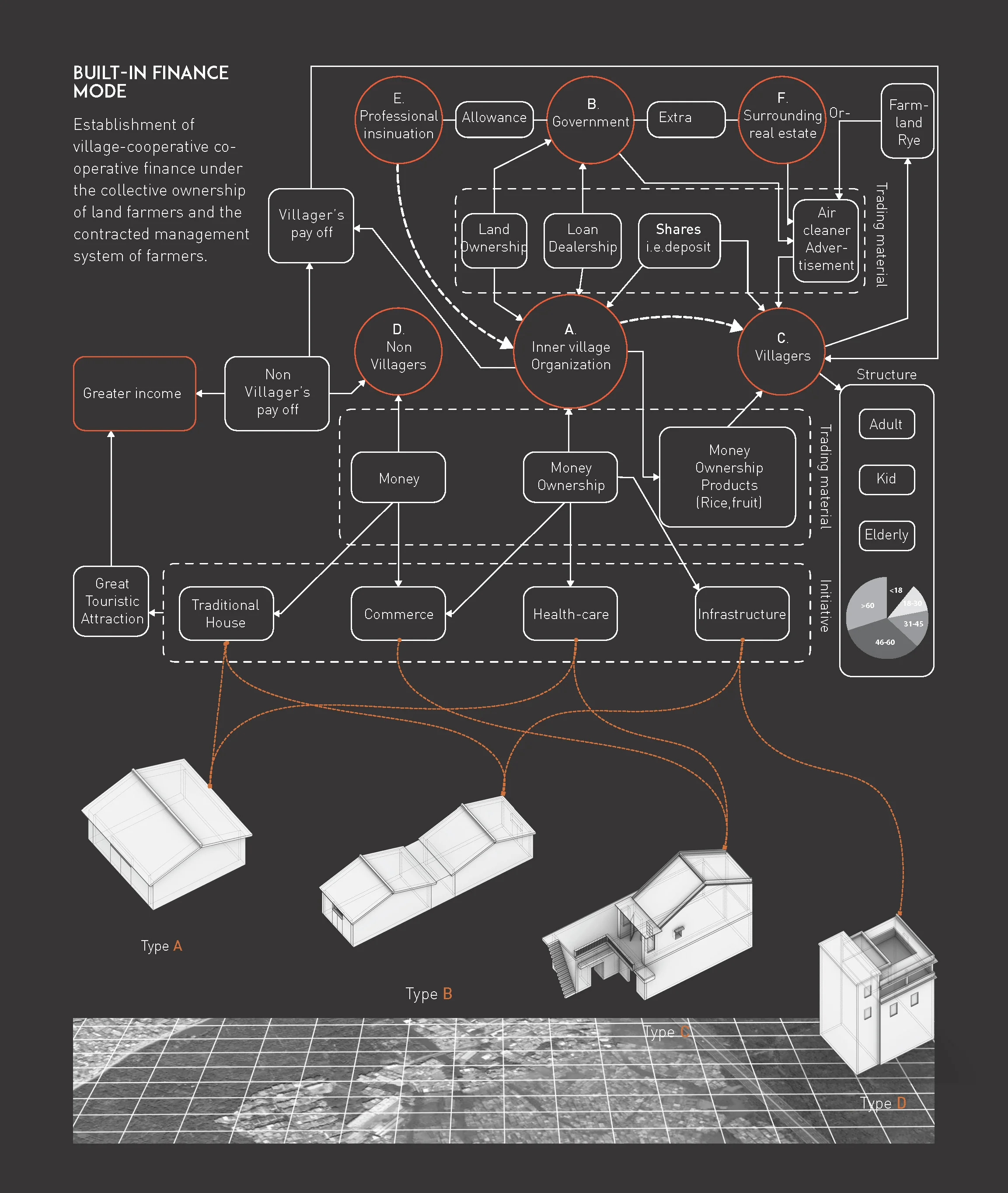
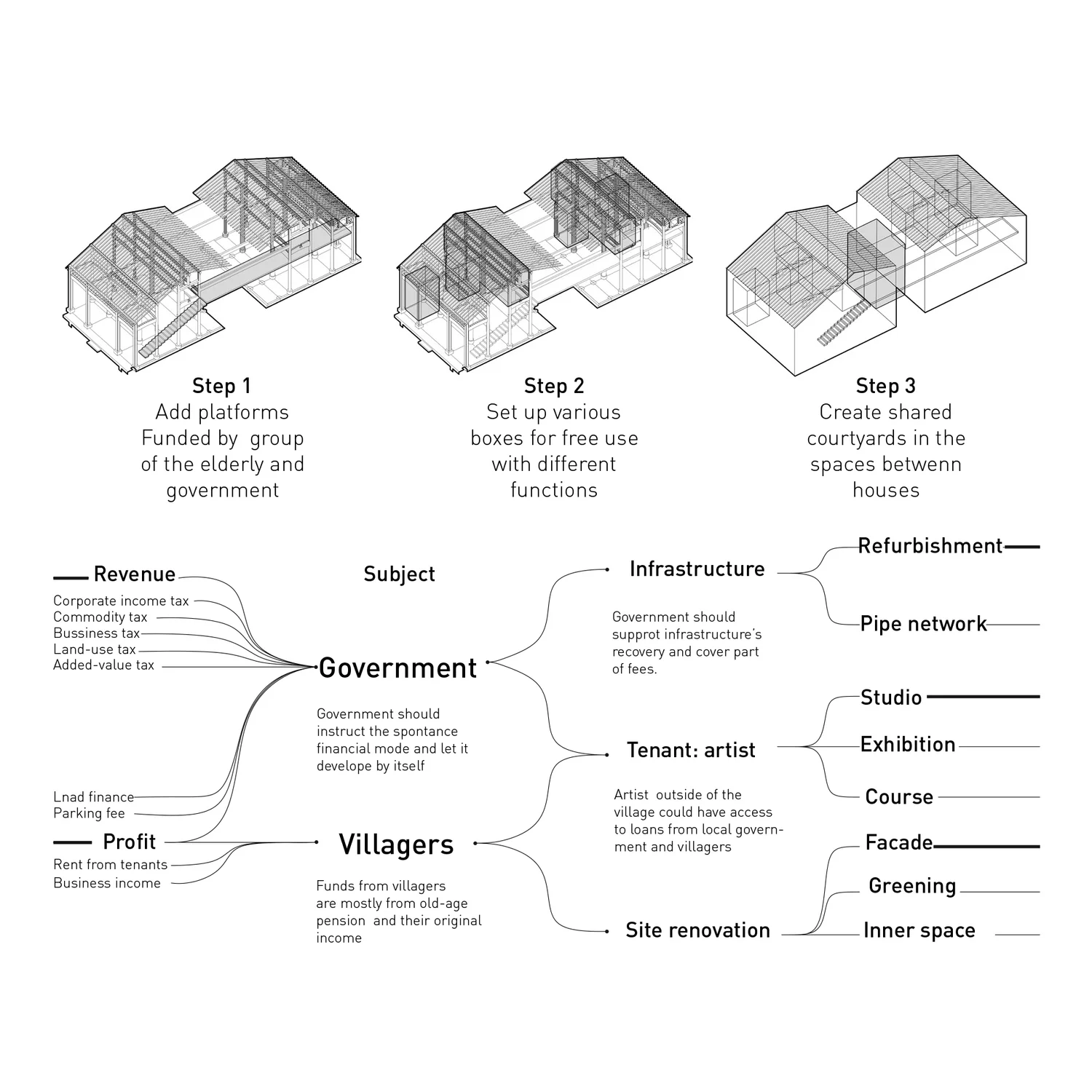
The trouble is the site itself, double-wrapped by orchard on one side and city on the other, and caught in the pull of the market economy — a quiet, vicious circle between the village's economy and the way it is lived. And village living is two things at once: the physical construction of the place, and the spiritual, collective construction that grows up around its public space. A problem of that shape cannot be solved by the government's ordinary methods — which is the opening this project works in: a renewal whose financial model is built into its architecture, so that reviving the collective is also what makes the village pay its way.
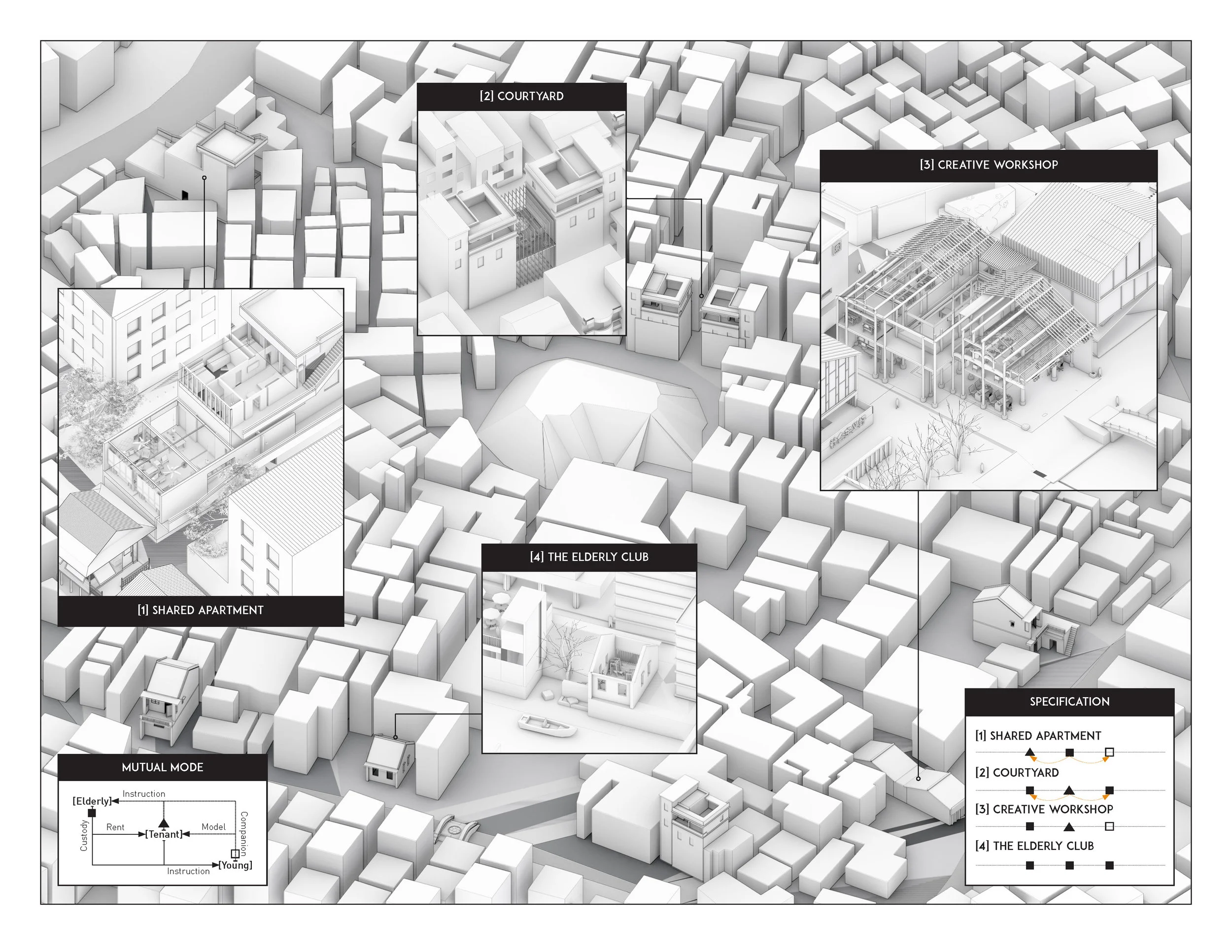
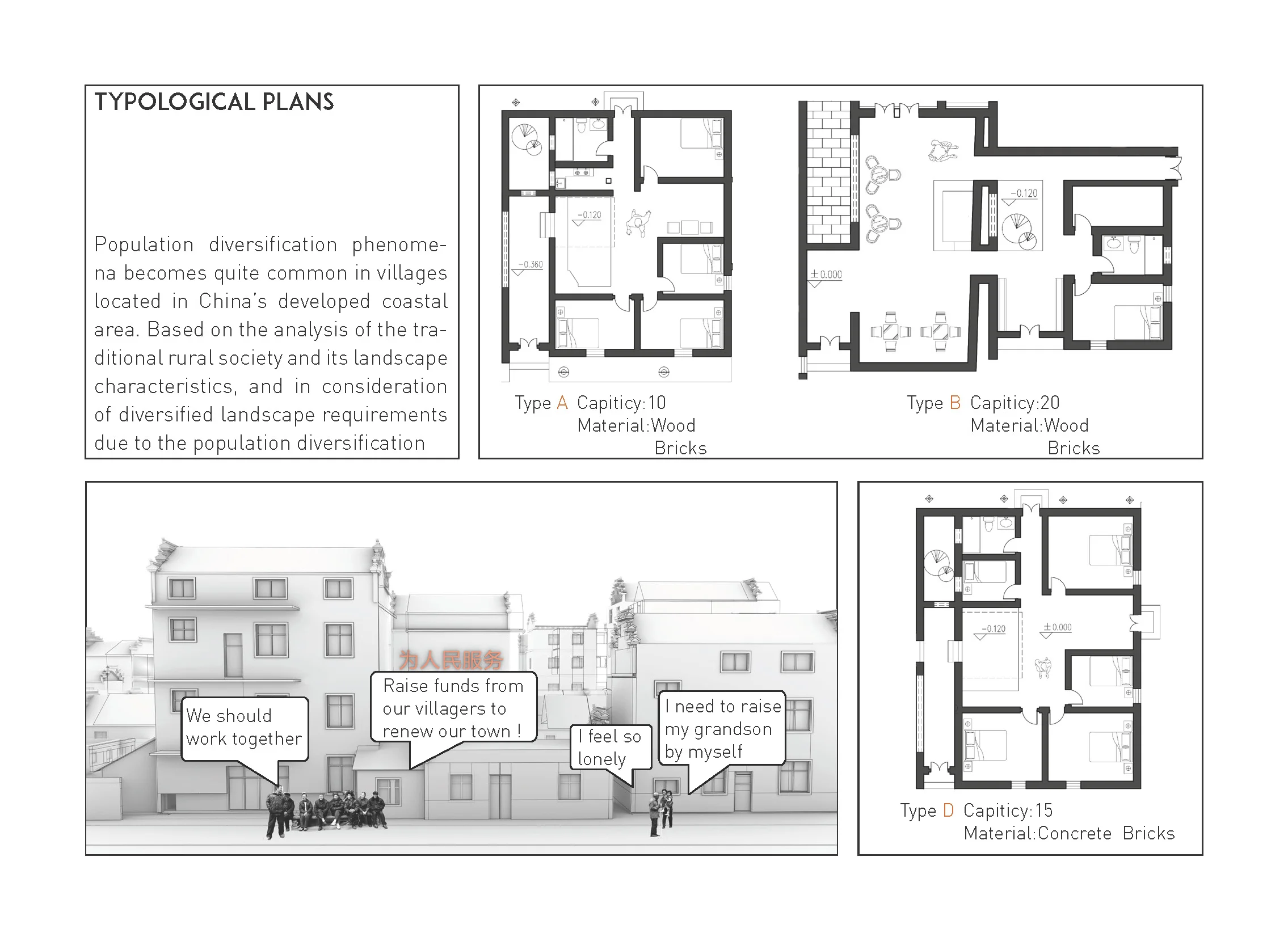
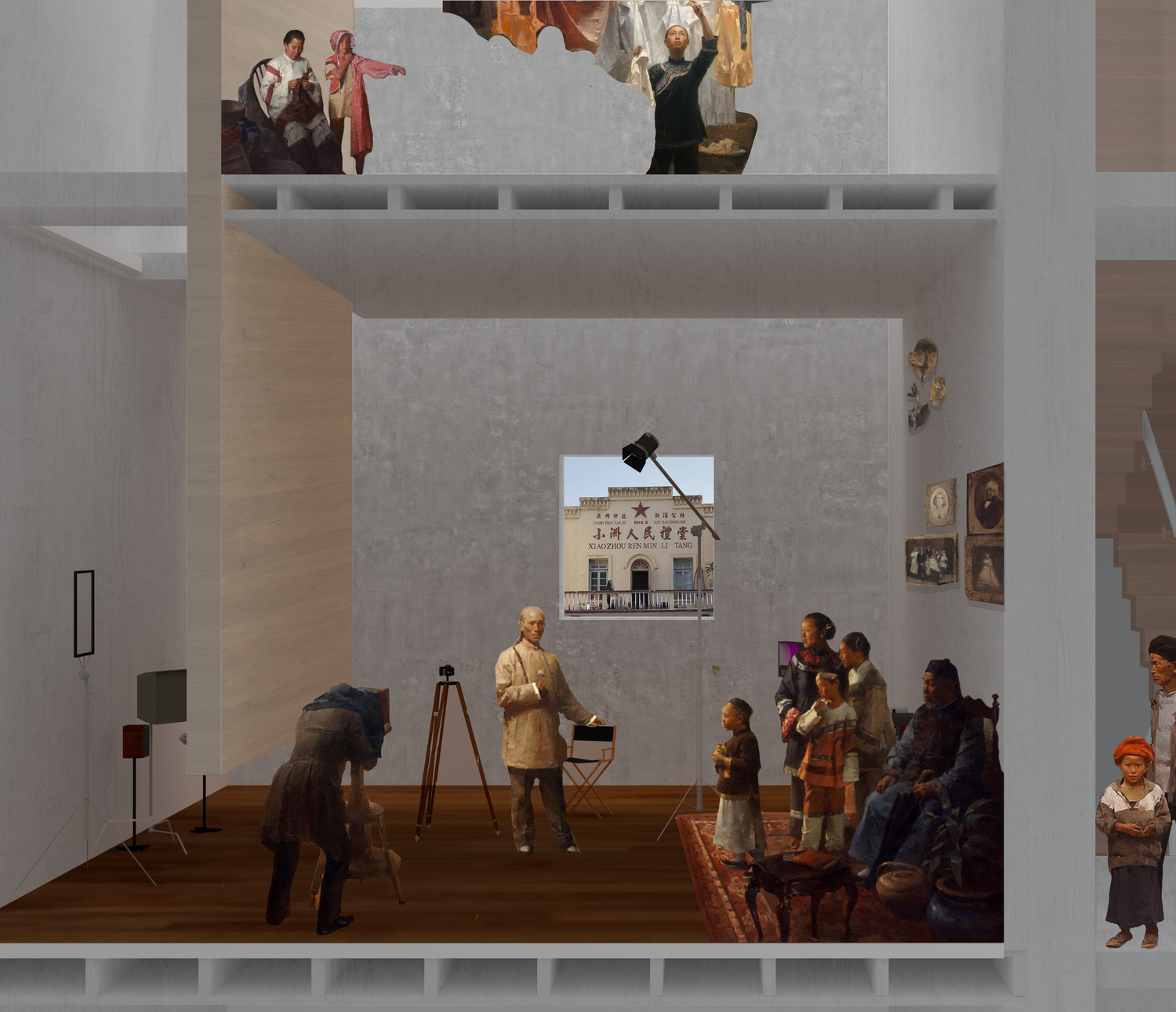
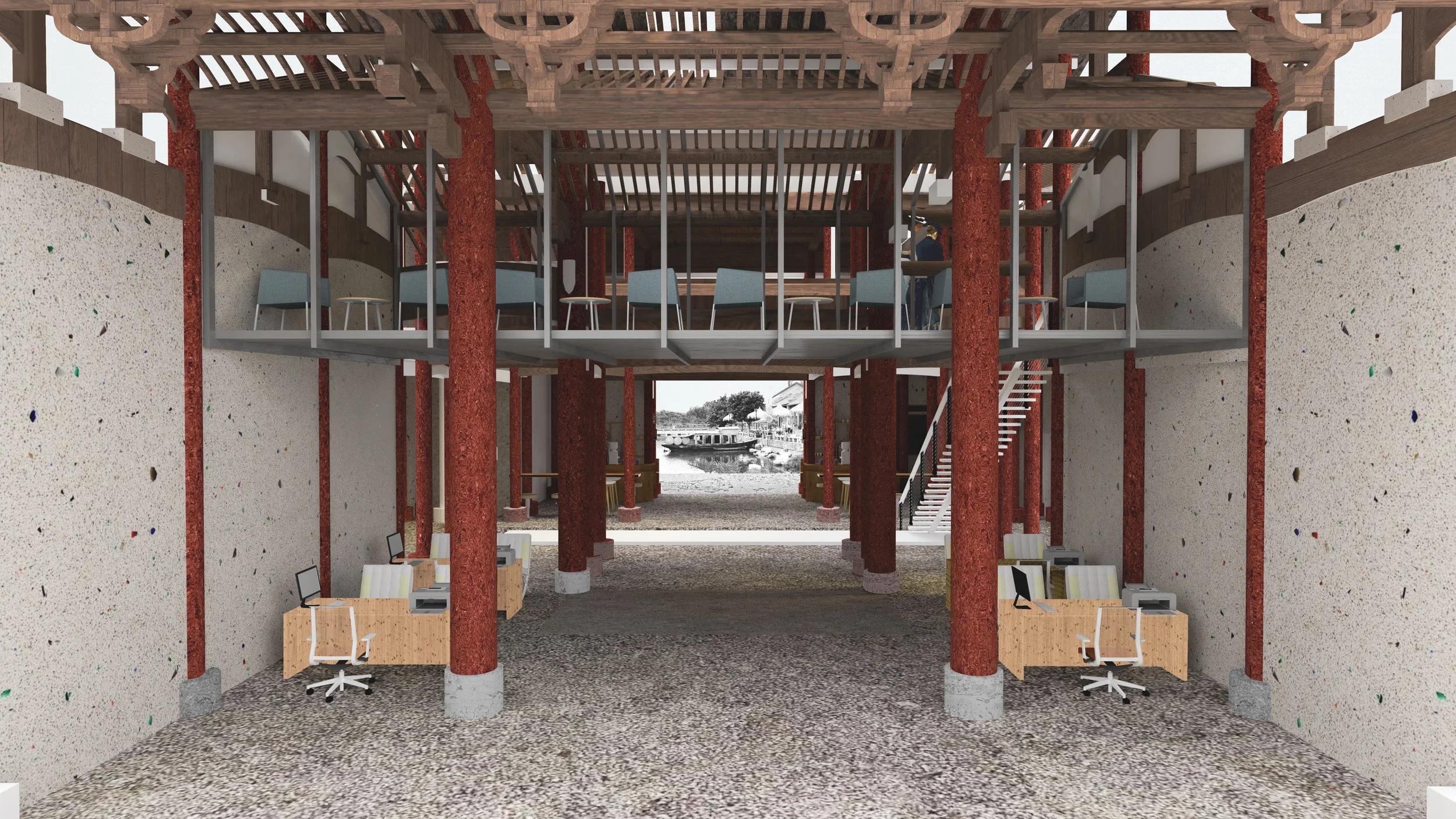
The answer is a village co-operative: finance built into the architecture itself, under the collective ownership of the farmers' land and a contracted system of management. On that footing the renewal proceeds as four types woven into the existing fabric — a shared apartment, a courtyard house, a creative workshop, and a club for the elderly — each raised by a simple kit of platforms, free-use boxes, and shared courtyards carved between the houses. At its heart the old People's Hall (小洲人民礼堂) reopens as the village's collective room, the place where its memory can gather again.