Archive — Renovation of industrial buildings
The Cloister
A disused factory in a Guangzhou urban village, re-made as a courtyard home for the elderly
2018 Spring · Yushatan, Guangzhou
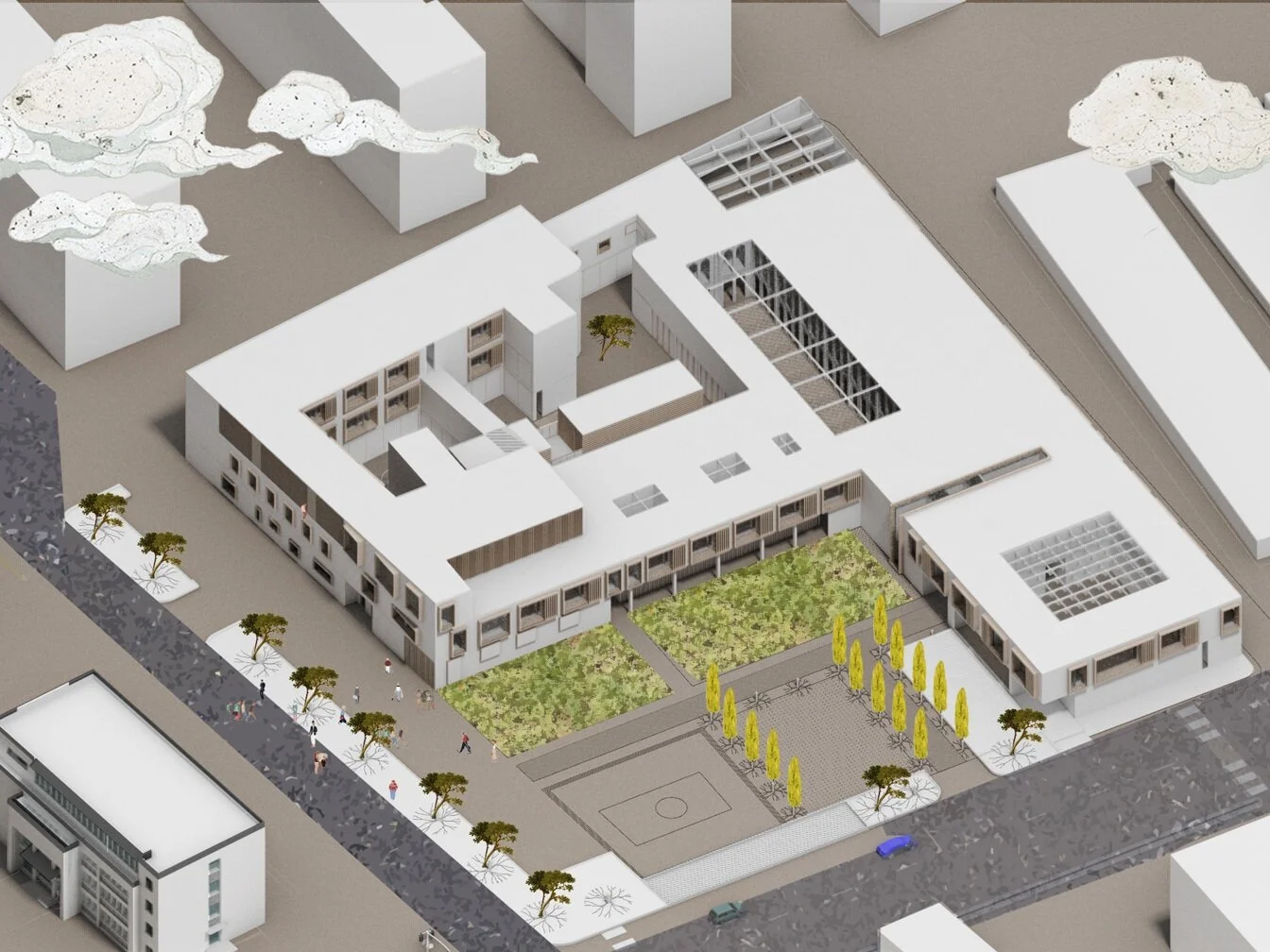
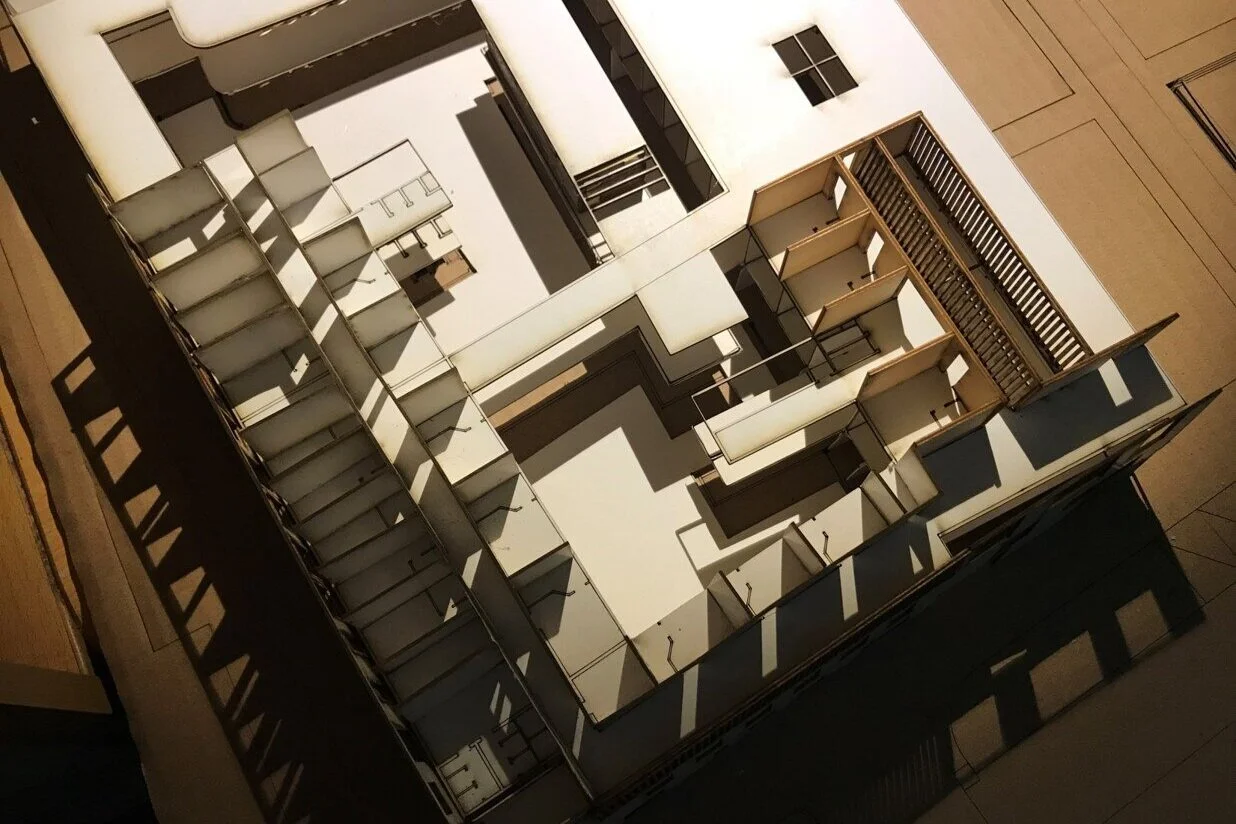
A spring-2018 renovation studio at the South China University of Technology (SCUT): a disused low-rise factory in Yushatan Village — a dense urban village on the edge of Guangzhou — is turned into a care home for the elderly, organised, like a monastery, around the calm and legible world of the courtyard.
01 — The Site
The site lies in Yushatan Village, off Fenghuang Street in Tianhe District, Guangzhou — part of the Pearl River Delta metropolis, about 10 km from the centre, in an area whose urban fabric and services are still only loosely formed. To the east are schools: the Yuxing Experimental Kindergarten and a vocational-technical college. To the north stand a former factory and the villagers' own low-rent housing, most of it let out for rent. To the west are the college's student dormitories, and to the south the old Yushatan community and a proposed hotel.
There is almost no buffer between the site and what surrounds it. From the building's stairs you can see mountains a short way to the north — so the distant view is open, even if the immediate landscape is poor.
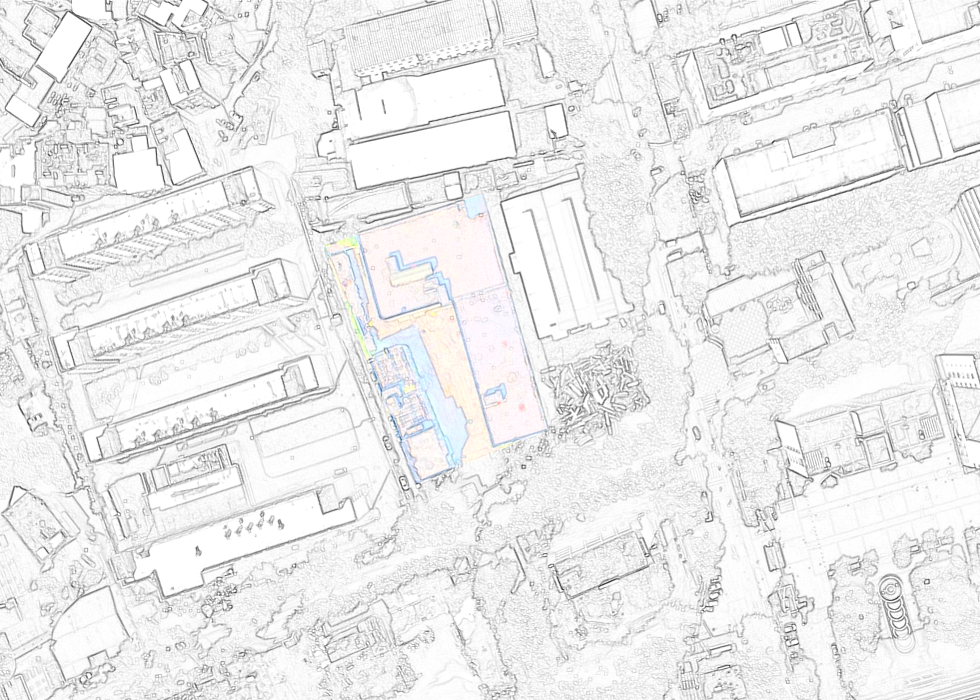
Yushatan is a typical urban village — part industrial, part agricultural, with the two scattered and intermixed. Workshops sit cheek by jowl with housing and shared public space, readily spilling over into village life; and the factories ringing the site bring the noise and pollution that a place of care can least afford.
02 — The Existing Building
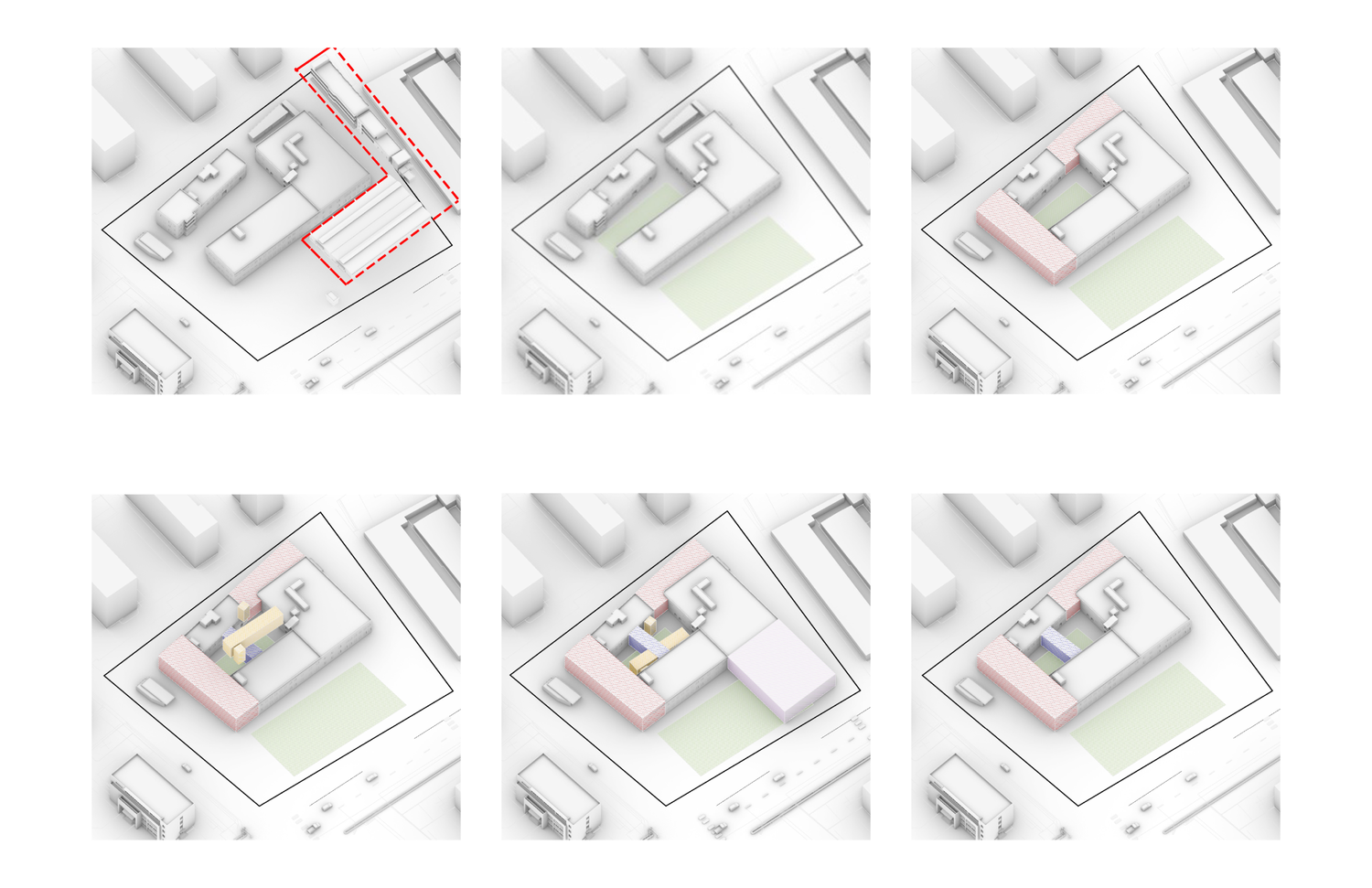
The building left behind is a deep-plan, low-rise shed on a four-to-six-metre column grid, its volumes varying widely in height — a fabric shaped purely for production. It catches a great deal of direct sun, yet its daylight and ventilation are poor. To the west lies a large open plot, well suited to building at some scale: room to extend the centre, and a chance to give it a better outlook.
03 — Precedent: Le Thoronet Abbey
At Le Thoronet, movement is wound around the courtyard. A cloister walk traces a single continuous loop at ground level, with the same loop repeated on the floor above, around a quiet garden court. As the abbey grew into a self-sufficient, working community — its numbers of people and livestock rising — the fabric expanded to keep the two apart, and the loop around the cloister grew steadily more intricate.
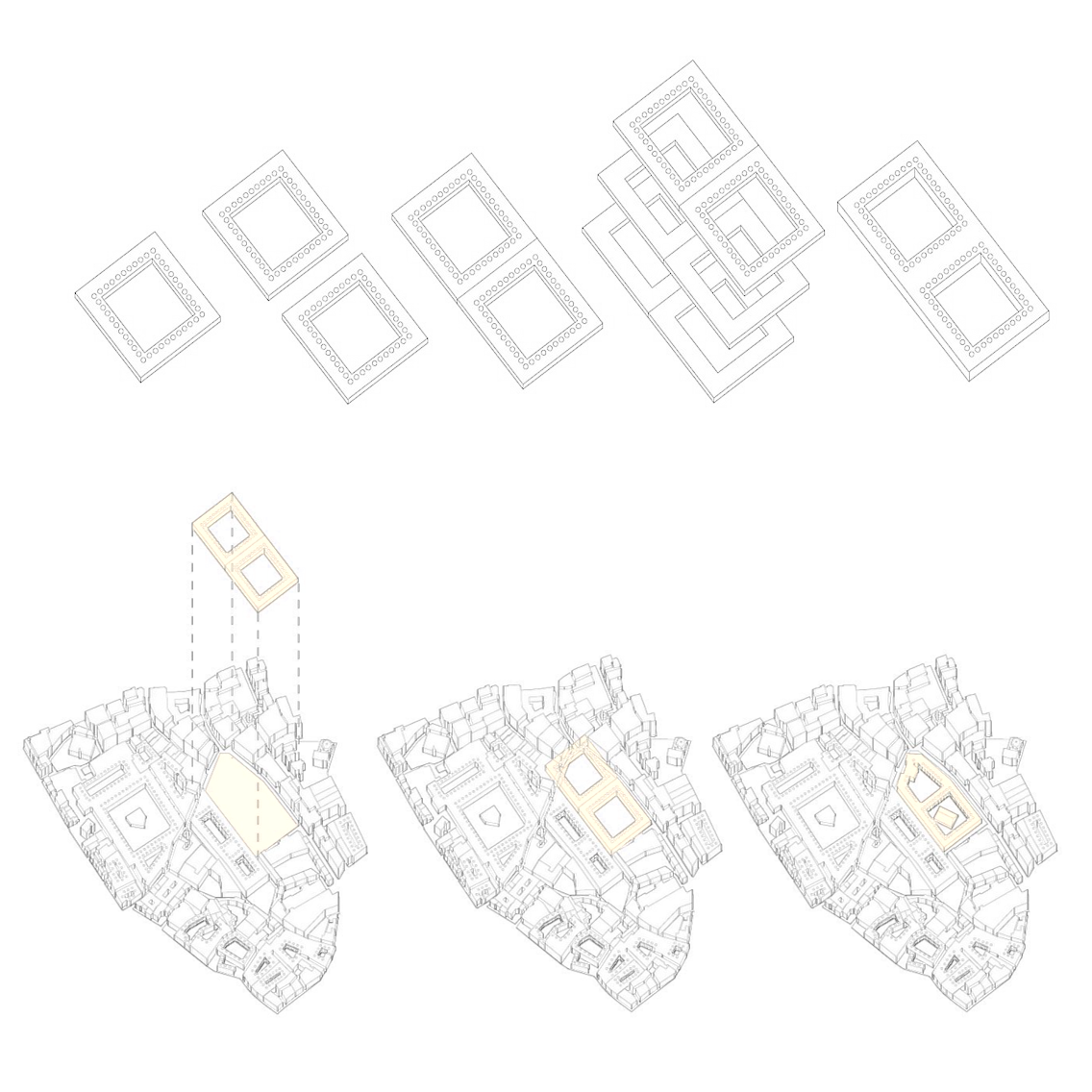
There are several ways to read this. In plan, it works much like the progressive courtyards of a traditional Chinese house: a series of courts threaded together by a single circular route — a loop that is almost impossible to get lost in, which matters greatly for the elderly. And the colonnade running round each court, repetitive and ordered, sets up a hushed, almost mysterious calm that settles the mind. That kind of abstract, contemplative space is one of the real gifts the language of religious building can bring to the care of the old.
04 — Typology: the Courtyard
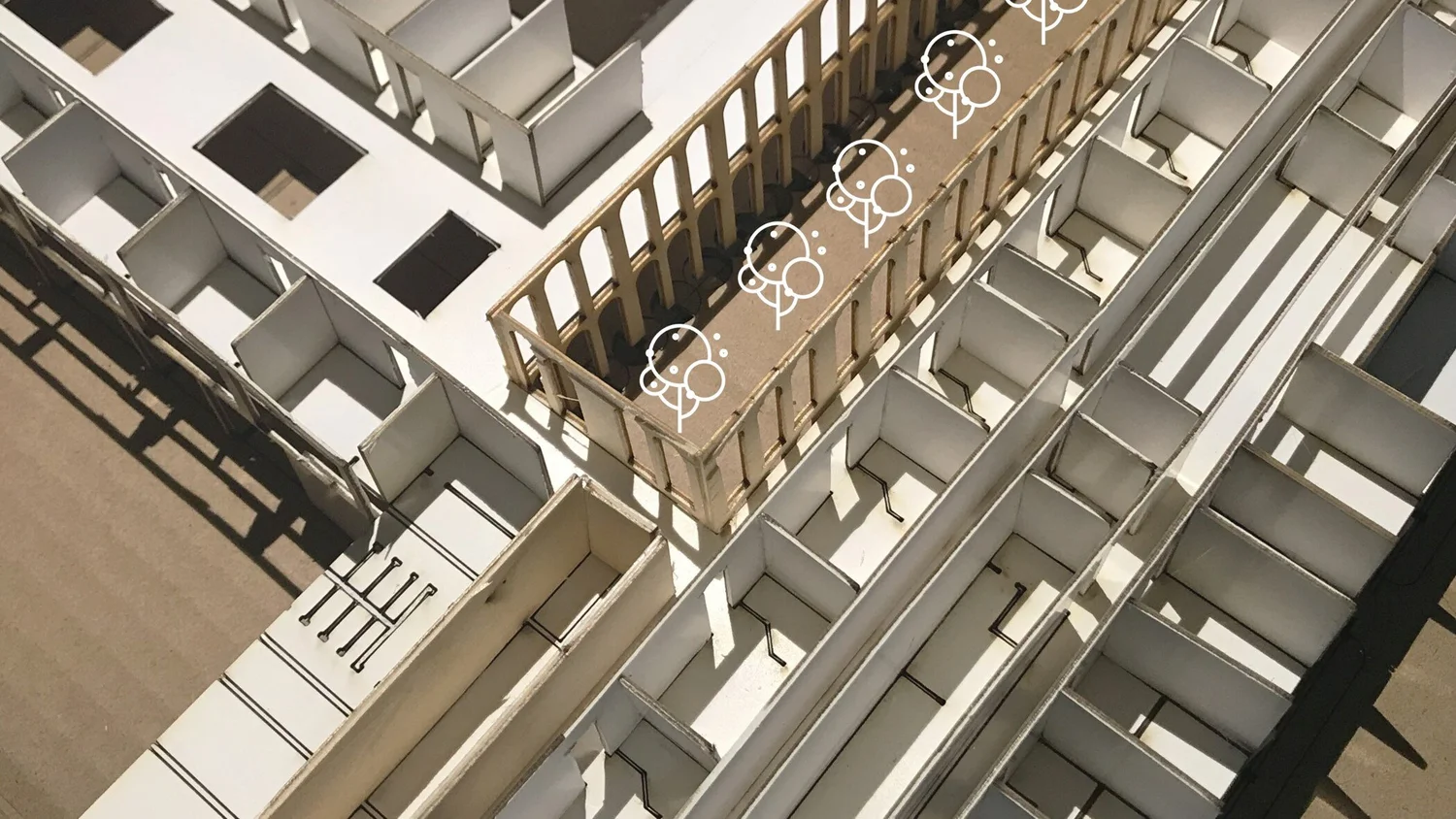
The courtyard becomes the project's organising idea. It turns the building inward, screening the elderly from the industry and traffic that press in on every side; it draws daylight and fresh air deep into a plan that had little of either; and it offers a clear, walkable loop — a sheltered inner world, legible enough that no resident need ever lose their way.
05 — Plans
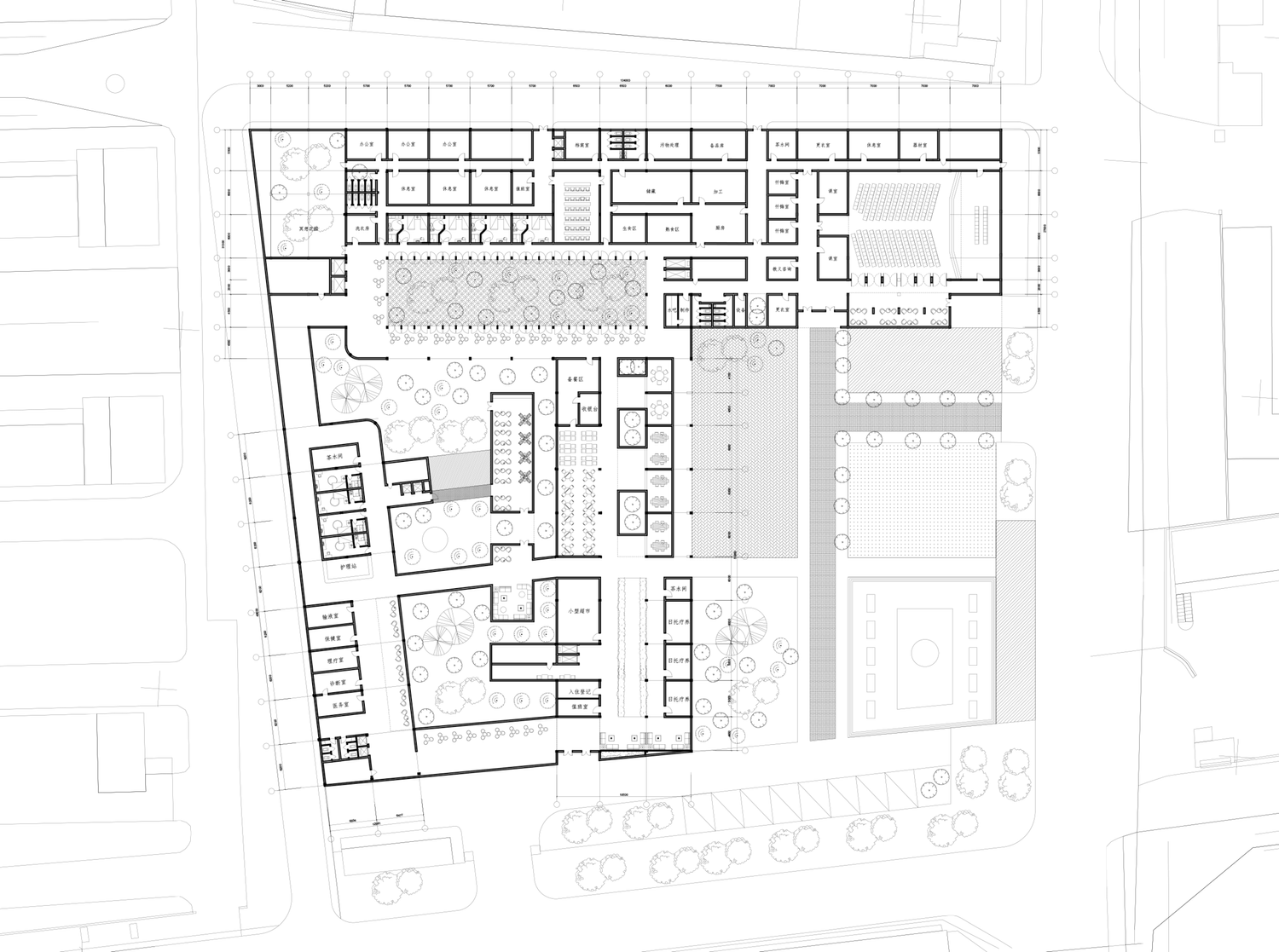
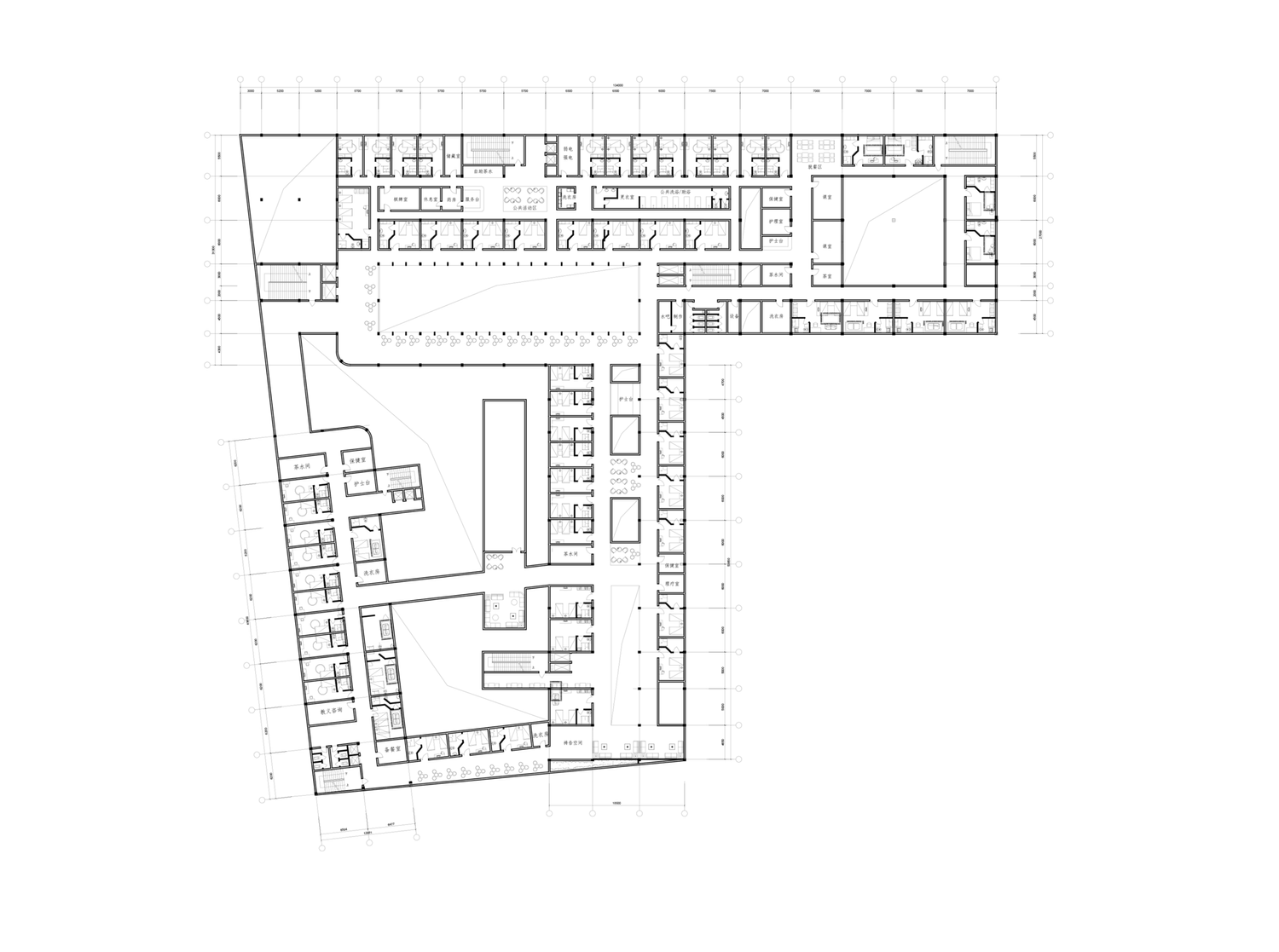
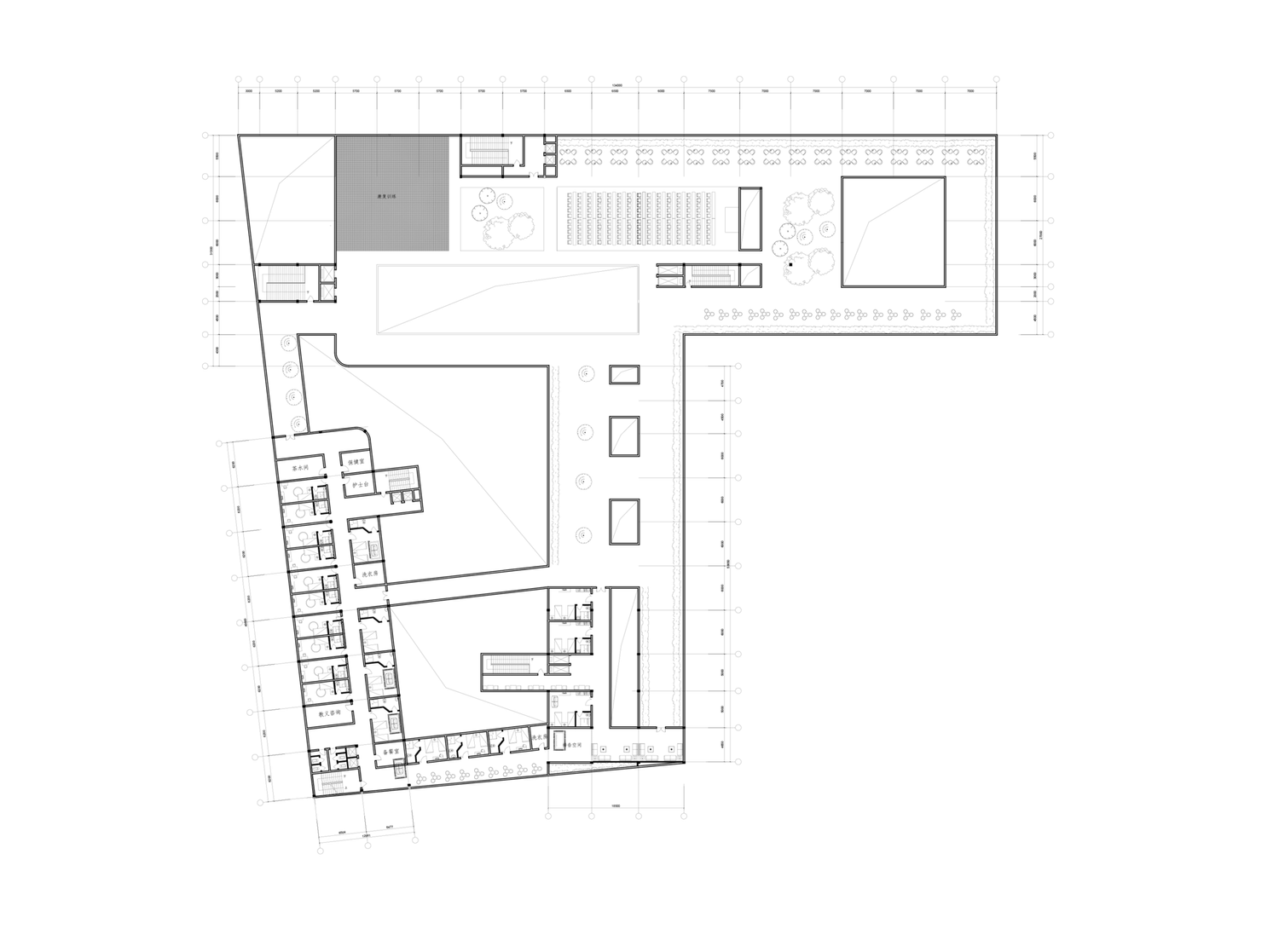
Across three floors, the bedrooms and care rooms are arranged around the two courts — a planted garden and a paved plaza — with a single corridor looping continuously between them. The cloister logic, made literal.
06 — Inside
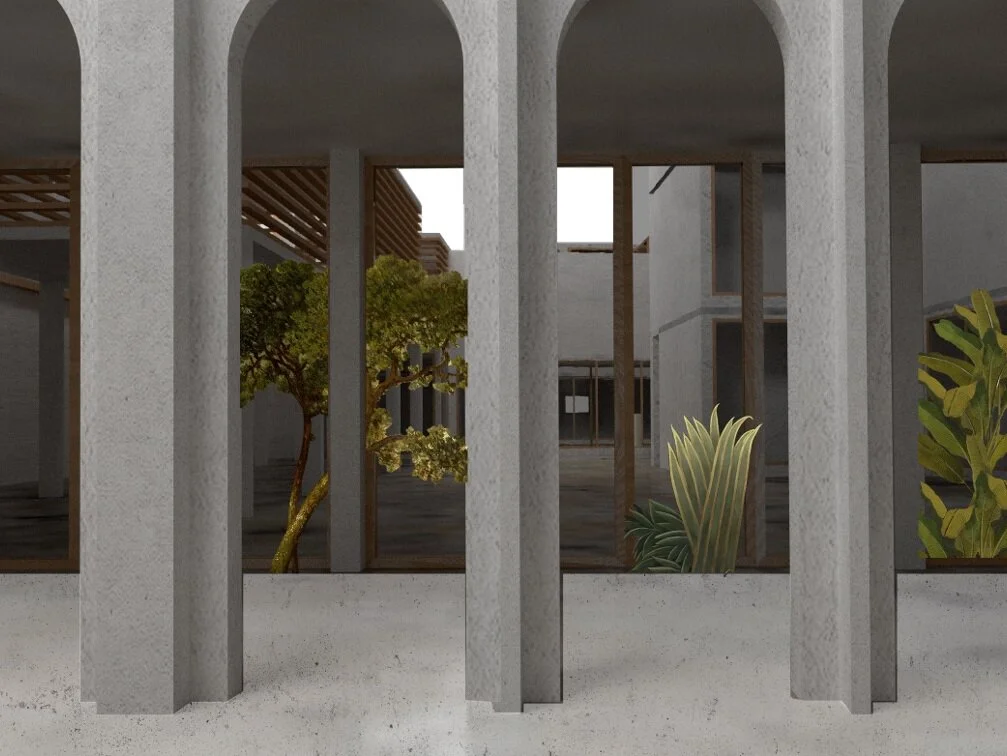
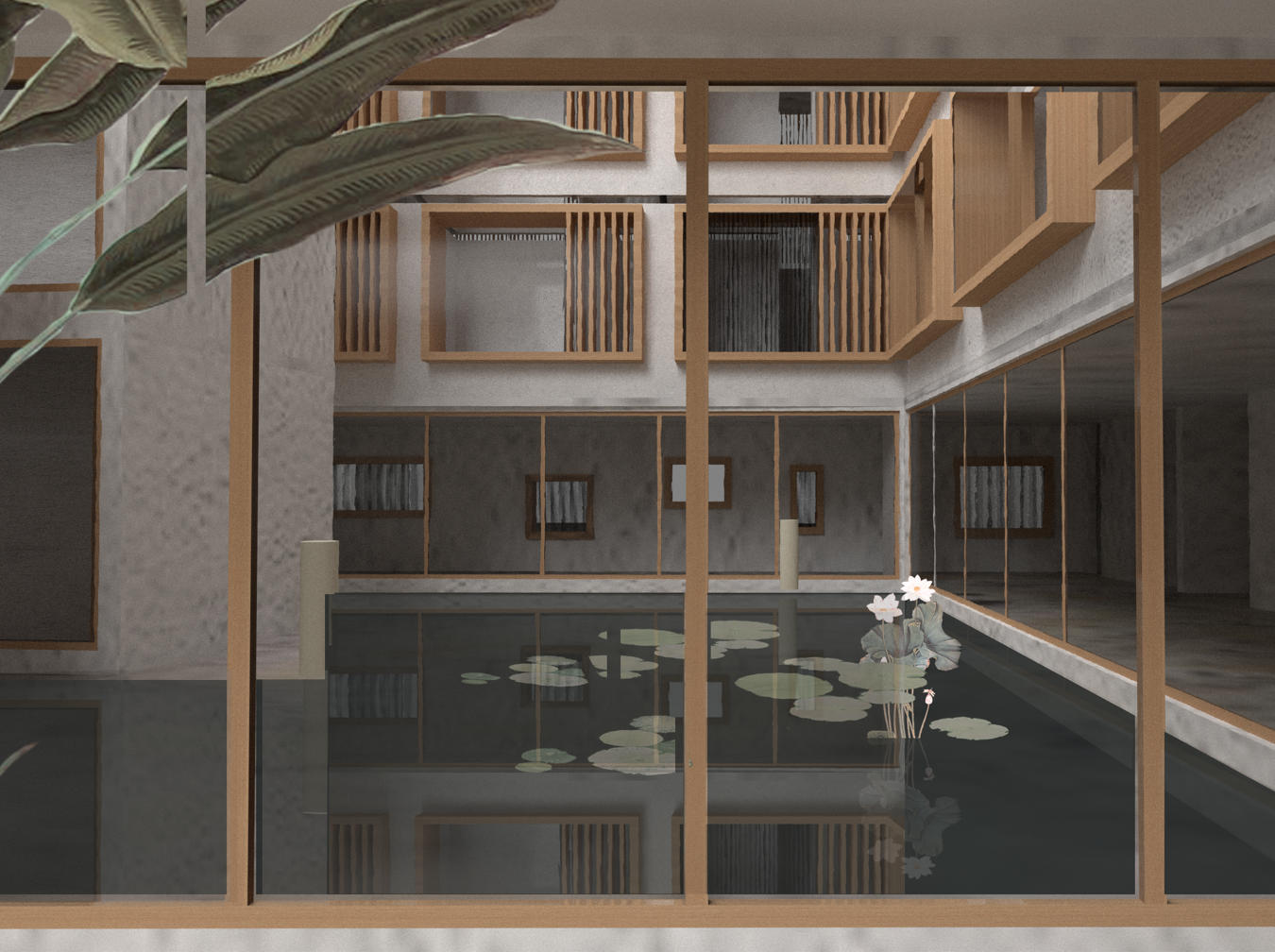
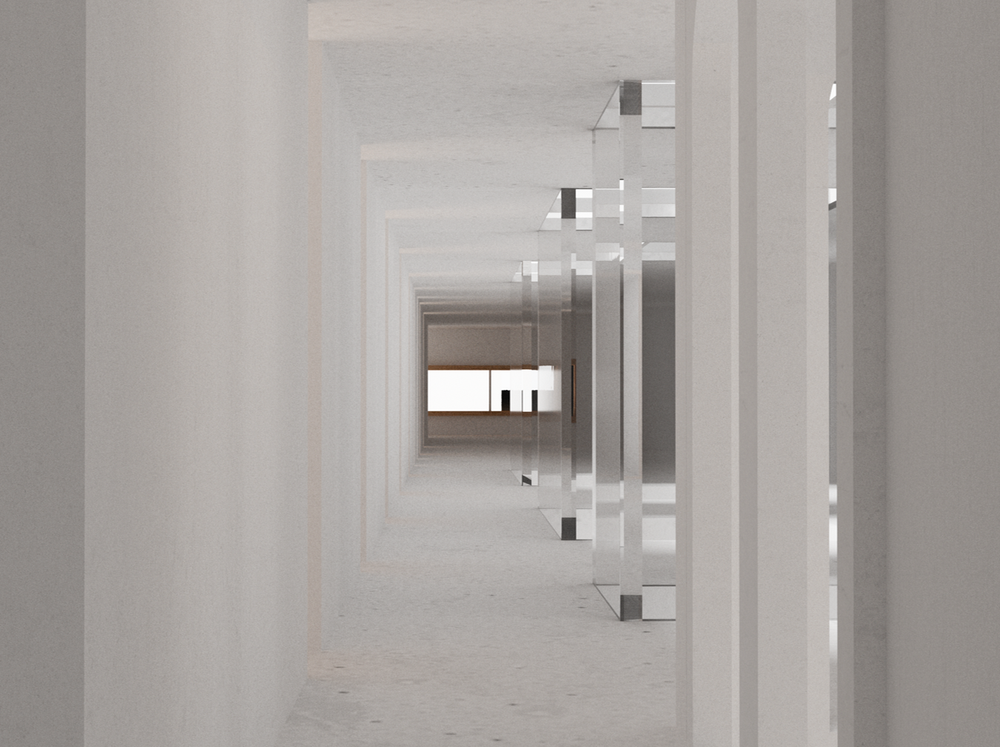
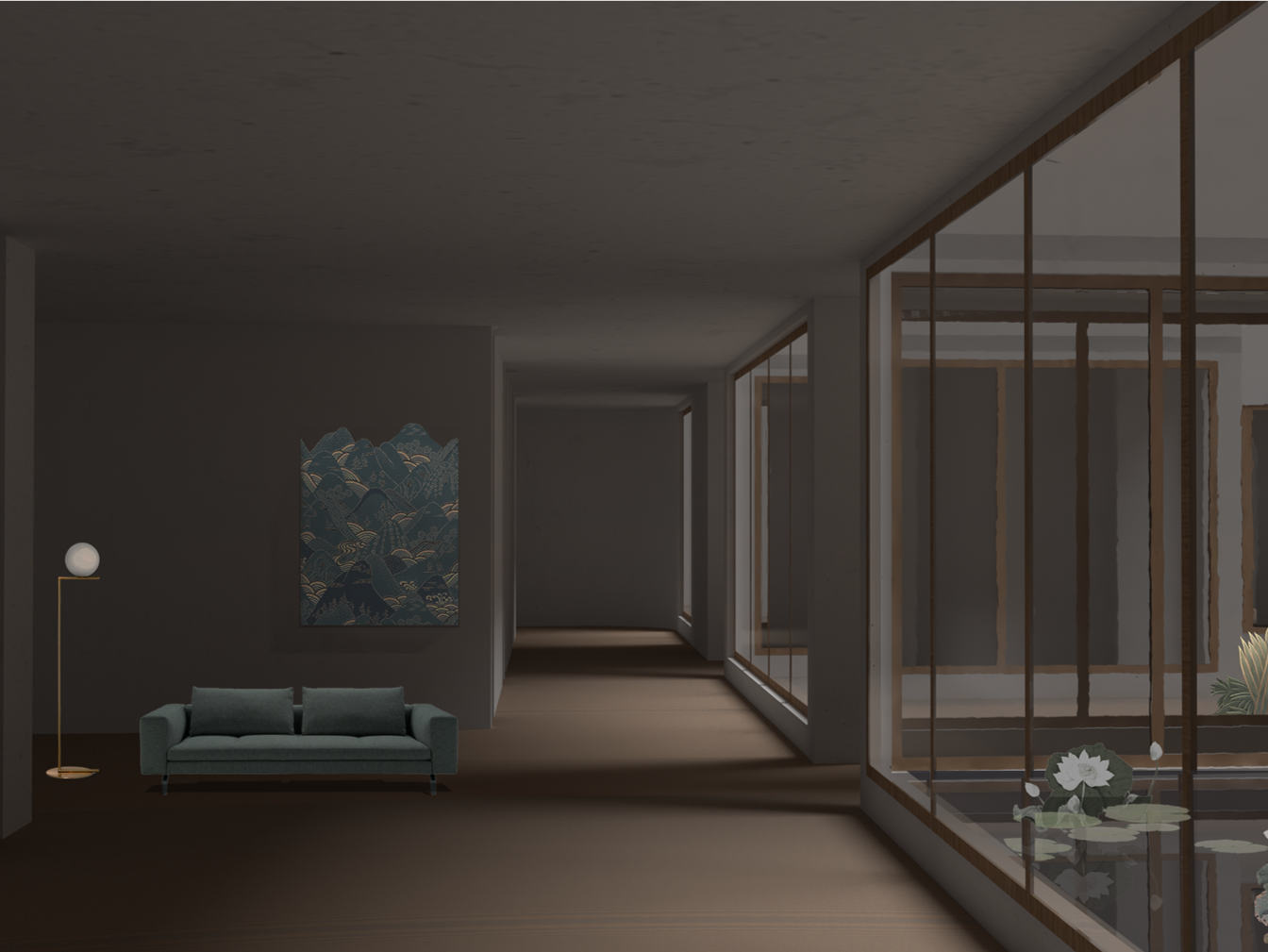
Indoors the architecture stays quiet and pale — deep colonnades, soft daylight, and long views back to the planted courts and a still reflecting pool.
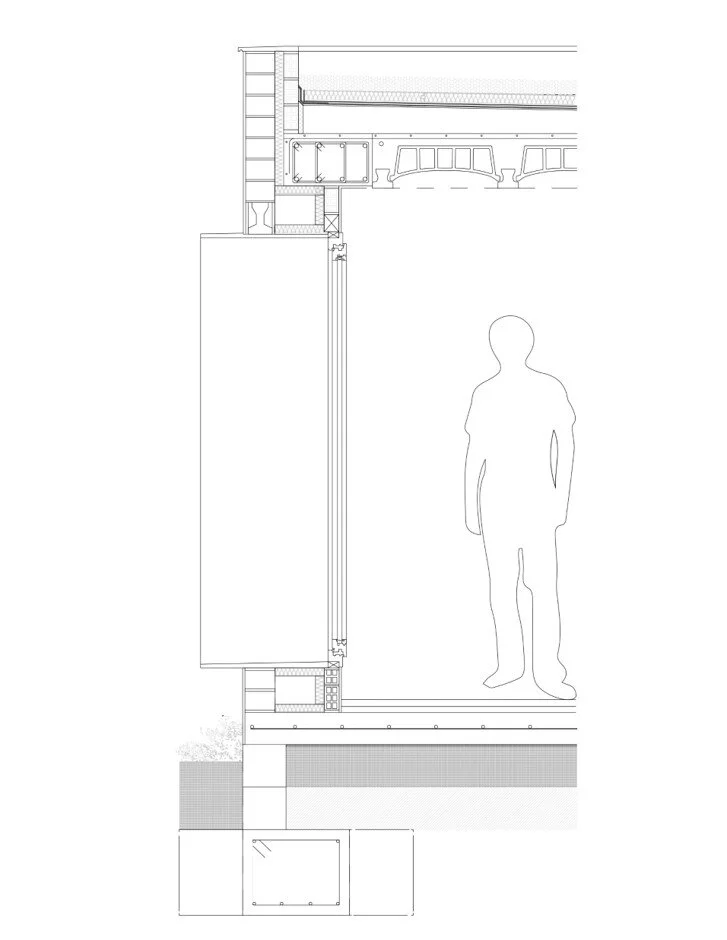
07 — Model & Detail